






Chancellor Rachel Reeves’s decision to reduce the annual cash ISA allowance will raise £95million from savers over the next five years, the Treasury has confirmed.
Official figures show the tax take is expected to rise from £5million in 2027 to 2028 to £45million by 2030 to 2031.
Ms Reeves announced in November that individuals under 65 will see their tax-free cash savings limit reduced from £20,000 to £12,000 from April 2027.
Ministers have said the move, which keeps the £20,000 stocks and shares ISA allowance unchanged, is designed to encourage more people to invest.
TRENDING
Stories
Videos
Your Say
However, the Government’s own projections indicate tax revenues will increase year on year.
Rachael Griffin, tax and financial planning expert at Quilter, said: "The Treasury's own revenue projections make it very hard to argue that cutting the cash ISA limit will push people into investing.
"If the policy were going to shift behaviour in the way ministers suggest, you would not see a rising tax take year after year."
Ms Griffin said the figures suggested many savers would instead move into taxable accounts.
Cash ISA cut to raise £95million as Treasury forecasts higher tax take from savers
|GETTY
She said: "What these figures actually show is that the Government expects large numbers of savers to be nudged out of a tax-efficient shelter and into taxable accounts rather than into stocks and shares ISAs, illustrating inertia, not increased investment."
Helen Morrissey, head of retirement analysis at Hargreaves Lansdown, said: "Initially the tax bills may only be small, but over time they will grow which will be a frustration for those who were used to using a cash ISA and not having to worry about tax at all."
The Treasury estimates that around 1.3 million savers will be affected by the changes.
This represents approximately 16 per cent of cash ISA subscribers and 12 per cent of all ISA holders.
LATEST DEVELOPMENTS
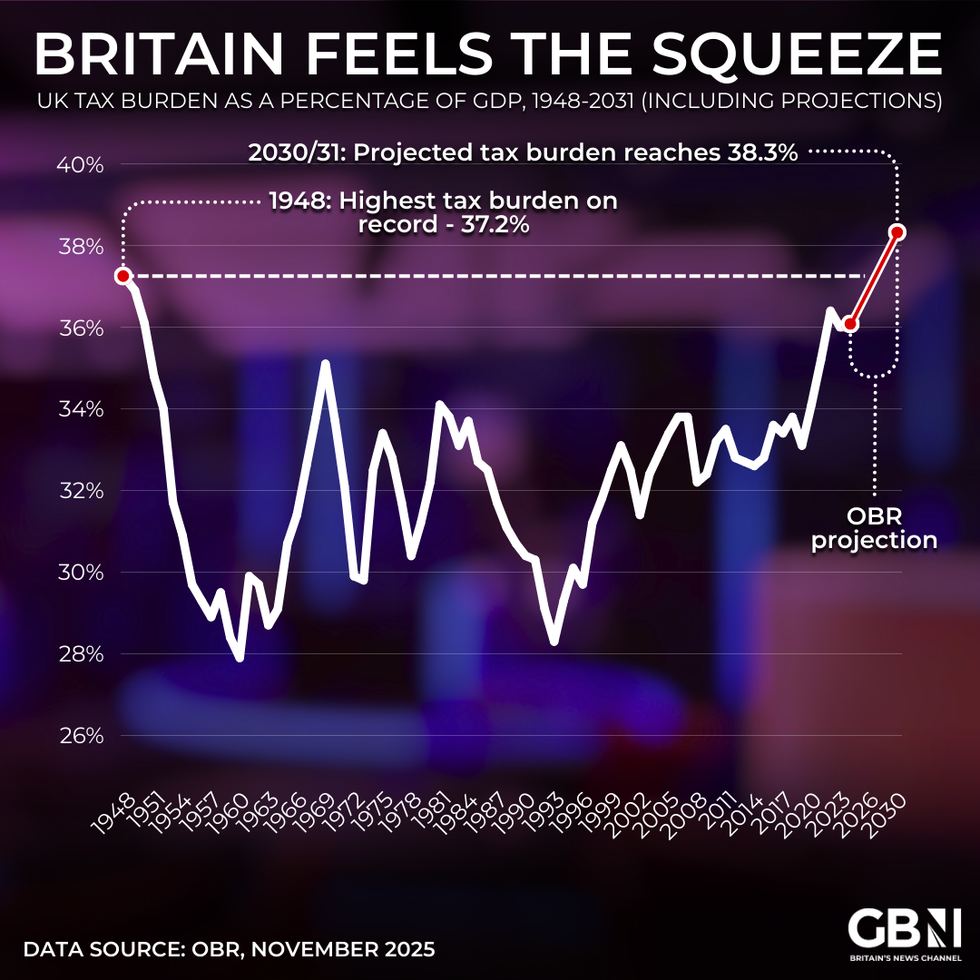 GRAPHED: The UK's tax burden as a percentage of GDP, 1948-2031 | GB NEWS
Those aged 65 and over are exempt, with around 800,000 people expected to be unaffected.
Analysis from Quilter suggests a basic-rate taxpayer who previously used their full cash ISA allowance and instead places £8,000 into a standard savings account could face an additional £328 in tax over five years.
This means choosing a standard savings account over a Cash ISA causes the interest earned no longer to be tax‑free, so a basic‑rate taxpayer could end up paying much more.
Current rules allow basic-rate taxpayers to earn up to £1,000 in savings interest tax-free each year, while higher-rate taxpayers receive a £500 allowance and additional-rate taxpayers receive no allowance.
HM Revenue and Customs (HMRC) is also expected to apply charges on interest earned from cash held within stocks and shares ISAs.
This would target savers attempting to avoid the reduced threshold.
The building society association said the policy could have wider economic consequences.
The trade body warned that reduced lending capacity could result in 60,000 fewer mortgages being issued, which may impact economic growth and reduce Treasury revenues by £2.5billion over five years.
Tom Selby, head of retirement policy at AJ Bell, said the Treasury estimates were uncertain.
 ISA products remain central to UK household savings strategies | GETTY
Mr Selby said: "The Treasury figures are at best, a finger-in-the-air guess at the fiscal impact of the cash ISA allowance cut."
Treasury minister Lucy Rigby said: "This is part of the wider strategy aimed at supporting people to get into investing, including 'targeted support', which will be available from April 2026."
She said financial services firms would introduce new routes to help individuals identify suitable UK investment opportunities.