









Labour has announced plans to outlaw the sale of new petrol and diesel lorries from 2040 as part of a mass push for net zero.
Under the proposals, all new heavy goods vehicles (HGVs) must be fully electric.
Ministers have rejected the use of low-carbon or synthetic fuels as alternatives.
Critics argue the move will force haulage firms to adopt costly battery or hydrogen-powered vehicles - expenses which will be passed onto consumers.
The announcement sets up a fresh clash with the Conservatives and Reform, both of which have pledged to reverse expensive environmental policies.
Richard Holden, the Tory Shadow Transport Secretary, accused Labour of "sleepwalking into a cost shock for the entire economy".
"Forcing haulage firms to scrap perfectly good lorries while they can still run for years and replace them with other vehicles before either the technology or infrastructure is ready will simply drive up costs, as well as being environmentally disastrous," Mr Holden said.
"Those costs will be passed straight through supply chains into higher prices in shops, higher construction costs, and more pressure on inflation. Every supermarket shelf, building site, and home delivery will feel higher prices.
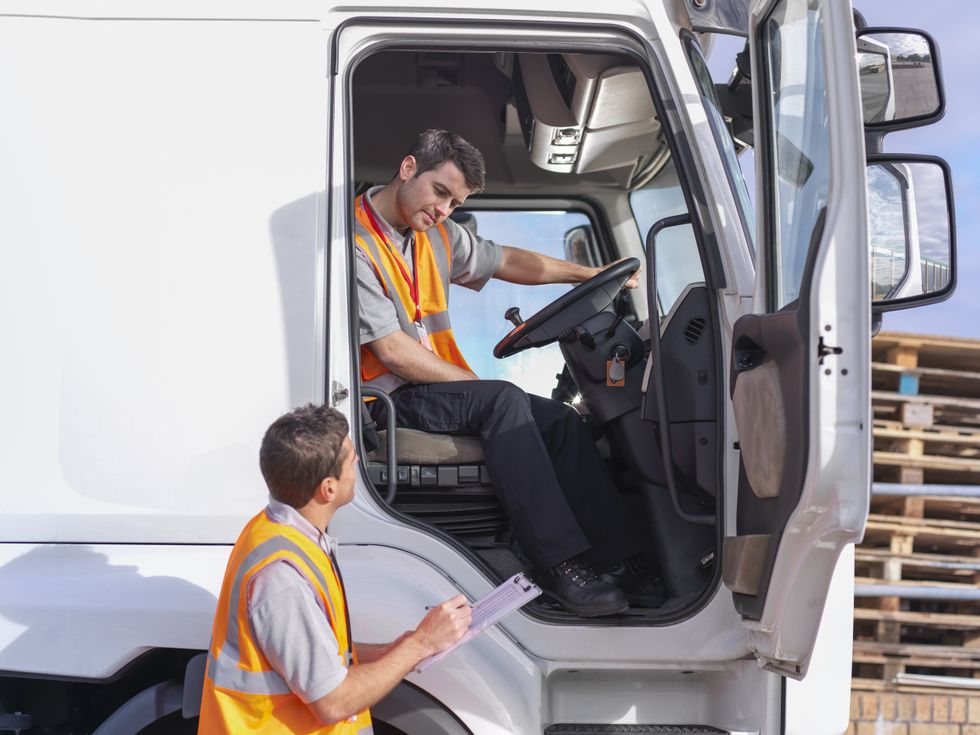
Under the proposals, all new heavy goods vehicles (HGVs) must be fully electric (file photo)
|GETTY
"Rather than letting innovation and the market cut emissions sensibly, Labour are reaching straight for quotas, caps and bans.
"Central planning with a delivery charge attached is delivering another blow to the British economy."
The Road Haulage Association (RHA) has also pointed to infrastructure and vehicle costs as barriers to the net zero transition.
The group's Chris Ashley said: "We're clear that the decarbonisation transition hinges on two key issues being addressed - infrastructure in place to power zero emission HGVs, and vehicle affordability.
"The pathway to decarbonise lorries and coaches in the UK must be realistic and viable - we'll look to see how the consultation achieves that."
PETROL AND DIESEL BANS - READ MORE:

'Rather than letting innovation and the market cut emissions sensibly, Labour are reaching straight for quotas, caps and bans,' Richard Holden said
| PAAn RHA survey from last year found seven in 10 haulage firms had no intention of adding zero-emission vehicles to their fleets.
Range limitations and purchase costs were cited as the primary obstacles.
Current figures reveal just 500 electric HGVs are registered in Britain out of a total fleet of 535,000.
Transport Minister Keir Mather said the Government was aware it would be difficult to decarbonise the sector.
But Mr Mather claimed there was a need to act because lorries have a high environmental impact and emit 16 per cent of all emissions from domestic transport.

Keir Mather, pictured with Keir Starmer in 2023, said the Government was aware it would be difficult to decarbonise the sector
|GETTY
"We are firmly committed to accelerating the transition to clean technologies and to setting a path to phase out the sale of... all new non-zero emission heavy goods vehicles by 2040," he said.
He went on to claim technological advances would lead to "ever better, cheaper and more capable vehicles" which would ultimately reduce costs for haulage firms.
The Green Finance Institute has estimated that £100 billion in additional finance and subsidies will be required to support the uptake of electric lorries.
Road transport carries more than 80 per cent of goods across Britain.
The logistics industry employs nearly 2.7 million workers and contributes £185billion annually to the economy.