







Britons are bracing for all-time highs at the petrol pump amid fears of catastrophic price hikes as war in Iran rages.
Petrol prices risk smashing through the all-time high of 191.5p per litre as the Middle East conflict sends oil markets into turmoil.
Crude could surge to $150 (£112.74) a barrel by the month's end, according to experts, far exceeding the $116 (£87.19) peak seen during the Ukraine war in 2022.
The looming crisis could see the cost of filling a family car with petrol soar above £100 for the first time since Russia's invasion of its neighbour.
By Sunday night, Brent crude climbed past $104 (£78) a barrel, reaching levels not seen since autumn 2023.
Traders had earlier predicted the oil price to leap from the $92 it ended on Friday, before analysts at Goldman Sachs warned oil could hit around $150 per barrel if the crisis fails to end by April.
And in extreme cases, some oil traders have warned that the price of crude could soar to as much as $250 (£188) per barrel.
Howard Cox from FairFuelUK warned that if oil surpasses just $100, it could add 10-20p per litre to petrol and diesel "within weeks".
He added: "If it reaches $120, I believe it will trigger a recession."
Diesel has jumped 8.6p in just seven days to hit a 16-month high of 150.97p.
Petrol averaged 137.51p last night after climbing 4.7p.
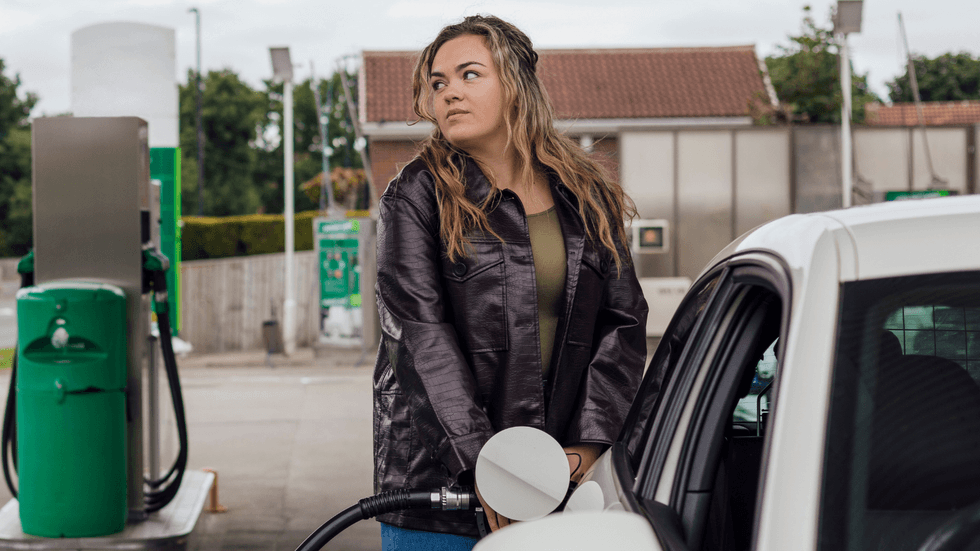
Britons are bracing for all-time highs at the petrol pump (file photo)
|GETTY
That came as US and Israeli warplanes struck oil facilities across Iran, sending thick black smoke billowing over Tehran and killing six people.
Sharan, one of Iran's biggest storage sites, was also targeted in the attacks.
Residents in the capital received warnings about acid rain from the toxic fumes spreading through the city.
Tehran responded by continuing strikes against neighbouring Gulf states - among the world's largest oil exporters.
One, Kuwait, began cutting oil output on Saturday and declared force majeure on shipments, though it did not say how much production it would shut.
FUEL FEARS - READ MORE:
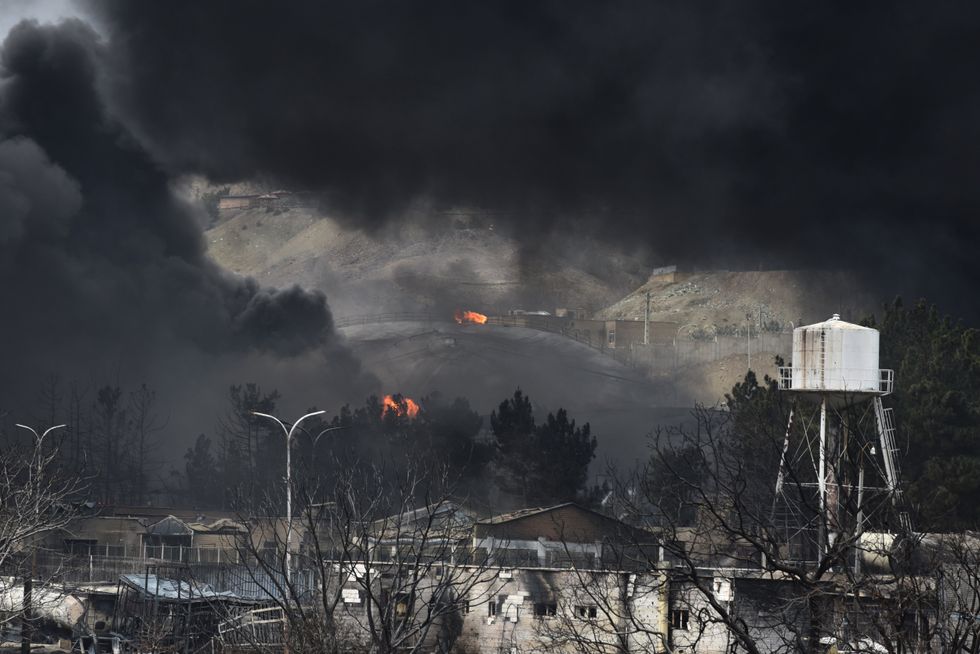
US and Israeli warplanes struck oil facilities across Iran
|GETTY
A fire then broke out in the UAE's Fujairah oil industry zone after "debris" fell - while Saudi Arabia's Defence Ministry said it intercepted a drone heading to its Shaybah oil field.
The Islamic Republic had earlier threatened to "set ablaze" any tanker attempting to pass through the Strait of Hormuz - the vital waterway which sees one fifth of the world's liquefied natural gas and oil pass through.
Emmanuel Macron became the first Western leader to directly urge Iran's president to reopen the strait.
US Energy Secretary Chris Wright said on Sunday that disruption to shipping through the strait would likely persist for weeks.
Just one tanker crossed the Hormuz passage this weekend, compared with dozens on a typical day.
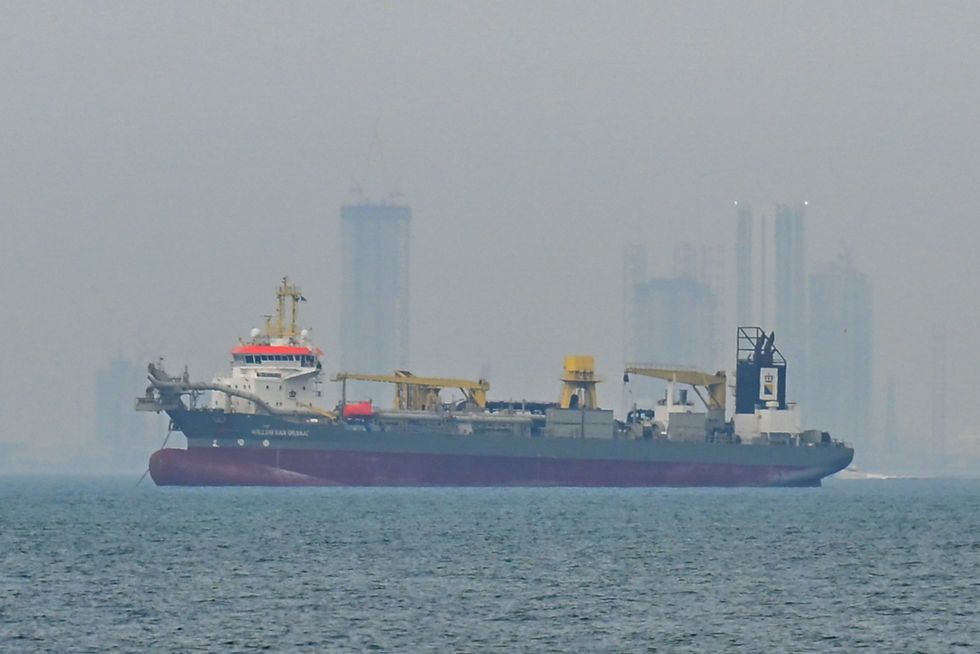
The Islamic Republic had threatened to 'set ablaze' any tanker attempting to pass through the Strait of Hormuz
|GETTY
Donald Trump dismissed the surge in oil prices as a worthwhile trade-off for destroying Iran's nuclear capabilities.
The US President posted on Truth Social on Sunday as crude broke through $100 (£75.23) for the first time in four years.
Mr Trump wrote: "Short term oil prices, which will drop rapidly when the destruction of the Iran nuclear threat is over, is a very small price to pay USA and world, safety and peace."
He added: "ONLY FOOLS WOULD THINK DIFFERENTLY!"
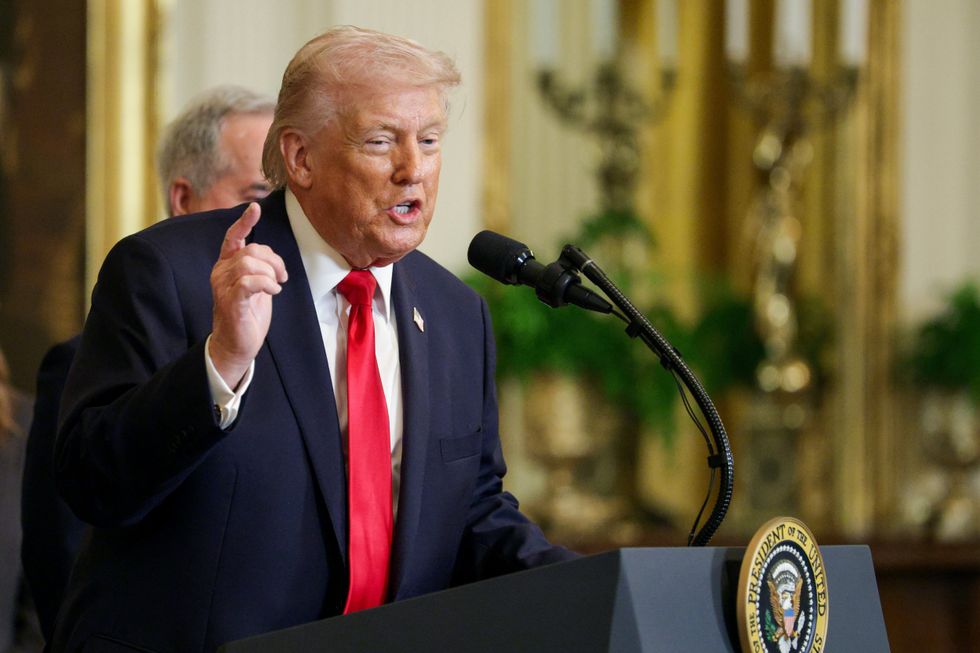
Donald Trump dismissed the surge in oil prices as a worthwhile trade-off for destroying Iran's nuclear capabilities
|GETTY
White House press secretary Karoline Leavitt acknowledged a "slight increase" in prices but insisted costs would fall once Iran's leadership was removed.
She told Fox News: "This is a short-term disruption for the long-term gain of taking out the rogue Iranian terrorist regime and finally ending their restriction of the free flow of energy in the Middle East and in the Strait of Hormuz."
British motorists also face further pain from Labour's planned fuel duty rises, with a 1p increase in September, 2p in December, and another 2p next March.
Shadow Chancellor Sir Mel Stride said: "The latest developments in the Middle East make it even more important for Rachel Reeves to reverse course and scrap the rise in fuel duty."
UK gas storage now holds fewer than two days' supply - though National Gas says this is normal.
Our Standards: The GB News Editorial Charter