









Brazil might be sitting on one of the world's most valuable secrets to living past 110 – and scientists have only just started paying attention.
A new study published on January 6 in Genomic Psychiatry by Dr Mayana Zatz and her team at the University of São Paulo makes a compelling case for why the country deserves more attention from longevity researchers.
The team has assembled a group of more than 160 centenarians, including 20 verified supercentenarians – people who've reached the remarkable age of 110 or beyond.
Among them was Sister Inah, recognised as the world's oldest living person until her passing in April 2025 at 116. The cohort also features the two oldest men on the planet.
TRENDING
Stories
Videos
Your Say
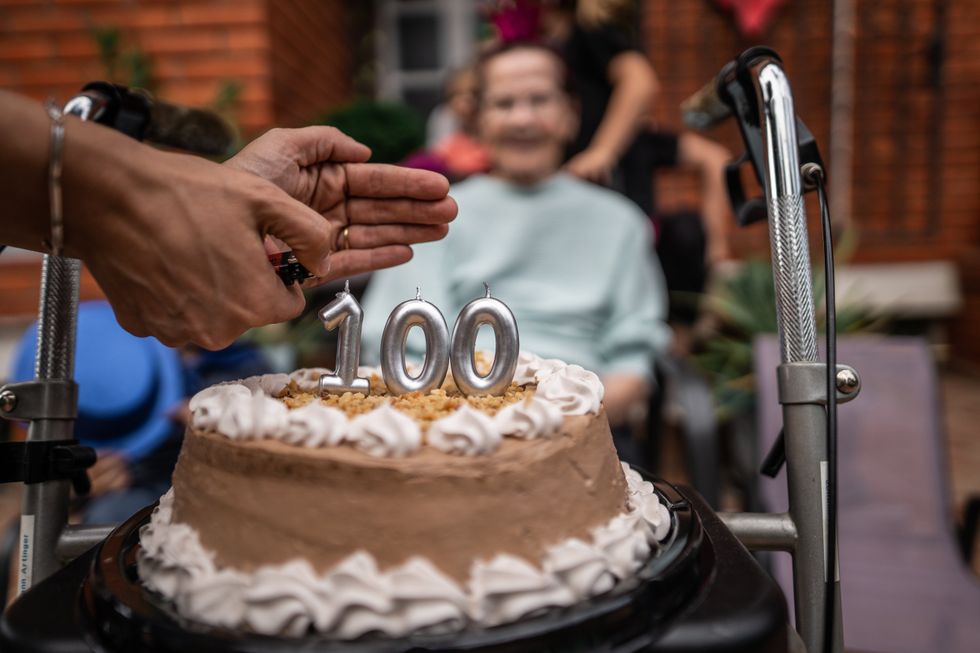
Scientists will be studying a group of more than 160 centenarians
|GETTY
The reason Brazil matters so much for this research boils down to genetics: the country has diversity like nowhere else on Earth.
Centuries of migration created an incredibly mixed population, with Portuguese colonisers arriving from 1500, followed by around four million enslaved Africans, then waves of European and Japanese immigrants.
"This gap is especially limiting in longevity research, where admixed supercentenarians may harbour unique protective variants invisible in more genetically homogeneous populations," explained the study's first author, Mateus Vidigal de Castro.
Early research on Brazilians over 60 found roughly two million genetic variants that had never been recorded before.
A follow-up study went even further, identifying more than 8 million previously unknown variants across the Brazilian population.
But what makes these individuals fascinating is not just their age – it is how well they've held up.
When researchers first met many of these supercentenarians, they were still mentally sharp and managing everyday tasks independently.
Here is the interesting part: most spent their lives in areas with little access to modern medicine. Their resilience developed naturally, without the help of healthcare systems.
LATEST DEVELOPMENTS
A 110-year-old woman has three nieces, aged 100, 104, and 106, making them one of the longest-lived families in Brazil's history. The eldest niece, now 106, was still winning swimming competitions at 100.
"Investigating such rare familial clusters offers a rare window into the polygenic inheritance of resilience and may help disentangle the genetic and epigenetic contributions to extreme longevity," noted Dr de Castro.
Perhaps the most striking proof of their biological toughness came during the pandemic.
Three supercentenarians in the study caught COVID-19 in 2020 – before any vaccines existed – and survived.
Lab tests showed they mounted impressive immune responses, producing strong IgG antibodies and neutralising agents against the virus, along with proteins linked to early defence mechanisms.
How do people over 110 fight off a brand-new pathogen that killed millions of much younger people? That's exactly what scientists want to understand.
The researchers found these individuals have immune cells with protein recycling systems that work like those of much younger people.
Their bodies also show an unusual expansion of certain T cells that behave differently from typical immune responses – a pattern rarely seen in younger populations.
Brazil's position in global longevity research is exemplary, with three of the ten longest-lived verified male supercentenarians coming from the country, including the current oldest living man, born in October 1912. What is particularly notable is that men rarely reach such extreme ages compared to women.
The cohort will feature two of the oldest living men on the planet
|GETTY
Brazilian women also punch well above their weight, with more representatives in the world's top 15 longest-lived than wealthier, more populous nations like the United States.
The team hopes to build cellular models for experiments and partner with Prof Ana Maria Caetano de Faria at the Federal University of Minas Gerais to study immune profiles more deeply.
"International longevity and genomics consortia should expand recruitment to include ancestrally diverse and admixed populations, such as Brazil's," urges Dr Zatz.
Our Standards: The GB News Editorial Charter