


All products and promotions are independently selected by our experts. To help us provide free impartial advice, we will earn an affiliate commission if you buy something. Click here to learn more








If you're under 16 years old, you might be blocked from accessing the best VPN deals, under new rules proposed by Sir Keir Starmer's administration.
The UK Government has confirmed it's looking into age-limiting or restricting access to Virtual Private Networks, more commonly known as VPNs — a tool designed to protect your privacy and security when you're browsing online.
This comes after a three-month consultation aimed at closing what ministers call "loopholes that put children at risk." From this, ministers are planning to amend the Children's Wellbeing and Schools Bill, giving themselves the power to act quickly on digital safety measures.
It follows the UK Government's roll-out of the Online Safety Act last summer — adding strict age verification barriers to thousands of popular websites, forums, and social media services. Britons must verify their age by providing a passport scan, a facial scan, or entering credit card details.
Prime Minister Keir Starmer says the government is "laying the groundwork for further action," though any major changes like mandatory age checks for VPN providers will still need Parliament's approval before becoming law. For those who don't know, VPNs use military-grade encryption to hide the websites that you visit — as well as the amount of time spent on them.
VPNs have long been essential downloads in enterprise, since they stop hackers, governments, and criminals from snooping on online activity or personal data. However, in recent years, record numbers of everyday people have turned to these security apps to supercharge their privacy too.
Plans to block access to millions of younger users have sparked controversy.
Wikipedia co-founder Jimmy Wales branded the proposals "an embarrassment," while digital rights groups warn that forcing age checks could put "vulnerable people in immediate danger."
Big Brother Watch, the UK-based civil liberties organisation, has been particularly vocal, describing the measures as a "draconian crackdown."
The counterargument? Making all VPN users prove their age essentially defeats the whole purpose of technology that's meant to keep you anonymous.
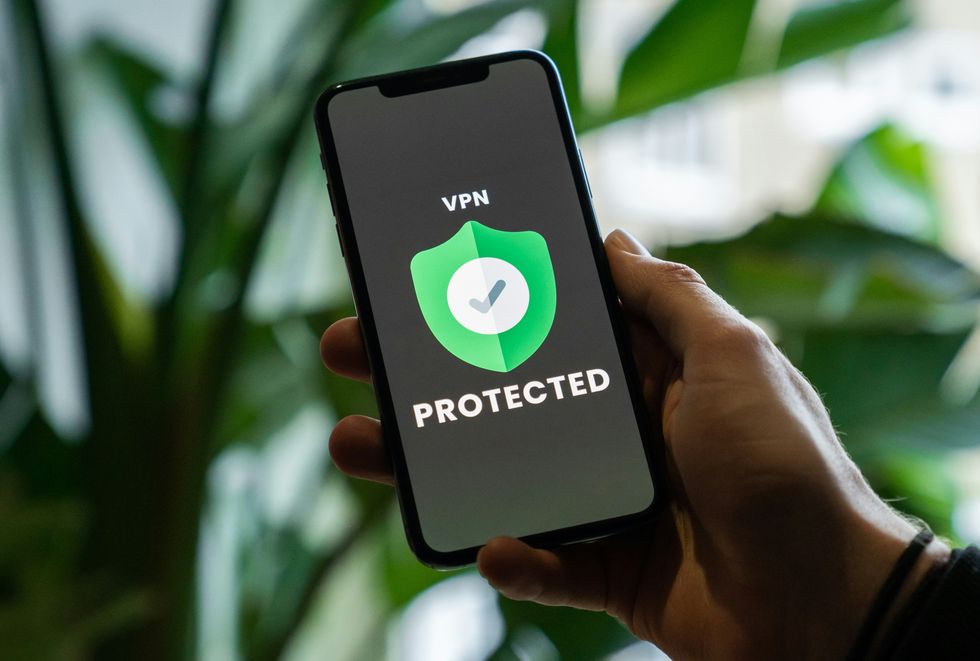 A Virtual Private Network (VPN) is software that protects and anonymises everything you do online. | UNSPLASH
 Jessica Wilson, managing director of Eventum Legal, said, “Any move to age-restrict or limit VPN use by children needs to be approached carefully. VPNs are not inherently tools for wrongdoing - they are legitimate privacy and security mechanisms. They encrypt internet traffic and protect users, including young people, from data harvesting, tracking and interception."
There's also a big question mark hanging over how the implementation of such a ban would actually work in practice. Right now, it's still unclear how VPN providers would technically enforce age checks — and the companies themselves seem to be in the dark too.
Ms Wilson said, "If access is restricted without providing replacement security or safeguarding, we could put children more at risk, instead of protecting them. The question shouldn’t be about whether young people are using VPNs, but why they feel the need to. Security policies shouldn’t inadvertently weaken cybersecurity in the name of safeguarding."
When major providers, including NordVPN, Surfshark, Windscribe, and ExpressVPN, were asked about the proposals, they all said they'd be happy to talk to the government about it.
However, none of them had actually been contacted by ministers at the time the restrictions were first announced.
VPNs with RAM-only, no-logs servers, like ExpressVPN, make it technically impossible for people to retrieve your browsing history or connection logs from the VPN provider, even if requested
| EXPRESSVPN PRESS OFFICEKonstantin Levinzon, co-founder of Planet VPN, told GB News, “Banning access to VPNs for young users undermines the core principles of privacy and anonymity that these tools provide. Proposed restrictions would force VPN providers to collect sensitive data and perform identity checks, posing privacy risks for many users and potentially exposing vulnerable groups, including human rights activists, to risks of surveillance."
VPNs are also deeply embedded in business systems and security setups, meaning blanket requirements could prove extraordinarily disruptive.
The government insists it's trying to strike the right balance here.
A spokesperson for the Department for Science, Innovation and Technology told TechRadar: "We recognise that VPNs serve legitimate purposes, including protecting privacy and security online. That's precisely why we're consulting to make sure we get this right."
They added that the department wants input from VPN providers and digital rights organisations to ensure any measures are "targeted and proportionate."
LATEST DEVELOPMENTS
How a VPN Protects Your Privacy
A VPN protects your privacy by securing your online activity from being tracked by your Internet Service Provider (ISP) or other third parties. When you use a VPN, your real IP address is hidden, and your connection is encrypted. This means the websites you visit and your browsing activity are not directly linked to your home IP address.
With age-verification systems potentially requiring identity checks or third-party verification services, some users worry about data retention and digital profiling. While a VPN does not remove age checks imposed by UK law, it does prevent your ISP from seeing which websites you access and helps limit additional tracking beyond the verification process itself.
VPNs with RAM-only, no-logs servers, like ExpressVPN, make it technically impossible for anyone to retrieve your browsing history or connection logs from the VPN provider because no activity data is stored long term. RAM-only servers operate without hard drives, meaning all data is wiped on reboot and nothing is permanently retained.
Secure your online privacy with ExpressVPN at its lowest ever price

With its new multi-tier subscription structure, ExpressVPN has never been more affordable
If you want to unlock reliable protection, the ExpressVPN Basic plan offers unlimited access to its award-winning reliable and ludicrously speedy VPN servers across the globe, it has cut monthly subscriptions by 82%. If you sign up for a 12-month plan, you'll be gifted with a generous 4 months of access to the award-winning VPN service for free. That equates to under 6 pence per day!
ExpressVPN
$9.99
$1.74
Based in the British Virgin Islands — outside Five Eyes jurisdiction — ExpressVPN avoids mandatory data retention laws, which means that even if the company were collecting data (it's not), law enforcement from the UK and US would be unable to compel ExpressVPN to hand over any information about its subscribers.
ExpressVPN supports a wide range of devices, including smartphones, tablets, laptops, smart TVs, and routers. ExpressVPN stands out from the crowd and allows between 10 and 14 devices to be used at the same time, meaning internet users don’t need to worry about being limited to only one Windows 10, Windows 11, iPhone, Mac or Linux device.
ExpressVPN even offers a 30 day guarantee to first-time customers. Yes, ExpressVPN is so confident that you’ll love the services that it will give you your money back with no questions asked. It even offers 24/7 customer support, so you'll be able to talk to someone from any time zone to get a full refund if you're unhappy with the experience on your devices.
For Android and iOS users, ExpressVPN also offers a 7-day free trial, where you don’t need to worry about any money being taken from your accounts.
All you have to do is sign up for the 12-month plan and create your account to start your 7-day trial.
Secure your online privacy with a VPN subscription to NordVPN
 Get secure data privacy from NordVPN
Get all the security and support from a VPN provider that uses a RAM-only server. For a limited time, NordVPN is offering a generous 70% discount on its VPN subscriptions. That drops the effective monthly price of this award-winner to just £2.59. Since you'll need to commit to a two-year plan to unlock the maximum savings, Nord offers a 30-day money-back guarantee on all subscriptions.
NordVPN
$8.69
$2.59
All NordVPN subscribers will enjoy automatic malware scans to save you from dodgy downloads and alerts about leaked credentials on the Dark Web. Of course, NordVPN also offers access to 6,400 server locations across the globe with fast connection speeds.
NordVPN provides military-grade encryption, fast global servers, and protection on public Wi-Fi. With a strict no-logs policy, CyberSec malware-blocking, and multi-device support, NordVPN safeguards your internet activity while maintaining speed and reliability worldwide.
Secure your online privacy with a VPN subscription to Surfshark
 Secure you data privacy with Surfshark
You can secure your online privacy with Surfshark. For a limited time, it's slashed 88% off its monthly cost and coupled that discount with three months of free access. You'll need to sign up for a two-year plan to unlock this saying, but with a 30-day money-back guarantee and 24/7 customer service, there's no risk for new customers
Surfshark
$12.29
$1.49
Surfshark boasts faster RAM-only servers in more than 100 countries. The provider offers packages with 24/7 data breach alerts that flag when a website that you rely on has been hacked, antivirus software, its CleanWeb adblocker, and Alternative ID that generate a new email and phone number to enter into online forms — with communication forwarded to your real details, which remain anonymous.
 A VPN creates a secure, encrypted connection between your device and the internet | SURFSHARK PRESS OFFICE
Are VPNs legal?
VPNs are legal. If you've been issued a company laptop to work remotely, the IT department will likely require you to use a VPN before you start a shift. Needless to say, this isn't against the law.
But while VPNs were once solely used in enterprise and government spheres, these apps are becoming increasingly popular with people across the world to improve personal online security. As all of us rely on the internet for more and more of our daily lives, VPNs are an essential way to enhance privacy, block advertisers from tracking your movements, unlock streaming TV shows and sports coverage, and even find cheaper flights.
VPNs, however, are illegal in 10 countries: China, Russia, Belarus, North Korea, Turkmenistan, Uganda, Iraq, Turkey, UAE, and Oman. If you're currently based in any of these nations or plan on visiting one soon, consider uninstalling any VPN apps from your devices.
Outside of these countries, VPNs are legal and can be used without restrictions.
But while it might be legal, it's worth noting that using a VPN might be against the Terms Of Service of some websites or mobile apps, so it's always worth checking the T&Cs to make sure you're in the clear.
More From GB News