

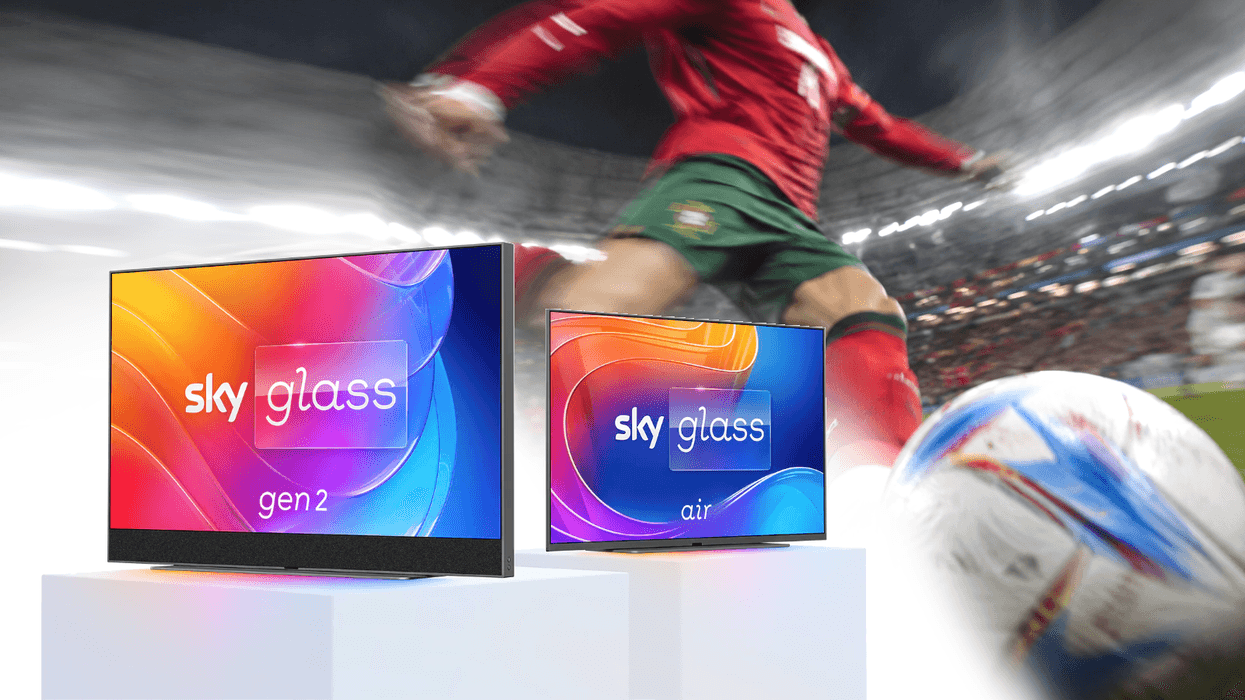









If you're planning to watch the World Cup on Sky Glass or Sky Stream, the British broadcaster is promising to "bring live sport closer to the moment" by reducing latency in its streams. It means the gap between a football being kicked in a stadium in North America and the footage appearing on your television should be shorter than ever before.
Sky is promising Glass and Stream viewers will be able to "watch what’s happening on the pitch within seconds".
Dubbed Real Time, it offers the "lowest latency streaming experience" yet from Sky – building on an update to SkyOS, the custom-designed operating system built by teams at Sky to bring together live and on-demand content, which launched back in 2024 to reduce latency in live broadcasts by 22-seconds. This was followed by a similar upgrade to BBC iPlayer aimed at cutting delays in streams compared with traditional over-the-air broadcasts.
 Satellite-powered set-top boxes, like Sky Q, have been the preferred option for those watching coverage of live sports — due to the lower latency. But that could finally shift with the latest shake-up to Sky Glass and Sky Stream | SKY TV PRESS OFFICE
 Real Time brings together all of these innovations across Sky Sports, BBC, and ITV to ensure you can watch all of the action from the FIFA World Cup with less lag — cutting the chance of any spoilers from social media, radio, cheers from the neighbours still watching on terrestrial television, and notifications from apps with the latest scores.
The clever SkyOS functionality is only available for "select live sports" at the moment.
To make sure you're watching with the smallest possible gap between the action on the pitch and your telly, make sure to use the opt-in button to trigger Real Time when watching a compatible stream. You can also switch to one of several dedicated channels with the ultra-low latency streams.
- BBC One HD Real Time | Channel number 926-944 (depending on region)
- ITV1 HD Real Time | Channel number 945
- ITV4 HD Real Time | Channel number 946
The latency from streaming is a function of how this broadcast method works. Cameras capture the footage as it happens, but these files are converted into a format that can be sent hundreds of miles across the internet — a process that takes a few seconds.
The video footage is replicated in several different picture qualities so that it can be shown on different internet connection speeds without pausing to buffer.
LATEST DEVELOPMENTS
These copies are deployed across servers all over the UK. In your home, Sky Stream or Sky Glass will send a request for the series of files, each just a few seconds long, to load up and play on-screen. Each of these steps introduces a short delay, which is compounded across the pipeline.
In most cases, your device will wait until it has a few chunks of completed video before it starts showing anything on-screen — this is to ensure the finished product appears like a consistent stream, rather than footage stopping and starting every few seconds with a buffer animation as it waits for the next file.
Industry research has shown that viewers prefer to suffer with latency to guarantee a more consistent experience, instead of the feed cutting out momentarily due to a failure or delay somewhere in the chain.
Nevertheless, Sky Stream and Sky Glass subscribers have taken to the Sky Help forums to bemoan the delays.
There are numerous threads with disgruntled viewers complaining about the amount of lag, one example reads: "I was watching champions league football on bt sports and when I checked my app on my phone to see what minute the match was in my sky stream box was 1 Minute and 30 seconds behind"
The delay in traditional broadcasts, delivered via television aerials or satellite dishes, is typically around eight seconds. It's unclear what to expect from Real Time, but the last time Sky engineers cut latency, they were able to achieve "give or take" the same delay as satellite broadcasts on Sky Q or Sky+ HD, the company told GB News.
So, it's possible that with the additional gains from the roll-out of Real Time, it will be better than anything we've seen from the British broadcaster before. And if you want to stream all of the action from the World Cup across BBC and ITV, SkyOS might be the best place to do it.