

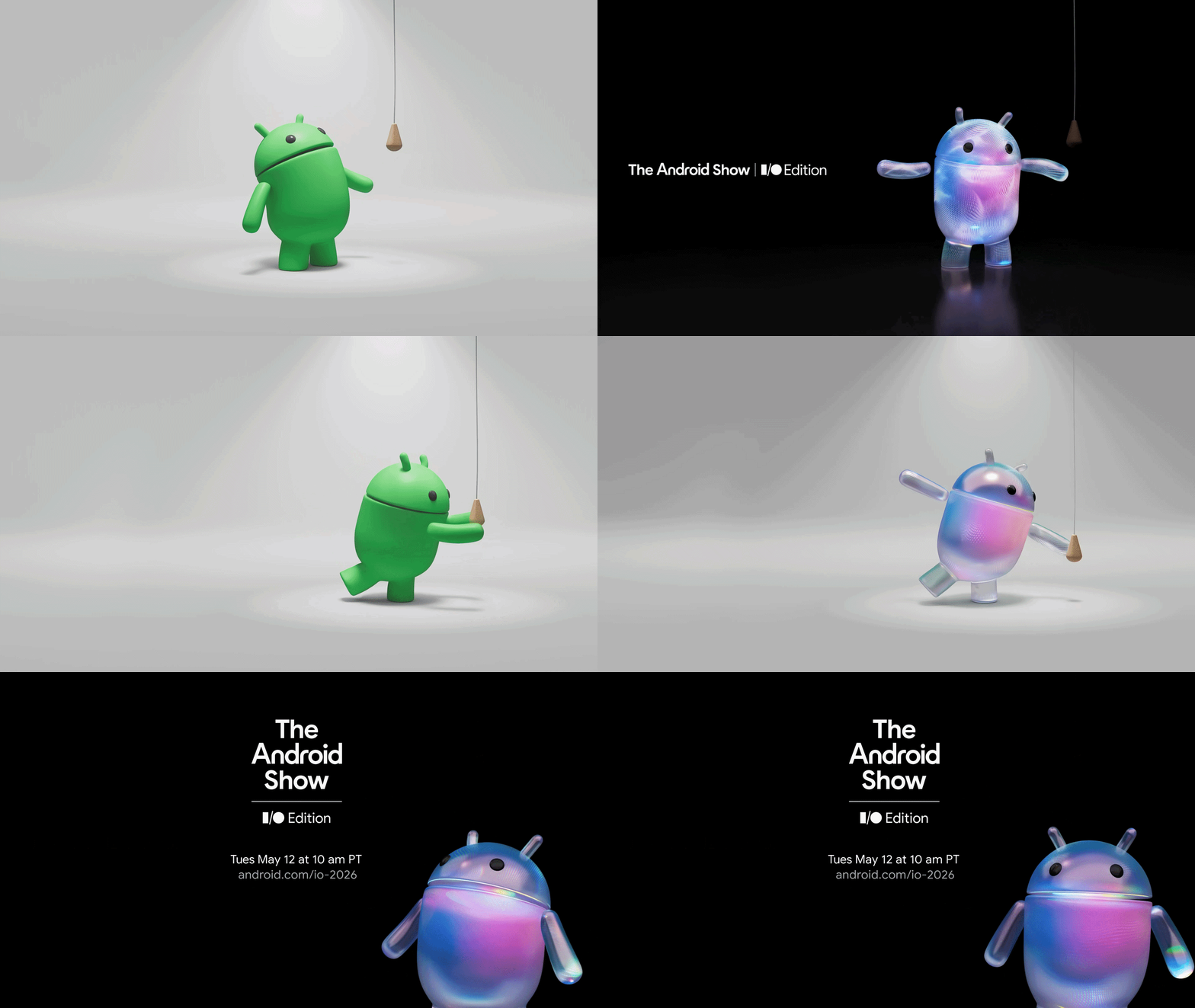








Android will not model its next major redesign on Liquid Glass.
That's according to Sameer Samat, President of the Android Ecosystem at Google. The executive was replying to a concept image that depicted what the Android operating system could look like if it mimicked the design used by its counterpart iOS. It was shared on X, formerly Twitter, with the words: "Liquid Glass confirmed"
"Not happening! Y'all are wild," replied Sameer Samat, who is responsible for the user experience of Android.
That's pretty definitive.
The mockup was posted on X in response to a teaser video for The Android Show: I/O, which showed the droid-like mascot pulling a light switch and suddenly turning translucent. Some believed the teaser video was hinting at an iOS-like redesign of Android that would bring more transparency to the mobile operating system.
Android is developed by teams within Google.
The company uses the mobile operating system, which it acquired back in July 2005 for an estimated $50 million (£36.7 million, converted), for its own Pixel-branded smartphones. However, it allowed other manufacturers — like Samsung, Honor, Nothing, OnePlus, Xiaomi, Motorola — to use the open-source version of Android and customise the functionality and appearance to their own tastes.
LATEST DEVELOPMENTS
- Googlebook is a brand-new type of AI-packed laptop
- Spotify's 20 Years feature was SO popular, it brought down the app
- Best VPN deals
- Polestar 4: We drove the first car sold in Britain without a rear window
- Millions of Samsung TV owners are being treated to FREE extra channels
- British brand's Sky Q rival finally goes on sale
Oppo, Honor, and Xioami have both developed variants of Android that share many visual similarities with Liquid Glass, so those who want to continue using Android but admire some of the design flair of the new design language present across Apple devices can pick-up some of these. You could even pocket a smartphone that looks eerily similar to something you'd find stocked in an Apple Store.
For its part, Google uses a design language called Material Design. It debuted this aesthetic back in 2014, although it has been updated several times since then. The latest shake-up — Material 3 Expressive, launched last summer — added bouncy and playful animations across the operating system. It also allows smartphone and tablet owners to customise the accent colours across Android and apps that support the feature, thanks to a clever dynamic theme.
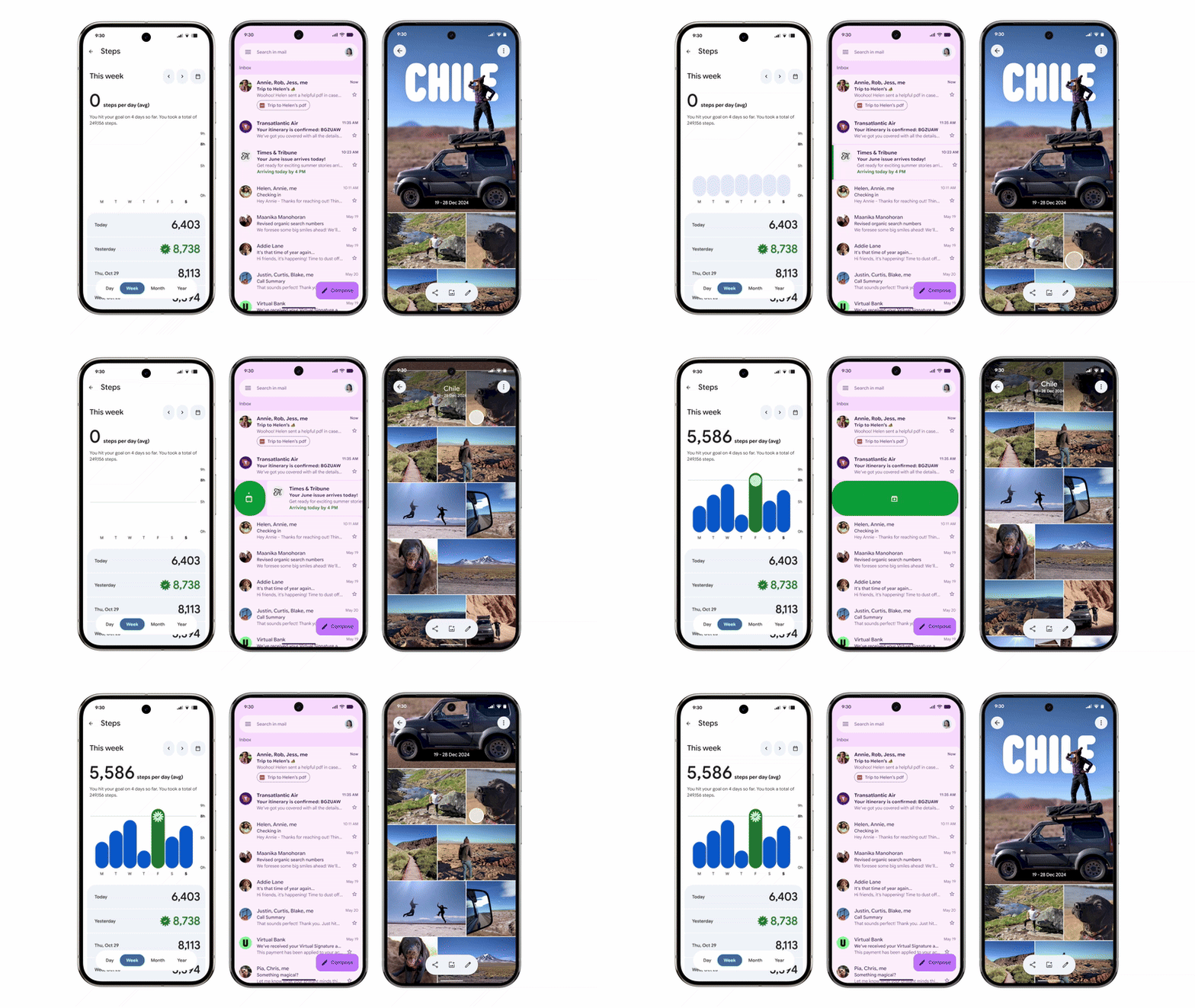 Google has confirmed plans to expand Material 3 Expressive into many of its own applications, including Google Photos, Fitbit and Gmail | GOOGLE PRESS OFFICE
 Google introduced new font options too as part of what it called its "biggest updates in years".
Apple introduced Liquid Glass at its Worldwide Developers Conference last summer. Dubbed the "broadest design update ever," this new aesthetic was rolled-out across all of its devices simultaneously — a first for the company. Liquid Glass was a core part of iOS 26, iPadOS 26, macOS 26, watchOS 26, visionOS 26, and tvOS 26 that adds a translucent quality to elements of the interface, so that it behaves like glass in the real world.
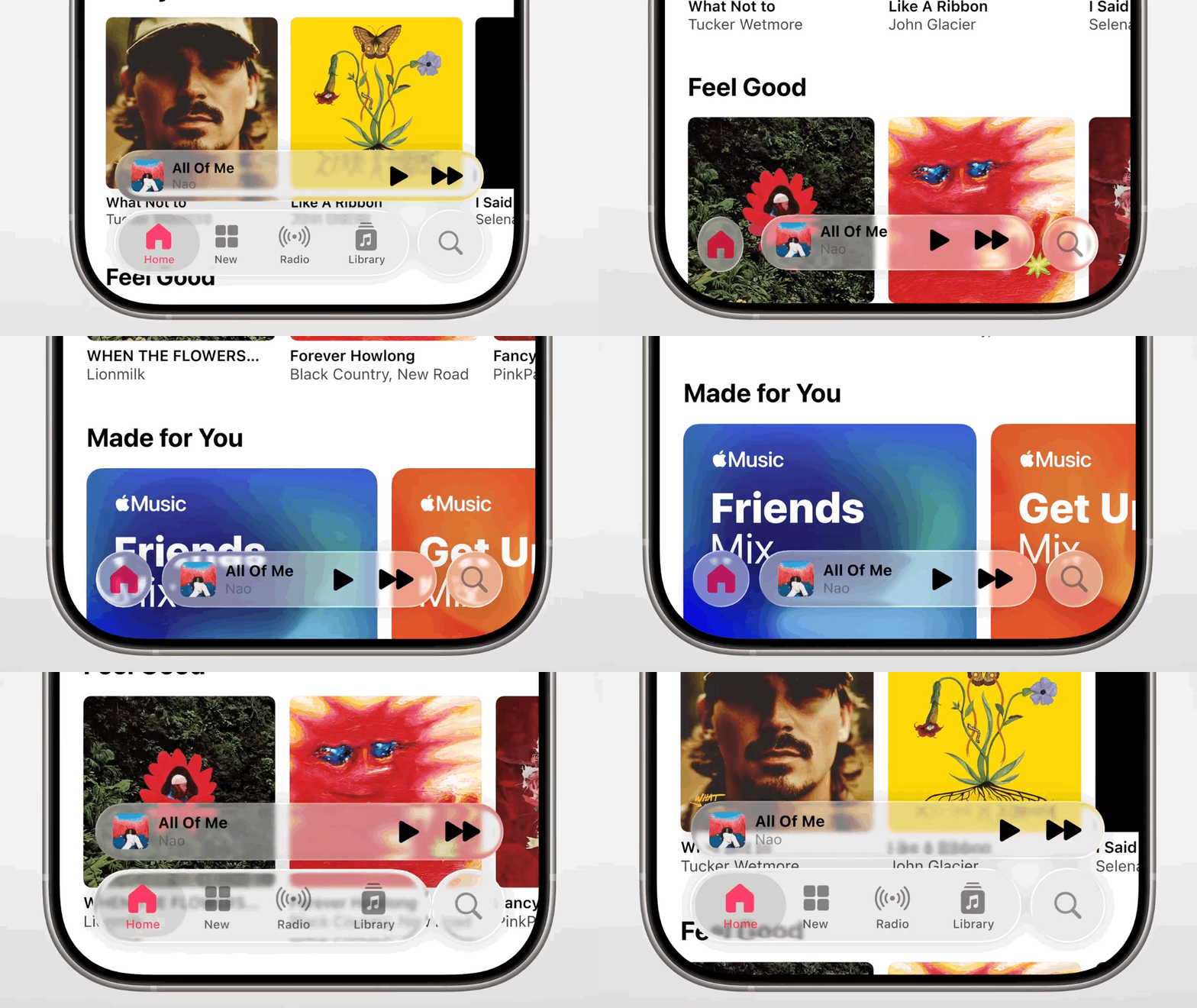 Sharp corners and straight lines have been excised from the new design, which uses circular elements and rounded corners to fit around the curved corners used on the display of modern iPhones, iPads, and Mac | APPLE PRESS OFFICE
 For example, the colour of a menu will intelligently adapt to its surroundings, letting the photographs, videos, webpages, or album artwork seep through. Light refractions will also move and glint as you physically tilt the device in your hand. Sharp edges and straight edges were excised completely from iOS, iPadOS, macOS, and watchOS with the Liquid Glass shake-up. Instead, controls, toolbars, and navigation within apps have been reworked to fit the rounded corners found on every single recent device released by Apple.
Across its new operating systems, Apple has started to tuck away options and settings into these expandable menus. This should clean up the appearance — hiding away the settings that you don't use as frequently. For the first time, you'll be able to expand these menus to see all options at once.
The new design has been a major change for Apple users, but it is not universally loved.
After years of seeing Android and iOS mimick the best features, functionality, and design flourishes that appear on each other's platforms, it's interesting to see such a divergence between these two rival operating systems.