








The banks of the River Thames are bracing themselves for the roar of the crowds, the splash of the oars, and the culmination of months of gruelling early-morning training.
Today, the legendary Boat Race returns to London, reigniting one of the oldest and fiercest rivalries in global sport.
As the crews from the University of Oxford and the University of Cambridge prepare to take to the water, the weight of nearly two centuries of history sits squarely on their shoulders.
But how did this ferocious battle of the blues begin, and why does it continue to capture the nation’s imagination?
TRENDING
Stories
Videos
Your Say
To understand the intensity of the Boat Race, one must look back to its rather gentlemanly origins in 1829.
The concept was born from a friendship between two former Harrow School pupils: Charles Merivale, who went on to study at Cambridge, and Charles Wordsworth, who attended Oxford.
Wordsworth and Merivale decided to set up a challenge between their respective universities.
The terms were simple but laid the groundwork for a sporting phenomenon: "That the University of Cambridge hereby challenge the University of Oxford to row a match at or near London, each in an eight-oared boat during the ensuing Easter vacation."
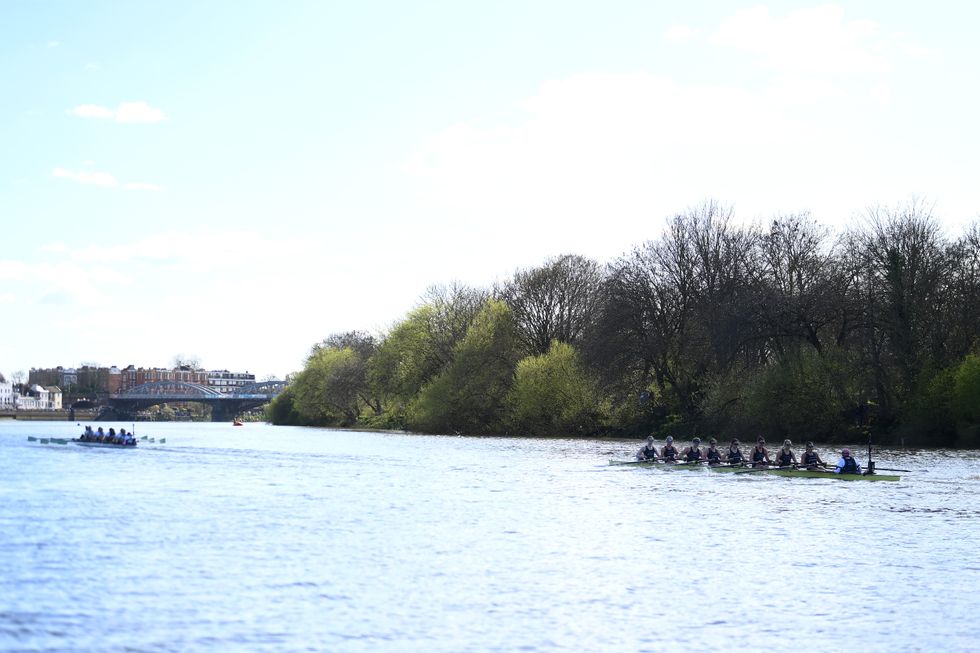
To understand the intensity of the Boat Race, one must look back to its rather gentlemanly origins in 1829
|GETTY
Oxford won that inaugural race, which took place in Henley-on-Thames.
The event proved so popular that it eventually became an annual fixture, moving to its permanent home in London in 1845 to accommodate the massive crowds it attracted.
Today, the battleground is the famous Championship Course.
Stretching over 4.25 miles (6.8 kilometres) of the tidal Thames in South West London, the course runs from Putney to Mortlake.
LATEST SPORTS NEWS:
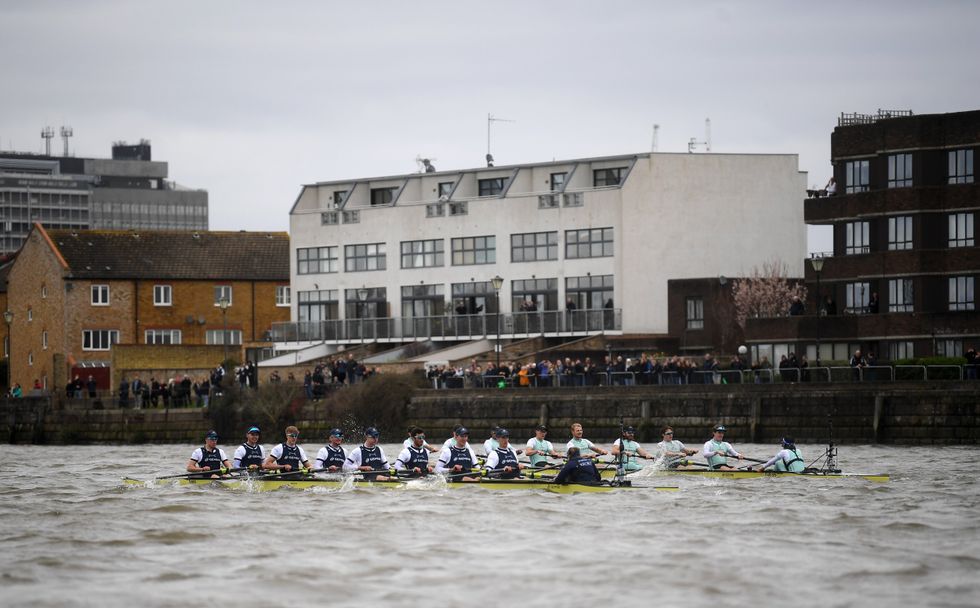
The Boat Race is a significant part of the British sporting calendar
|GETTY
Unlike standard Olympic rowing regattas, which are raced over a straight 2,000-metre course, the Boat Race is a sprawling, unpredictable beast.
Navigating the Championship Course is an immense tactical and physical challenge, heavily dictated by the perilous and ever-changing conditions of the River Thames.
Because the race is deliberately timed to coincide with the incoming flood tide, coxswains must expertly hunt for the fastest-moving streams of water to gain a crucial edge over their rivals.
This complex task is further complicated by the fierce, winding bends of the river, making the initial coin toss for the Middlesex or Surrey starting station a vital strategic advantage depending on the crews' race plan.
As if the currents and curves weren't enough, rowers are constantly at the mercy of the Tideway's notoriously unpredictable weather; rough, choppy waters can develop in an instant, threatening to flood the boats and completely shatter a crew's painstakingly honed rhythm before they even reach the finish line.
The rivalry is also heavily defined by its iconic colours.
Cambridge proudly dons light blue, while Oxford wears the dark blue.
Historically, Cambridge has maintained an edge in the overall men's standings, but the head-to-head record has seen periods of total dominance from both sides.
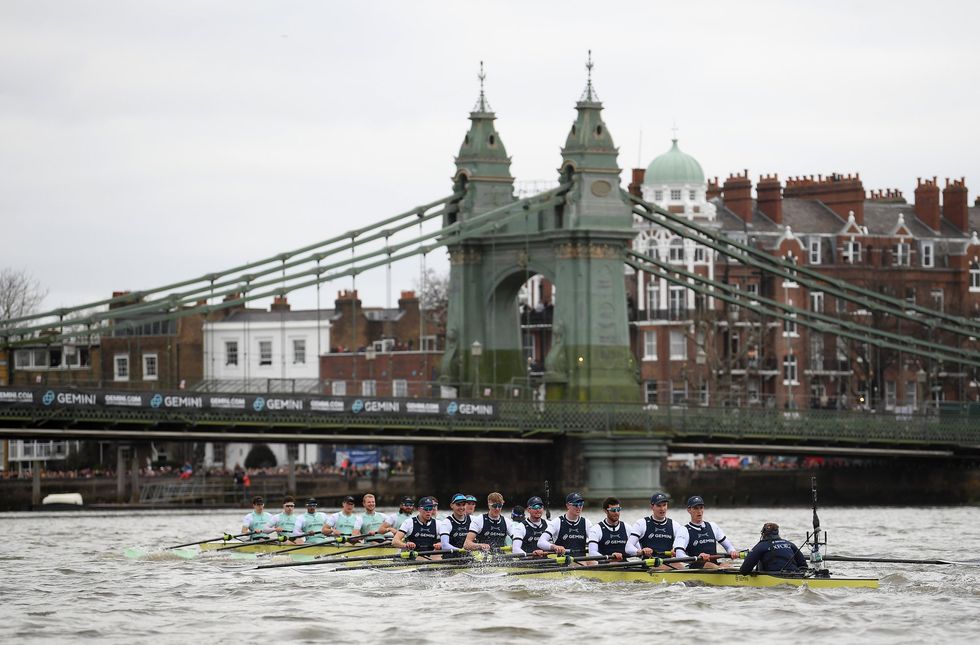
The Boat Race has evolved over the years
|GETTY
Every victory is fiercely protected, and every defeat is a bitter pill to swallow, often prompting an overhaul of training regimens for the following year.
For the athletes, who balance rigorous academic degrees with up to 40 hours of training a week, the race is a strictly amateur pursuit.
There is no prize money. The only reward is absolute sporting immortality within their university and the right to lift the coveted trophy.
While steeped in tradition, the event has evolved.
A major milestone was reached in 2015 when the Women’s Boat Race - which first took place in 1927- was moved to the same day and the same Championship Course as the men's race.
Broadcast to millions globally and attended by hundreds of thousands lining the riverbanks, the event is now a vital double-header that showcases top-tier collegiate athleticism across the board.
As the crews make their final adjustments at the Putney boathouses today, friendships will be temporarily forgotten, and the polite traditions of academia will be left on the shore.
Who comes out on top remains to be seen.