








Nasa's Artemis II mission has achieved a historic milestone, carrying four astronauts on a sweeping trajectory around the Moon's far side before returning them safely to Earth, but what lies ahead for the future of space exploration?
The Orion spacecraft delivered an impressive performance throughout the mission, with the crew capturing stunning imagery that has captivated a fresh generation of space enthusiasts.
Yet despite this triumph, the path to actually setting foot on the lunar surface remains fraught with obstacles.
Circling the Moon, it turns out, represented the straightforward portion of America's lunar ambitions. The genuinely demanding work still lies ahead.
TRENDING
Stories
Videos
Your Say
Whether today's young viewers inspired by these images will eventually live and work on the Moon remains uncertain. The honest assessment, according to experts, is "maybe, maybe not".
Nasa requires lunar landers to transport astronauts to the surface, and the agency has commissioned two private firms for this task: Elon Musk's SpaceX and Jeff Bezos's Blue Origin.
Both companies have fallen significantly behind their original timelines.
A Nasa Office of Inspector General report released on March 10 painted a stark picture of the situation. SpaceX's lunar variant of Starship, standing 35 metres tall, is running at least two years late, with additional delays anticipated.
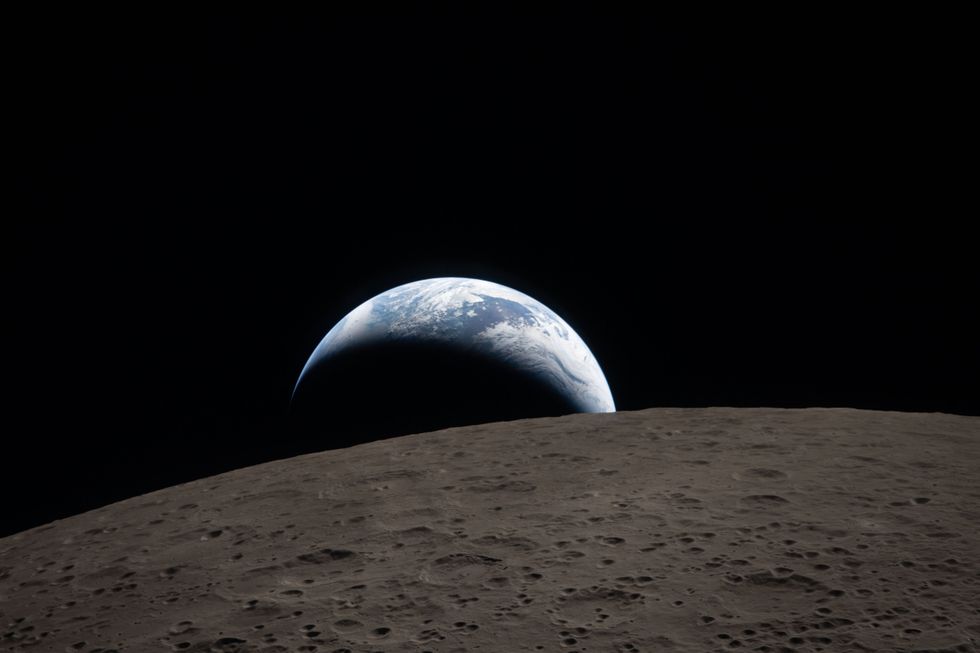
The Nasa target for a manned landing on the Moon remains 2028
|NASA
Blue Origin's more compact Blue Moon Mark 2 lander trails its schedule by a minimum of eight months. Nearly half the concerns raised during a 2024 design assessment remain unaddressed more than twelve months later.
These setbacks pose serious questions about Nasa's ambitious landing schedule.
These new landers differ dramatically from the compact Eagle module that delivered Neil Armstrong and Buzz Aldrin to the surface in 1969. Modern craft must transport substantial infrastructure including equipment, pressurised rovers, and initial base components.
Such heavy payloads demand vast quantities of propellant, far exceeding what any single rocket launch can carry.
LATEST DEVELOPMENTS
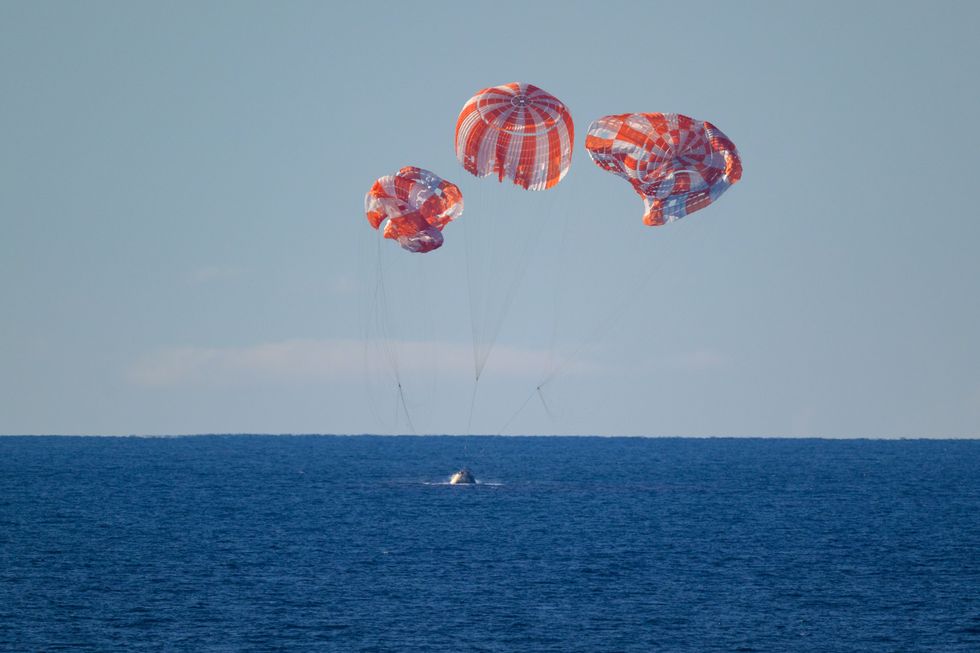
Artemis II successfully splashed down earlier today
|GETTY
Nasa's solution involves an orbital depot circling Earth, replenished by more than ten separate tanker missions over several months. The concept appears elegant on paper but presents formidable technical hurdles.
Maintaining super-cold liquid oxygen and methane in the vacuum of space, then transferring these propellants between vehicles, ranks among the programme's most challenging engineering problems.
"From a physics point of view it makes sense," says Dr Simeon Barber, a space scientist from the Open University. However, he notes that Artemis II itself was delayed twice due to fuelling complications.
"If it's difficult to do in the launch pad, it's going to be much more difficult to do in orbit," he observes.
Nasa has maintained its 2028 target for a crewed lunar landing partly for political reasons. The deadline aligns with President Trump's space policy calling for Americans to return to the Moon by that date, coinciding with the end of his current term.
Independent analysts consider this timeline unrealistic. Nevertheless, Congress has committed billions in taxpayer funding to the effort.
A significant factor driving this urgency is China's rapid advancement in space capabilities. Beijing has declared its intention to land an astronaut on the Moon by approximately 2030.
Should the Artemis schedule slip, as many experts anticipate, China could reach the lunar surface first. The Chinese approach is notably simpler, employing two rockets with separate crew and landing modules while avoiding the complex orbital refuelling that complicates American plans.
Our Standards: The GB News Editorial Charter