










Astronomers have detailed the "huge surprise" they found after looking below the clouds on a distant world.
Scientists used the James Webb Space Telescope to reveal what the weather is like on a distant gas giant named WASP-94A b, nearly 700 lightyears from Earth.
Their observations of the faraway planet revealed a striking atmospheric phenomenon: Every morning is cloudy, while every evening is clear - forever.
The findings, published in the journal Science, provide an unprecedented look at changing conditions on a planet far outside our solar system.
The clouds themselves are composed primarily of magnesium silicate, a mineral found commonly in terrestrial rocks.
Strong winds push them from cooler regions towards hotter areas, where they burn away in the intense heat.
WASP-94A b belongs to a category of worlds astronomers call "hot Jupiters".
The planet completes an orbit around its star in just four Earth days.
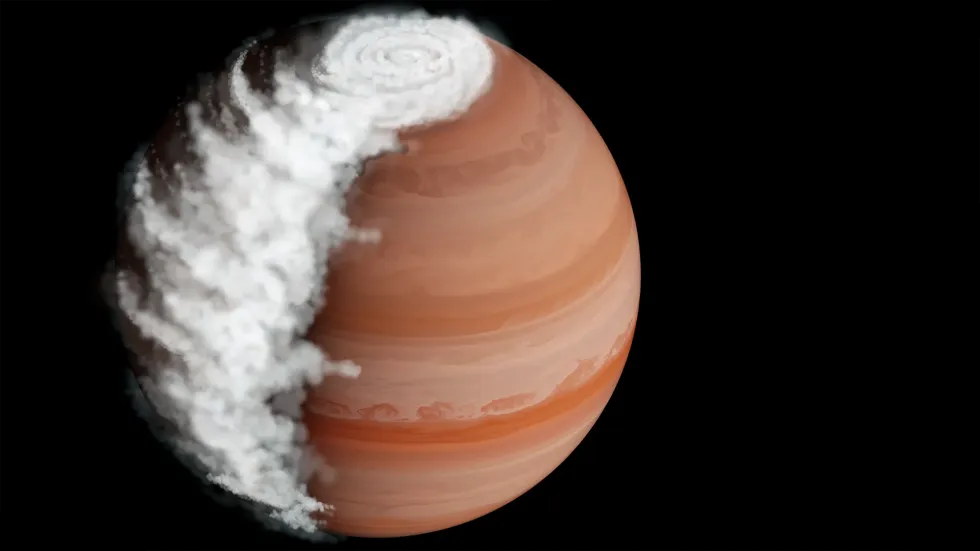
One half of WASP-94A b permanently points towards its nearest star, while the other sits in eternal darkness
|JOHNS HOPKINS UNIVERSITY
On the side which faces its "sun", temperatures can skyrocket past 1,000C.
The world is tidally locked, meaning one hemisphere permanently points towards its nearest star, while the other sits in eternal darkness.
This arrangement creates a fixed boundary between day and night, with permanent "morning" and "evening" zones at the edges.
Researchers found a temperature gap of a staggering 450C between these two regions.
This dramatic difference powers the weather cycle, with clouds forming in the cooler morning zone before being swept towards the scorching evening side.
Professor David Sing of Johns Hopkins University said cloudiness has long frustrated researchers.
SPACE DISCOVERIES - READ MORE:
"I've been looking at exoplanets for 20 years, and general cloudiness has been a thorn in our side. We've known for quite a while that clouds are pervasive on hot Jupiter planets, which is annoying because it's like trying to look at the planet through a foggy window," he said.
"Not only have we been able to clear the view, but we can finally pin down what the clouds are made out of and how they're condensing and evaporating as they move around the planet."
The scale of variation caught researchers off guard.
"It was a huge surprise. People have expected some differences, like it's cooler in the morning than the evening — that's something natural that we experience here on Earth," Prof Sing added.
"But what we saw was a real dichotomy between the weather on both sides of the planet, and huge differences in cloud coverage, and that changes our whole picture of the planet."
The discovery also resolved puzzling earlier readings from the planet.
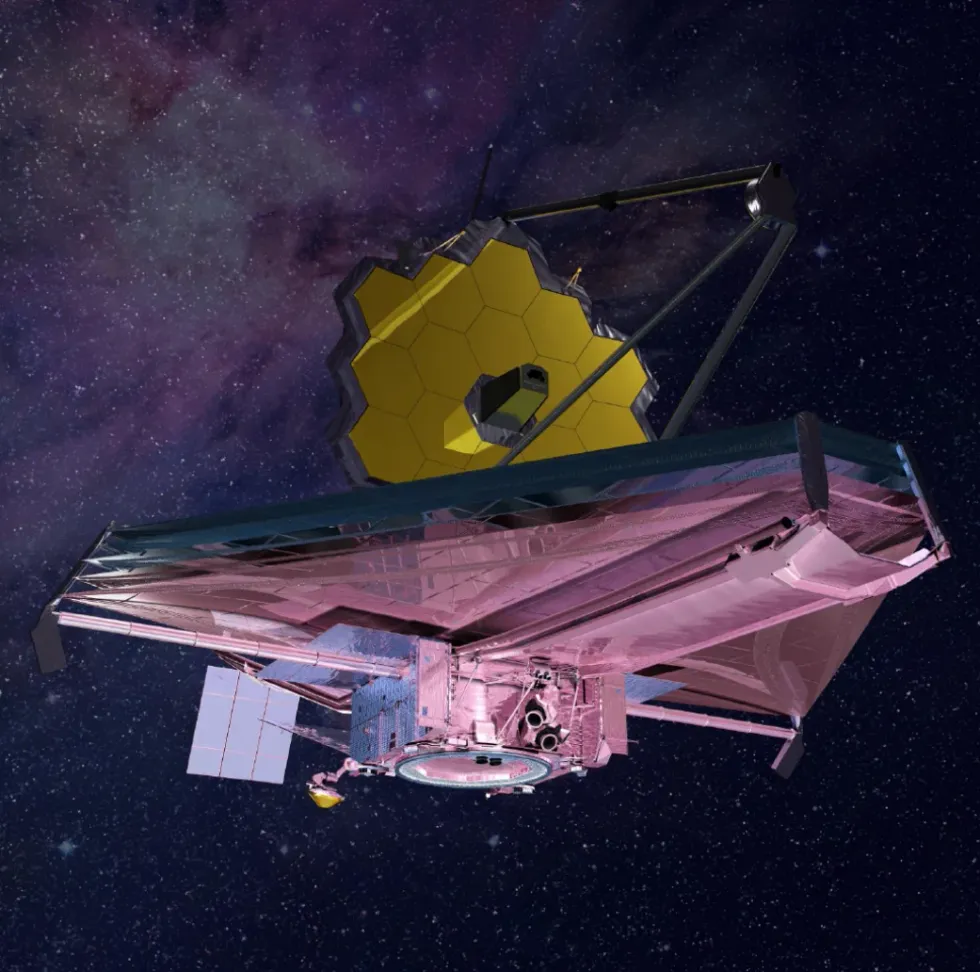
Scientists used the James Webb Space Telescope to reveal what the weather is like on a distant gas giant
|NASA
Previous observations had blended the cloudy and clear regions together, producing unexpectedly high measurements of heavier elements like oxygen and carbon.
Separating morning from evening data made the atmospheric composition far more consistent with existing theories of how planets are formed.
Sagnick Mukherjee, who led the study, explained the difference in telescope capabilities.
"With the Hubble telescope, when we used to do this type of observation, we got an average view of the whole planet with data from the clouds and the atmosphere squished together and indistinguishable," he said.
"This approach with the JWST lets us localise our observations, which helped us see the cloud cycle," he added.
The team has also detected similar patterns on two other hot gas giants, WASP-39 b and WASP-17 b.