









A mysterious was seen rising through the night sky in the Phillipines after a green fireball "hit" an erupting volcano.
Remarkable footage has emerged depicting the vivid green meteor bursting apart above an active volcano on Sunday evening.
The space rock, described as "visually striking" by the Philippine Space Agency, appeared over Mount Mayon at 10.33pm local time on May 25.
Mount Mayon sits in Albay province on Luzon island in the central region of the south east Asian country.
The volcano rises to 8,081 feet above sea level and has been in an eruptive state since early January, according to the Smithsonian Institution's Global Volcanism Program.
Two separate livestreams trained on the volcano's activity recorded the brilliant flash, which persisted for slightly longer than one second.
The Philippine Institute of Volcanology and Seismology (PHIVOLCS) captured black-and-white footage showing the luminous event near the summit, where molten lava was already providing light.
A colour recording from livestream operators AfarTV displayed both the crimson glow of flowing magma and the emerald streak of the descending meteor.
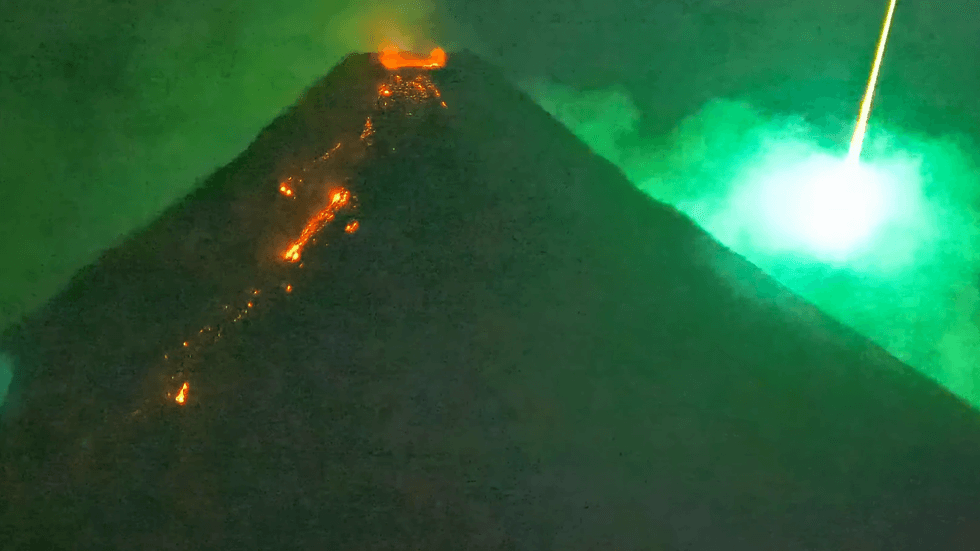
Remarkable footage has emerged depicting the vivid green meteor bursting apart above an active volcano on Sunday evening
|YOUTUBE/AFARTV
A smaller light was then seen rising through the night sky after the flash.
However, that flash is thought to have been a satellite rather than anything connected to the space rock.
Initial statements from PHIVOLCS suggested the meteor had struck the volcano's northern slopes, prompting misleading content to spread across social media platforms.
The agency subsequently issued a correction following further analysis.
"Our review of seismic, infrasound and additional camera footage around the volcano indicate that the meteor disintegrated while in the atmosphere and did not strike the slopes of Mayon," the updated statement read.
SPACE - READ THE LATEST:

A small ascending light visible near the meteor's path is thought to be a satellite
|YOUTUBE/AFARTV
Had the meteor actually impacted the mountain at the moment it became visible, estimates from the Philippine Information Agency suggest the force could have equalled 7,500 tonnes of dynamite.
Such an impact would likely have caused substantial rockfalls detectable by seismic monitoring equipment surrounding the volcano, according to experts.
The simultaneous display of volcanic and celestial fire was not linked and is merely a coincidence.
Fireball meteors form when asteroids enter Earth's atmosphere and survive initial reentry before being consumed by intense frictional heat.
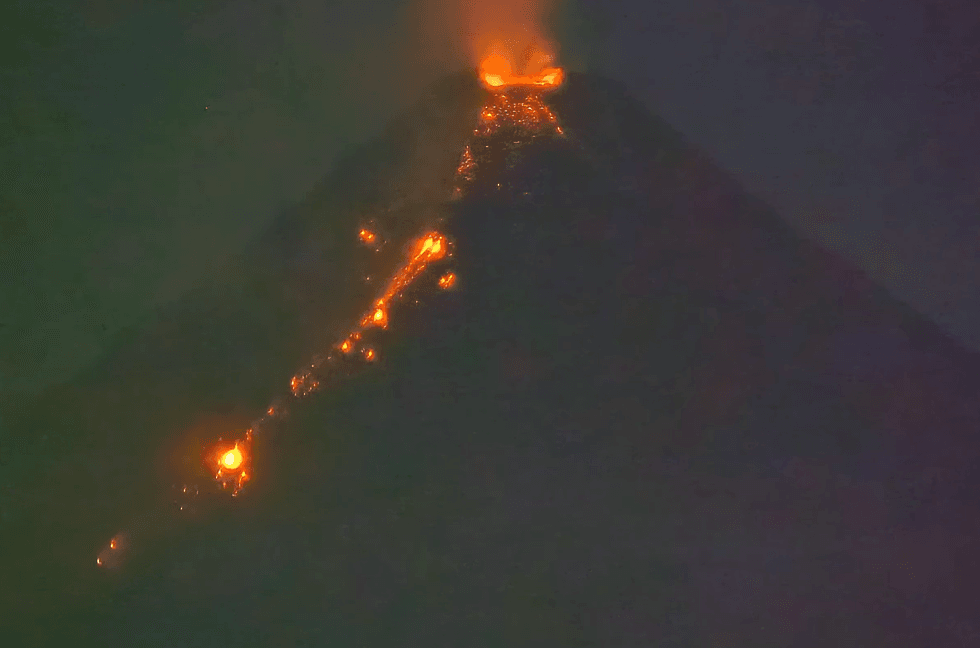
Mount Mayon sits in Albay province on Luzon island in the central region of the south east Asian country
|YOUTUBE/AFARTV
"As [fireballs] plunge through the atmosphere at extreme speeds, friction heats them so intensely that they vapourise," the Philippine Space Agency explained.
"This heat also ionizes the air molecules around them, creating the bright, glowing streak we see as 'shooting stars.'"
This typically happens between 37 and 62 miles above the Earth's surface.
The distinctive green colouration of this particular fireball was most likely caused by high nickel content within the asteroid, based on previous sightings.
Our Standards: The GB News Editorial Charter