










Unusual circular formations on Venus could unlock secrets about the planet's mysterious interior.
Dr Anna Gulcher, an earth and planetary scientist at Germany's University of Freiburg, has developed new 3D models of these structures, known as coronae.
Her team analysed decades-old radar data from Nasa's Magellan spacecraft, which stopped operating in 1994.
The research was presented at the European Geosciences Union's 2026 General Assembly in Vienna.
"They are huge circles of fracture systems that we think are basically the surface expression of a plume of hot material moving upwards from the interior of the planet," Dr Gulcher said at the conference.
The updated database now catalogues 741 coronae across Venus.
These concentric fracture systems vary dramatically in size, spanning from 60 to more than 2,000 kilometres across.
"We think they are formed by something circular in shape from the interior," Dr Gulcher explained.
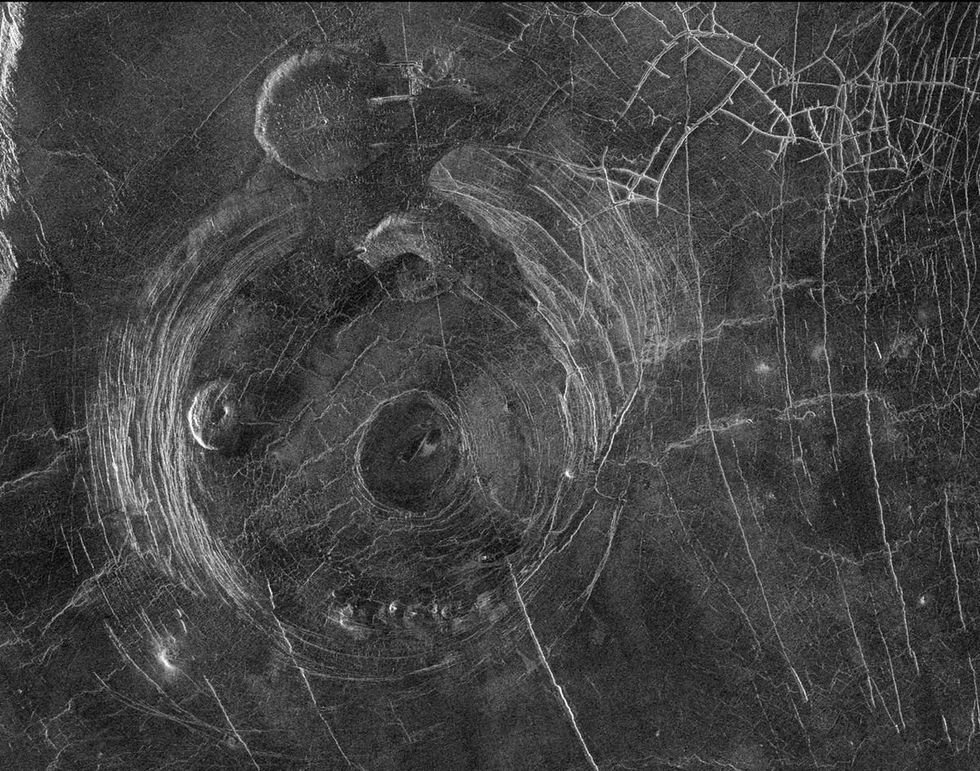
Dr Anna Gulcher analysed decades-old radar data from Nasa's Magellan spacecraft - which showed 'earthlike' rings on the surface of our space neighbour
|NASA
Hot magma rising from deep within the planet pushes the crust upward, creating the distinctive ring patterns.
The process driving this activity is mantle convection.
"It's the cycle of upward and downward movement of the mantle over a very long time scales," Gulcher said.
By combining gravity measurements with map information and computer simulations, the research team identified possible warm mantle upwellings beneath 52 of the patterns.
SPACE - READ THE LATEST:
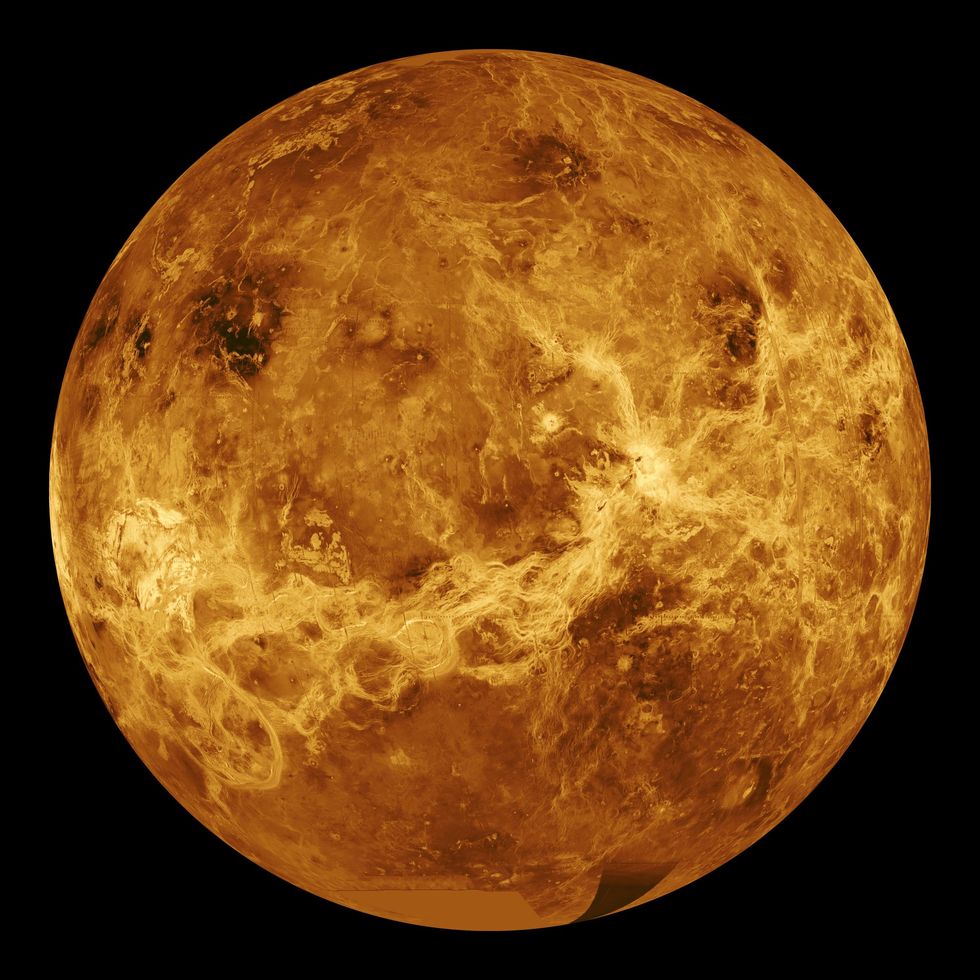
Scientists could shed light on what happens inside Venus thanks to Dr Gulcher's work
|NASA
Though scientists remain unsure whether Venus ever experienced plate tectonics like Earth.
Our planet's tectonic system has remained stable for at least three billion years.
"This global destruction of material and formation of material allowed our planet to lose a lot of heat and also to recycle material back into the mantle," Gulcher said.
"On Earth, carbon is recycled back into the mantle very efficiently," she added.
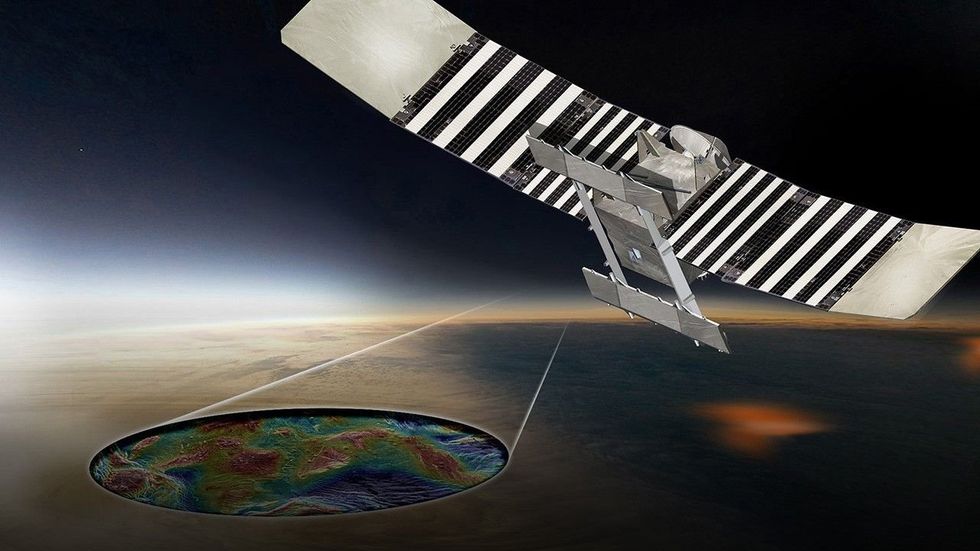
The Veritas Venus mission will look into the mysterious coronae in greater detail
|NASA
Large water oceans made Earth's rocks weaker and more flexible, enabling them to break into separate moving plates.
Venus, which may never have possessed substantial oceans, likely experienced only limited carbon recycling through volcanic and surface processes.
Despite these differences, Venus displays features remarkably similar to our own world.
"We see structures on Venus that are so earthlike yet also show a few very important differences," Dr Gulcher observed.
"With the available data, we don't fully understand how it can look so similar but be so different," she said.
Future space missions promise to shed light on these puzzles.
Two journeys, Veritas and EnVision, will examine coronae with far greater precision, capturing detailed surface and subsurface structures alongside improved topographic and gravity measurements.
Current gravity data may miss many active tectonic signals, suggesting volcanic and geological activity on Venus could be more widespread than scientists can currently see.