










Nasa engineers transmitted commands to Voyager 1 to shut down a key component ahead of a risky energy-saving procedure dubbed "the Big Bang".
Scientists sent a signal to the vessel to power down its Low-Energy Charged Particle (LECP) experiment, an instrument that has monitored ions, electrons and cosmic rays almost continuously since the probe's 1977 launch.
The decision marks another difficult step in managing the ageing spacecraft's dwindling energy reserves as it travels through interstellar space.
However, agencies have insisted the team remains committed to keeping both Voyager spacecraft operational for as long as feasible.
TRENDING
Stories
Videos
Your Say
Kareem Badaruddin, Voyager mission manager at Nasa's Jet Propulsion Laboratory said: "While shutting down a science instrument is not anybody's preference, it is the best option available.
"Voyager 1 still has two remaining operating science instruments, one that listens to plasma waves and one that measures magnetic fields.
"They are still working great, sending back data from a region of space no other human-made craft has ever explored."
Voyager 1 holds the distinction of being humanity's most distant artificial object, currently positioned more than 15 billion miles from Earth as it moves through the void between stars.
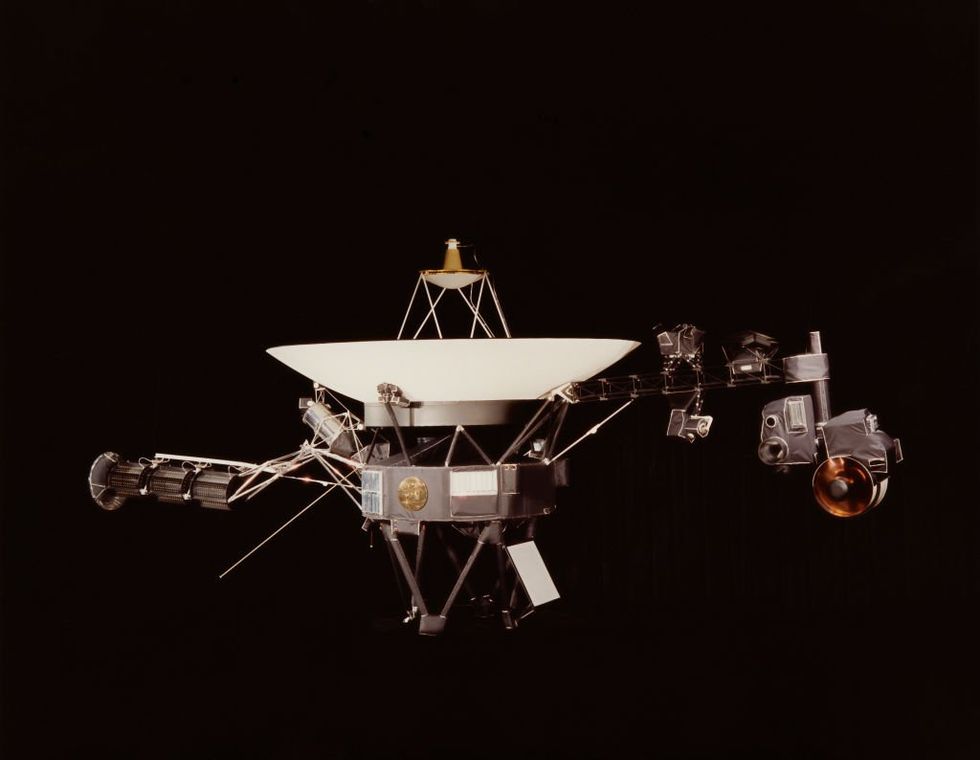
Voyager 1 has been forced to shut a component
|GETTY
The spacecraft departed Earth nearly five decades ago with an initial brief to examine Jupiter and Saturn, but its mission was repeatedly extended as it continued functioning far beyond expectations.
In 2012, the probe achieved a historic milestone by crossing into interstellar space, becoming the first human-made object to transmit data from beyond our solar system's boundaries.
Both Voyager 1 and its sibling Voyager 2 draw their power from radioisotope thermoelectric generators, devices that convert heat from decaying plutonium into electrical energy.
However, this power source diminishes by approximately 4 watts annually, creating an increasingly precarious situation for mission controllers.
LATEST DEVELOPMENTS
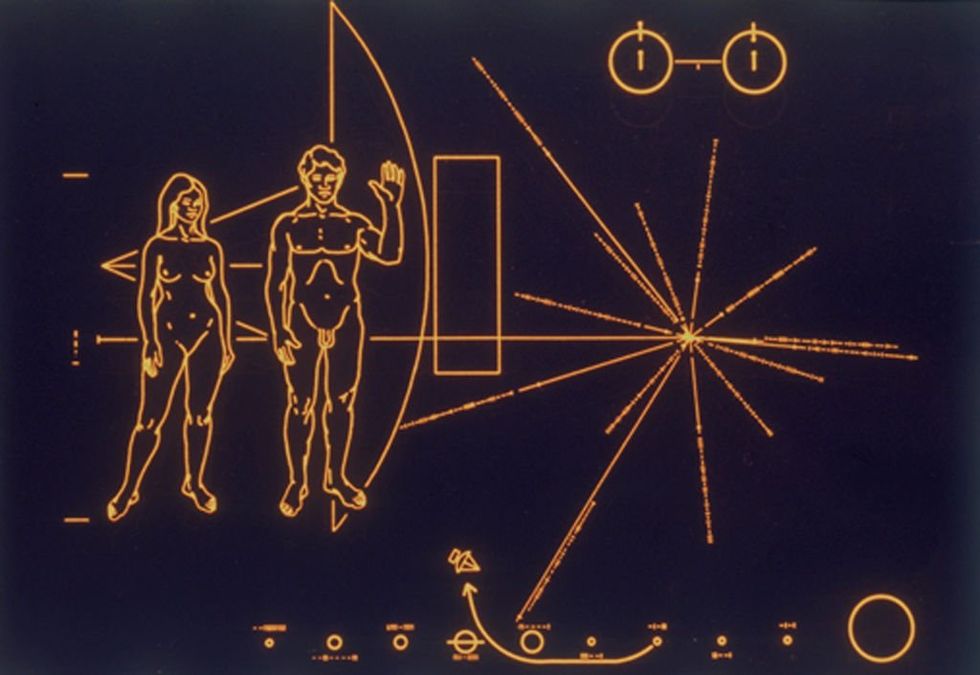
The universal message of friendship inscribed on the side of Voyager 1
|GETTY
Power margins have become critically thin, forcing engineers to progressively disable heaters and scientific equipment whilst ensuring the spacecraft remain warm enough to prevent their fuel lines from freezing.
The urgency to act intensified following an unexpected power drop during a routine roll manoeuvre on February 27.
Mission controllers grew concerned any further decline could activate Voyager 1's undervoltage fault protection system, an automated safeguard designed to shut down components independently to protect the probe.
Recovering from such an automatic fault would be a lengthy process carrying additional risks, prompting engineers to take pre-emptive action rather than allow the spacecraft to make the decision itself.
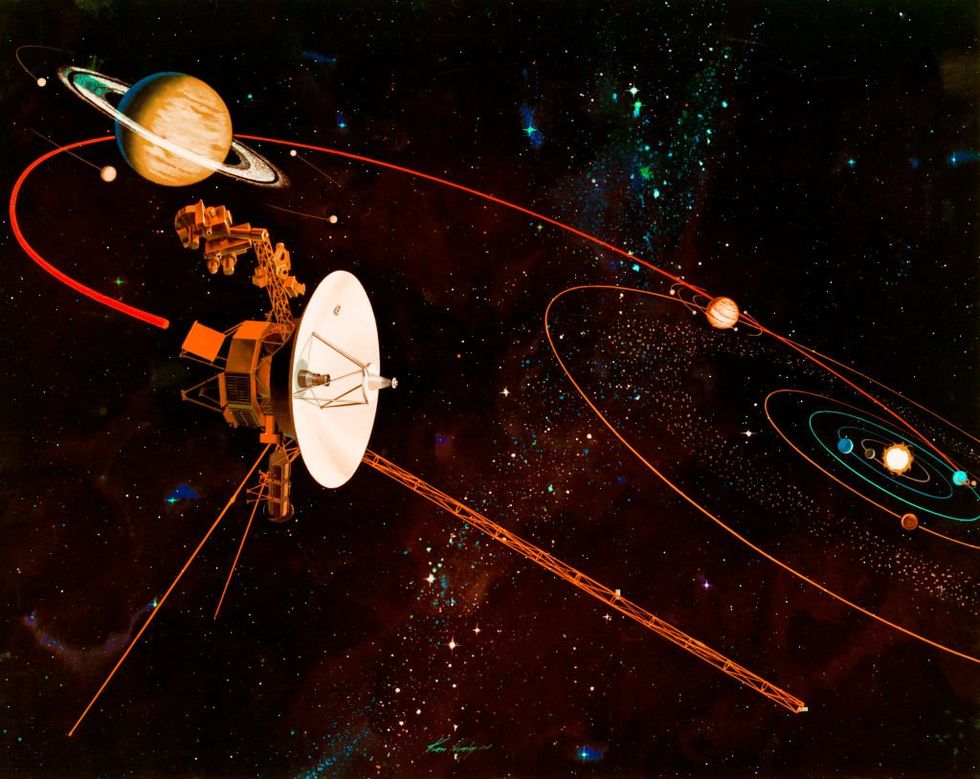
Voyager 1 and 2 are journeying through the stars
|GETTY
The LECP shutdown means just two of Voyager 1's original ten scientific instruments continue to function, whilst its twin Voyager 2 retains three operational instruments.
Notably, Voyager 2's own LECP instrument was deactivated in March 2025.
The science and engineering teams had agreed years ago on the sequence in which systems would be powered down as available energy declined.
Engineers are now preparing an ambitious energy-saving procedure dubbed "the Big Bang" they hope will extend operations for both Voyager spacecraft.
The plan involves simultaneously replacing multiple powered components with lower-power alternatives, allowing the probes to maintain sufficient warmth to continue collecting scientific data.
JPL intends to trial the procedure on Voyager 2 during May and June, as that spacecraft has greater power reserves and sits slightly closer to Earth. Should those tests prove successful, the more hazardous attempt on Voyager 1 would proceed no earlier than July.
The shutdown of the LECP is expected to buy roughly one year of additional operational time, but mission managers are hopeful the Big Bang procedure could yield further gains.
Encouragingly, engineers opted to keep a small half-watt motor within the LECP system running, preserving the possibility of reactivating the instrument should sufficient power become available in future.
Our Standards: The GB News Editorial Charter