










Humans could use an enormous magnet to protect the Earth from dangerous asteroids.
The method, dubbed non-contact orbital velocity adjustment (Nova), would use the magnet to gently pull the hazardous space rocks apart.
Gunther Kletetschka, who works at the University of Alaska Fairbanks, unveiled the concept at the Lunar and Planetary Science Conference in Texas earlier this month.
The proposed spacecraft would feature an enormous magnet constructed from superconducting wire, measuring approximately 20 metres across.
TRENDING
Stories
Videos
Your Say
A nuclear fission reactor would supply the necessary power to operate this colossal electromagnetic device.
Small thrusters would maintain the craft's position as it orbits the target asteroid, keeping it at a distance of roughly 10 to 15 metres from the surface.
Should the asteroid comprise a single solid mass of iron, the magnetic field could theoretically drag it directly off its collision course with Earth.
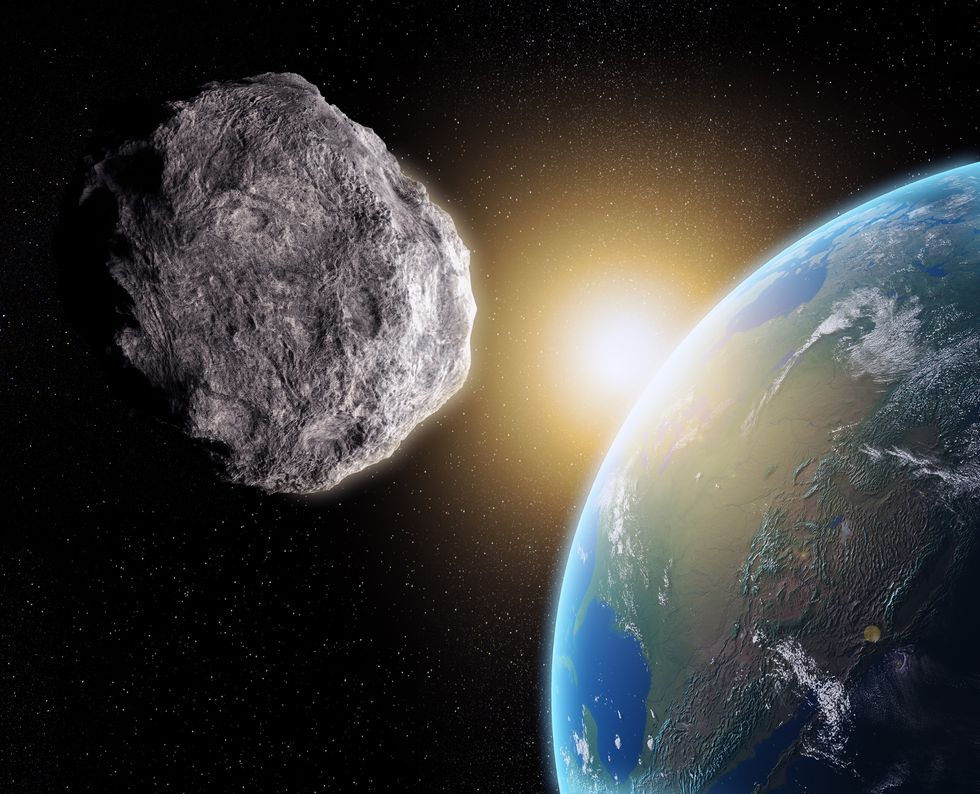
Humans could use an enormous magnet to protect the Earth from dangerous asteroids
| GETTYHowever, the vast majority of asteroids are not solid chunks but rather loose collections of smaller rocks bound together by weak gravitational forces, known as rubble piles.
"Because we have this rubble pile-like structure with essentially zero tensile strength, we cannot efficiently push on the whole body because it's like pushing on one boat among many boats on the ocean," Mr Kletetschka explained during his presentation.
Conventional kinetic impactors risk shattering such fragile bodies into numerous pieces, potentially creating multiple fragments hurtling towards Earth.
LATEST DEVELOPMENTS

Gunther Kletetschka unveiled the concept at the Lunar and Planetary Science Conference in Texas earlier this month
|X
The Nova system circumvents this danger by gradually extracting rocks from the pile and trapping them magnetically within the coil's centre.
Each captured fragment enhances both the spacecraft's mass and magnetic strength, making subsequent extractions progressively easier.
The scientist applied his calculations to asteroid 2024 YR4, a body measuring less than 70 metres in diameter that initially appeared to threaten Earth or the moon in 2032 before subsequent observations confirmed it would pass harmlessly.
Deflecting this relatively modest target would require a minimum of 170 days of continuous magnetic operations.
"This electromagnetic deflection is plausible, but we have critical uncertainties," Mr Kletetschka acknowledged, citing unknown iron content and the unprecedented challenge of manoeuvring a spacecraft so close to an asteroid for extended periods.
Nevertheless, he argued expanding humanity's planetary defence capabilities carried essentially no risk of exacerbating any threat.
Our Standards: The GB News Editorial Charter