










The Department for Work and Pensions (DWP) has confirmed five major benefits will be scrutinised for fraud and error during the 2026/27 financial year as part of a wider Government crackdown on incorrect welfare payments.
Universal Credit, Housing Benefit for pension-age claimants, Pension Credit, the state pension and Personal Independence Payment (PIP) have all been included in the department’s latest review programme.
The results of the assessment are expected to be published in May 2027 following analysis of payment accuracy and potential fraudulent claims across the welfare system.
The announcement follows publication of the DWP’s Fraud and Error in the Benefit System report for the year ending April 2026.
According to the department’s figures, Universal Credit continued to account for the largest proportion of benefit overpayments.
The DWP estimated that £9.5billion in Universal Credit payments had been overpaid during the period, representing 10.5 per cent of total spending on the benefit.
By comparison, state pension recorded the lowest overpayment rate across the system at 0.2 per cent, equivalent to £230million.
Labour has also granted the DWP expanded powers to examine bank account information as part of efforts to tackle benefit fraud and payment errors.

DWP will scrutinise five major benefits for fraud and error as new bank account powers come into force
|GETTY
Under the new system, the department can issue an Eligibility Verification Notice to banks and financial institutions requiring them to provide specific customer information.
Financial institutions receive an Eligibility Verification Notice are legally required to comply with the request.
The measures have prompted criticism from campaign organisations concerned about privacy and state surveillance.
Big Brother Watch has described the new regime as "Orwellian" and "dystopian" amid concerns over the scope of the powers granted to the department.
LATEST DEVELOPMENTS
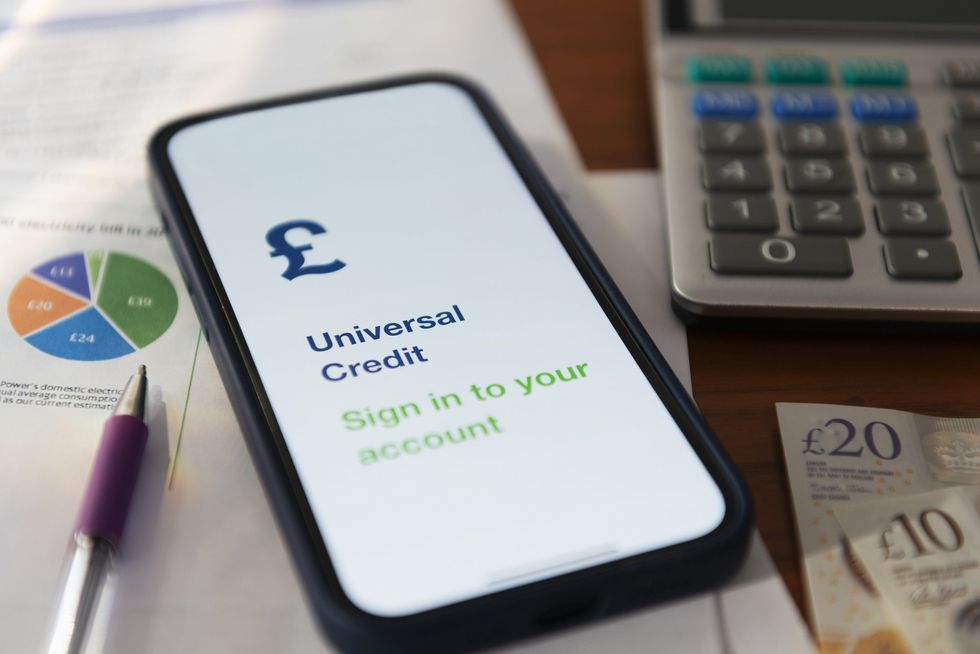 Universal Credit claimants rise to record 8.3 million as Labour faces welfare pressure | GETTY
The DWP has since published guidance detailing the exact information financial institutions may be compelled to provide when served with a notice.
The department said the measures are intended to help identify potential signs of fraud within the benefits system as concerns continue over rising welfare costs.
Under the guidance, banks may be required to hand over five categories of information linked to specific accounts.
These include the account sort code, account number, the name of the account holder and their date of birth.
Financial institutions may also be required to provide information demonstrating whether an account meets particular eligibility indicators set out by the DWP.
This could include evidence showing savings exceeding a specified threshold or records indicating that an account has been accessed abroad for consecutive periods.
The powers are particularly relevant for Universal Credit claimants because the benefit carries an upper savings threshold of £16,000.
Banks could therefore be instructed to identify accounts holding balances above that level where eligibility concerns arise.
The DWP said the published guidance was intended to provide greater clarity about the scope of the new powers following criticism from campaign groups and charities.
Disability charity Sense has warned that fraudulent claims remain uncommon among those receiving disability-related benefits.
Evan John, policy adviser at the organisation, told The Daily Record: "Fraud is very uncommon among people claiming disability benefits, with the vast majority of funds being used as intended: offsetting the additional costs that come with being disabled, and enabling disabled people to afford the essentials.
"Benefits are an absolute lifeline for disabled people with complex needs."
The charity has urged ministers to recognise the role disability payments play in supporting vulnerable households and to avoid introducing further reductions to support during the current parliament.
PIP currently provides between £121.20 and £778.40 every four weeks to more than 3.9 million claimants across England and Wales.
Our Standards: The GB News Editorial Charter