










Scientists have discovered "cavity" of cosmic radiation close to the moon in a finding that could make lunar exploration safer for astronauts.
The research, drawing on measurements from China's Chang'e-4 lander, was published yesterday in Science Advances.
Researchers found that galactic cosmic ray levels drop during the moon's local morning hours, roughly a few hours following sunrise on the lunar surface.
This radiation reduction could prove significant for upcoming crewed missions, including Nasa's Artemis II, which may launch as early as April 1.
The discovery upends previous scientific thinking that cosmic rays spread uniformly through the space between Earth and the moon once they passed our planet's magnetosphere.
Instead, Earth's magnetic field appears to influence regions of space much further away than researchers had thought.
Robert Wimmer-Schweingruber, a professor at Kiel University's Institute of Experimental and Applied Physics in Germany, told Live Science: "I had not expected to see this 'shadow' or cavity."
"It makes absolute sense in retrospect, but I was very skeptical when I first saw this result," he added.
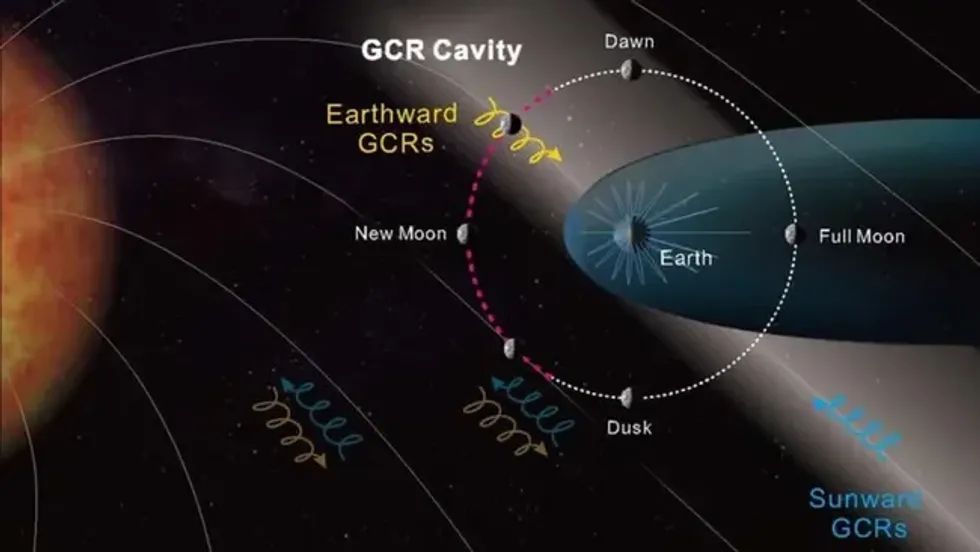
Researchers found that galactic cosmic ray levels drop during the moon's local morning hours
|SHANG ET AL SCIENCE ADVANCES
A research team examined data spanning 31 lunar cycles, gathered between January 2019 and January 2022.
They concentrated on periods of low solar activity, when galactic cosmic rays dominated the radiation measurements.
The Lunar Lander Neutron and Dosimetry instrument aboard Chang'e-4 detected protons across two energy bands.
Lower-energy protons, ranging from 9.18 to 34.14 mega-electron-volts, fell by approximately 20 per cent during lunar mornings in the waxing gibbous phase.
SPACE - READ THE LATEST:
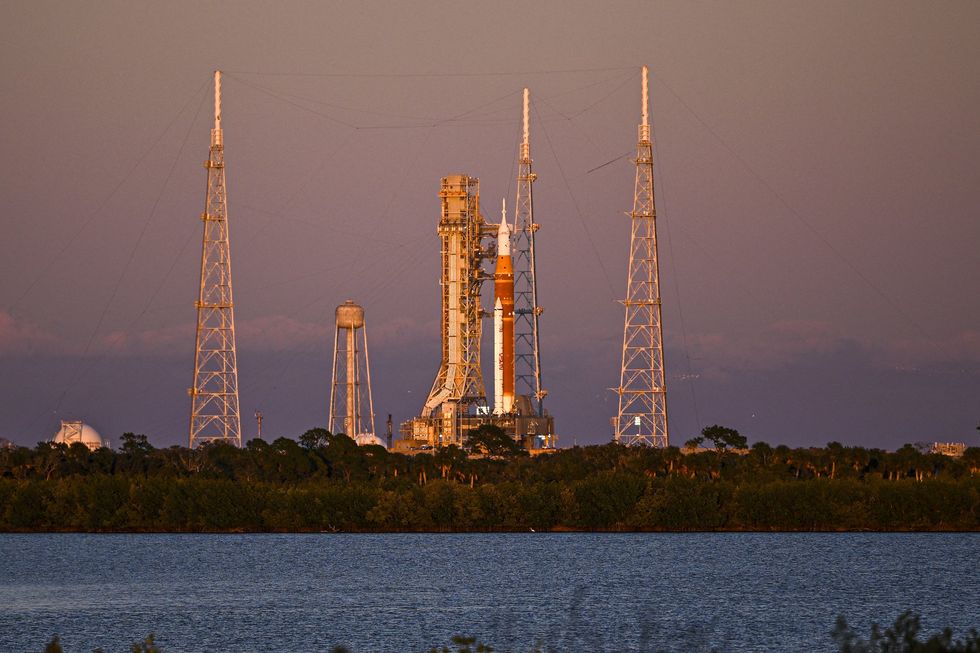
The discovery could prove significant for upcoming crewed missions, including Nasa's Artemis II
| GETTYComputer simulations of proton trajectories through the moon's orbital path confirmed the existence of this cavity.
The team believes Earth's magnetic field blocks some high-energy protons, creating this protected zone.
"Basically this result means that the Earth's magnetosphere influences space even beyond its extension," Prof Wimmer-Schweingruber said.
Cosmic rays represent one of the most serious radiation threats facing astronauts venturing beyond low Earth orbit.
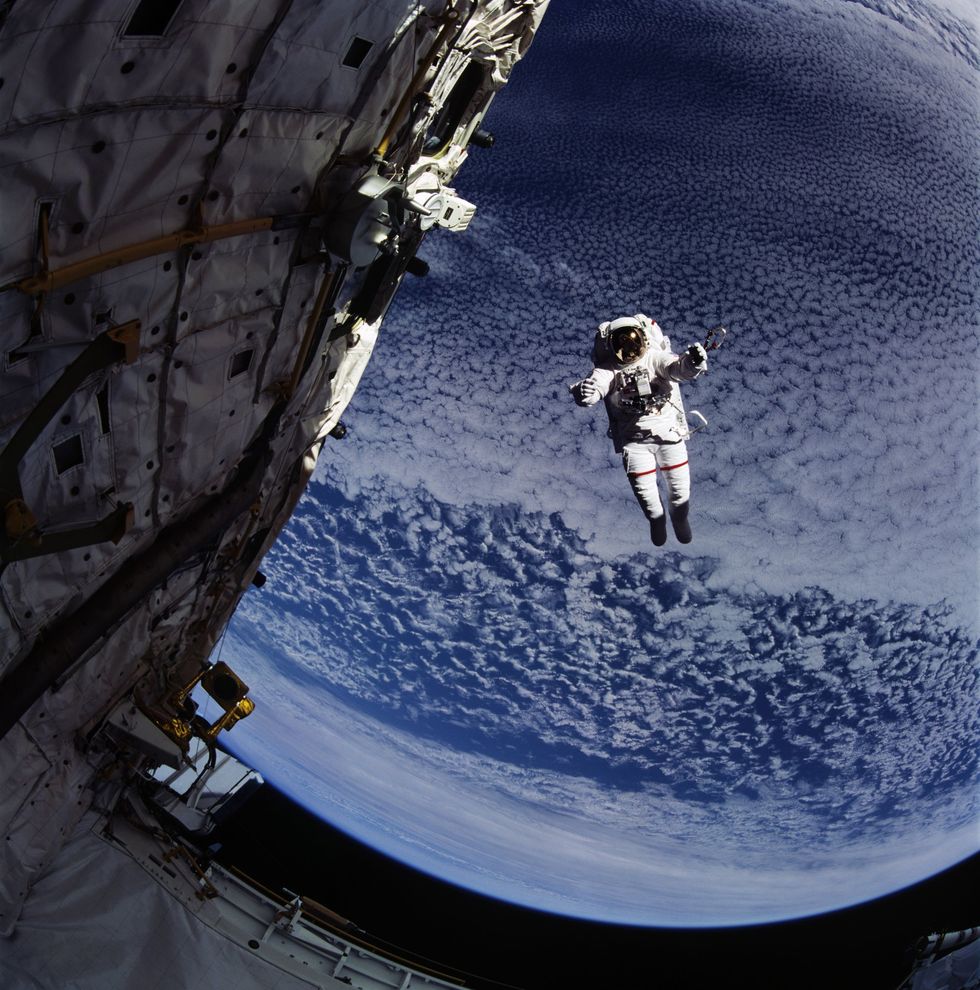
Cosmic rays represent one of the most serious radiation threats facing astronauts venturing beyond low Earth orbit
|GETTY
These energetic particles can pass through spacecraft hulls and human tissue, damaging DNA and raising cancer risks.
Prof Wimmer-Schweingruber noted that forthcoming lunar landings will likely target polar regions, which can receive constant sunlight.
Morning excursions could cut astronauts' skin radiation exposure by roughly 20 per cent compared with typical lunar levels.
"It's best for astronauts to venture out onto the lunar surface in the local morning hours," the professor added. "Just like for humans on Earth!"
Our Standards: The GB News Editorial Charter