










British researchers are following up on the success of Artemis II by preparing to launch a group of tiny worms into orbit aboard the International Space Station (ISS).
The microscopic creatures, measuring just one mm in length, will travel to the station as part of a UK-led scientific endeavour aimed at supporting humanity's ambitions to establish a lasting presence on the Moon.
Dozens of these minuscule organisms were originally set to depart from Kennedy Space Center in Florida on Wednesday, April 8, embarking on their own historic journey shortly after Nasa's return to the Moon launched last week.
That launch has now been delayed by two days to Friday, April 10.
TRENDING
Stories
Videos
Your Say
Astronauts stationed on the ISS will observe how these organisms react to microgravity and the extreme environment beyond Earth's atmosphere.
Prolonged journeys through space take a considerable toll on the human body, triggering a range of serious health complications, including the deterioration of bones and muscles, as well as problems impacting vision.
However, the most concerning is the heightened exposure to cosmic radiation, which can cause damage at the genetic level and significantly increase the likelihood of developing cancer.
By examining how these worms survive and adapt under such punishing conditions, scientists hope to uncover the biological processes that could ultimately shield astronauts from harm during lengthy missions.
The research aims to address one of the most pressing obstacles facing extended human exploration beyond low Earth orbit.
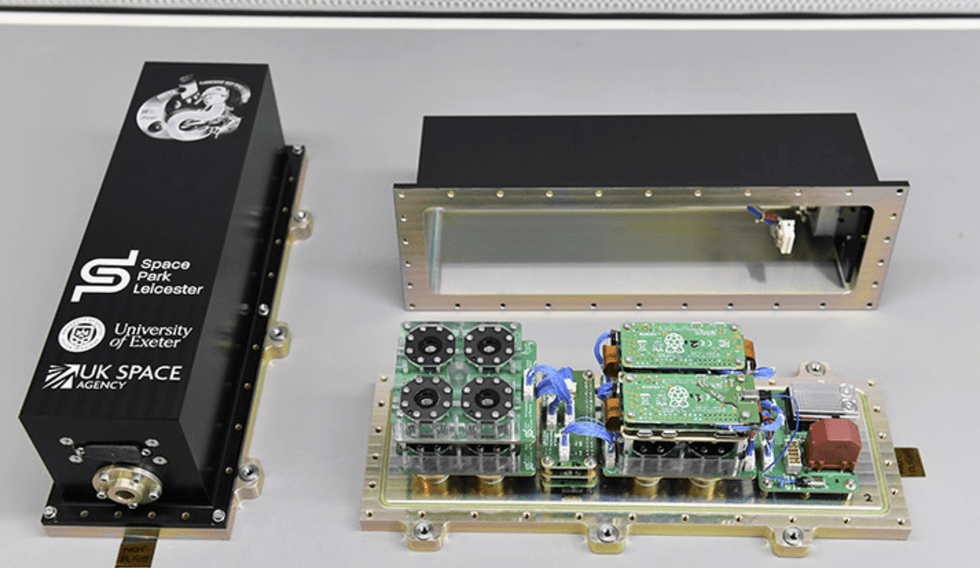
The capsule the worms will be contained in
|UNIVERSITY OF LEICESTER
The worms will initially be housed within a compact laboratory pod weighing approximately 3kg once they arrive at the space station.
Following this initial phase inside the ISS, a robotic arm will position the experiment on the station's exterior, directly exposing the creatures to the vacuum of space.
For up to 15 weeks, the tiny organisms will endure not only microgravity but also the full force of cosmic radiation—conditions that closely mirror what astronauts would face during deep space missions.
This pioneering study has been spearheaded by the University of Exeter, with the experimental equipment designed and constructed at Space Park Leicester by the University of Leicester. The UK Space Agency has provided funding for the entire project
LATEST DEVELOPMENTS
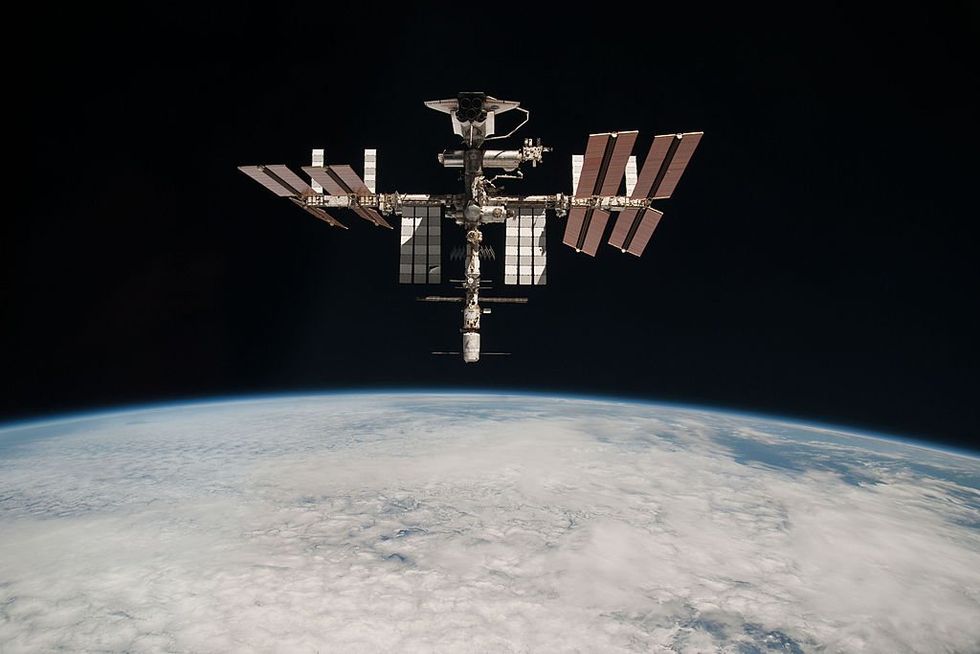
The worms will be heading
| GETTYSpace Minister Liz Lloyd told The Sun: "It might sound surprising, but these tiny worms could play a big role in the future of human spaceflight.
"This remarkable mission backed by government funding shows the ingenuity and ambition of UK space science, using a small experiment to tackle one of the biggest challenges of longduration space travel: protecting human health.
"As we prepare for a new era of exploration, including future missions to the Moon, research like this will help astronauts stay healthy and return home safely."
Dr Tim Etheridge, from the University of Exeter, said: "Nasa's Artemis programme marks a new era of human exploration, with astronauts set to live and work on the Moon for extended periods for the first time.
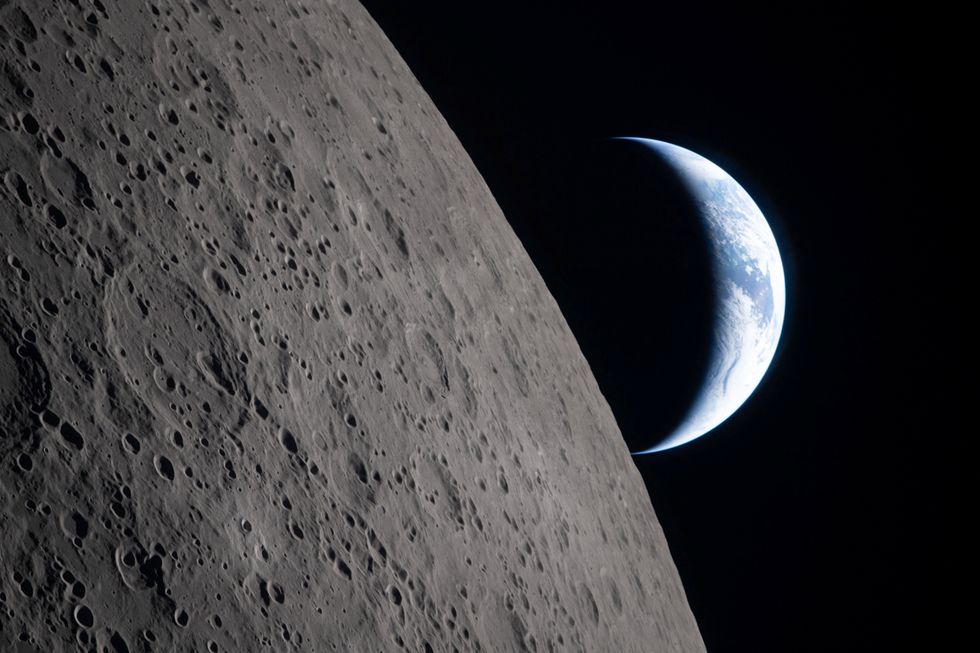
A view of Earth, partially hidden by the Moon, photographed through the Orion spacecraft window
|REUTERS
He continued: "By studying how these worms survive and adapt in space, we can begin to identify the biological mechanisms that will ultimately help protect astronauts during long-duration missions and bring us one step closer to humans living on the Moon."
The Artemis II mission is about to enter day eight of its mission, after flying deeper into space on Monday than any humans before them.
About two dozen scientists packed a conference room adjacent to mission control at Nasa's Johnson Space Center in Houston to record the lunar phenomena witnessed by the Artemis crew in real time as their Orion spacecraft, about the size of an SUV, sailed around the moon roughly a quarter million miles (402,000 km) from Earth.
The six-hour flyby, which swooped to within 4,070 miles of the lunar surface, came six days into a spaceflight marking the world's first voyage of astronauts to the vicinity of the moon since NASA's Cold War-era Apollo missions more than half a century ago.