










Earth has recently traversed a trail of cosmic debris left behind by a disintegrating asteroid, a Nasa researcher has warned.
Dr Patrick Shober, based at Nasa's Johnson Space Centre, analysed millions of meteor sightings and discovered a distinct grouping of 282 shooting stars all appearing to originate from an identical location in space.
The rocky fragments represent the remnants of what scientists term a "rockcomet", an asteroid that ventured dangerously close to the sun and began breaking apart under intense heat.
This newly identified meteor shower, designated M2026A1, offers astronomers a rare glimpse into the destruction of a hidden space rock.
TRENDING
Stories
Videos
Your Say
Unlike the majority of meteor showers, which stem from icy comets that vaporise as they near the sun through a process called sublimation, M2026A1 has an altogether different origin.
The parent body is a dry, rocky asteroid that has begun behaving like a comet under extreme conditions.
Its orbital path carries it nearly five times closer to the Sun than Earth travels, subjecting the space rock to ferocious temperatures.
This punishing proximity to the sun causes the asteroid's surface to fracture, releasing trapped gases and sending chunks of material spinning off into space.
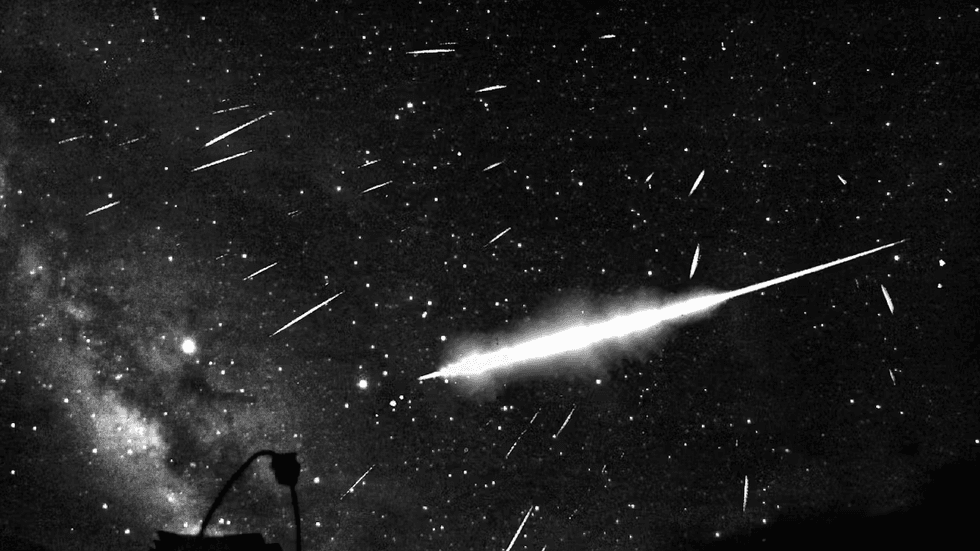
Scientists have designated the newly identified shower as M2026A1 (stock image)
|GLOBAL METEOR NETWORK
The resulting debris trail now intersects with Earth's annual journey around the sun.
Dr Shober explained the significance of the find, stating: "What makes this discovery so exciting is that we are essentially witnessing a hidden asteroid being baked to bits."
Analysis of how the meteors disintegrate upon entering Earth's atmosphere has provided crucial clues about their composition.
"Based on how these meteors break apart when they hit our atmosphere, we can tell they are moderately fragile, but tougher than stuff from comets," Dr Shober noted.
LATEST DEVELOPMENTS
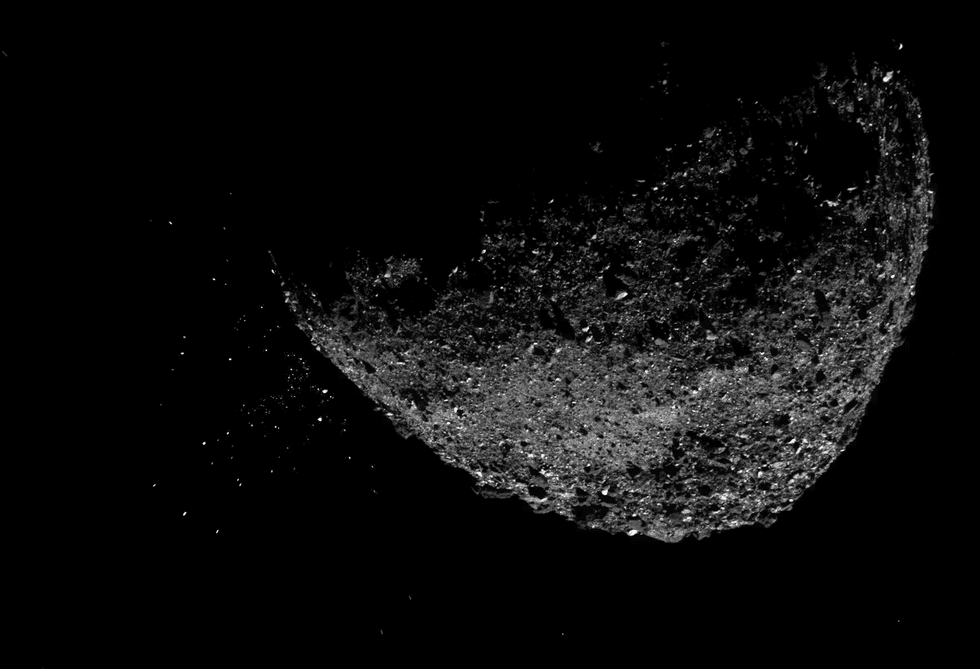
Previous space missions have gained greater knowlegde of the stress and heat damage done to asteroids by the Sun (stock image)
|NASA
"This finding tells us that intense solar heat is literally cracking the asteroid's surface, baking out trapped gases and causing it to crumble."
The discovery also "reveals hidden populations of near-Earth asteroids, which is vital information for planetary defence," he added.
Stargazers had the opportunity to witness M2026A1 annually between March 16 and April 7.
Though the display proved less dramatic than more established meteor showers.
Despite the compelling evidence provided by the meteor shower, the asteroid responsible for the debris field has yet to be located.
Detecting the dim, rapidly moving object from our planet presents considerable challenges, but Dr Shober remains optimistic about future prospects.
Nasa's NEO Surveyor mission, scheduled for launch in 2027, could prove instrumental in tracking down the source.
Dr Shober said: "This space telescope, dedicated to planetary defence and the discovery of dark, hazardous, sun-approaching asteroids, will be the ideal tool for searching for the shower's origin."
Our Standards: The GB News Editorial Charter