








Scientists in China have engineered a revolutionary "living plastic" embedded with bacteria that can self-destruct on command, leaving no microplastic residue behind.
The breakthrough, announced today by researchers at the Shenzhen Institute of Synthetic Biology, represents a potential solution to the mounting global crisis of persistent plastic waste.
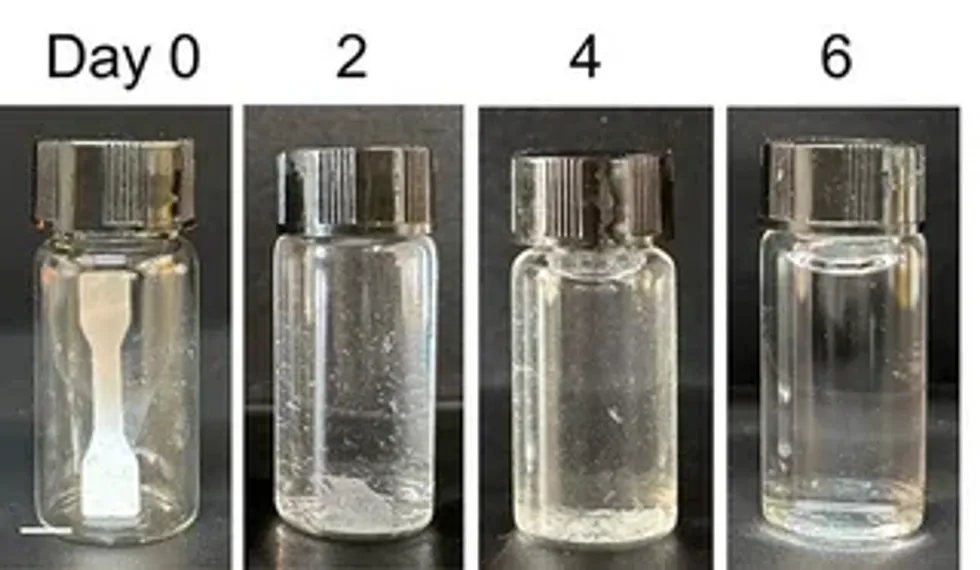
Their findings, published in the journal ACS Applied Polymer Materials, demonstrate how two specially modified bacterial strains can reduce the material to its fundamental components within just six days.
Conventional plastics can remain in the environment for centuries, despite the fact that many products are intended for single-use applications, such as packaging.
The team engineered two distinct strains of Bacillus subtilis, a common bacterium, each designed to produce a different polymer-degrading enzyme.
The first enzyme functions as a random cutter, slicing lengthy polymer chains into smaller fragments.
The second methodically breaks these fragments down from their ends into the most basic molecular components.
To preserve the microbes until degradation is required, researchers incorporated them into the plastic in their dormant spore form.
Scientists in China have engineered a revolutionary 'living plastic'
|ACS APPLIED POLYMER MATERIALS
The spores were embedded within polycaprolactone, a polymer widely used in 3D printing applications and certain surgical sutures, without compromising the material's structural integrity or mechanical performance.
When the plastic is placed in nutrient broth and heated to 50 degrees Celsius, the dormant spores germinate.
This causes the bacteria to break it down into its constituent building blocks within six days.
The collaborative approach proved significantly more effective than earlier attempts using single enzymes.
LATEST DEVELOPMENTS
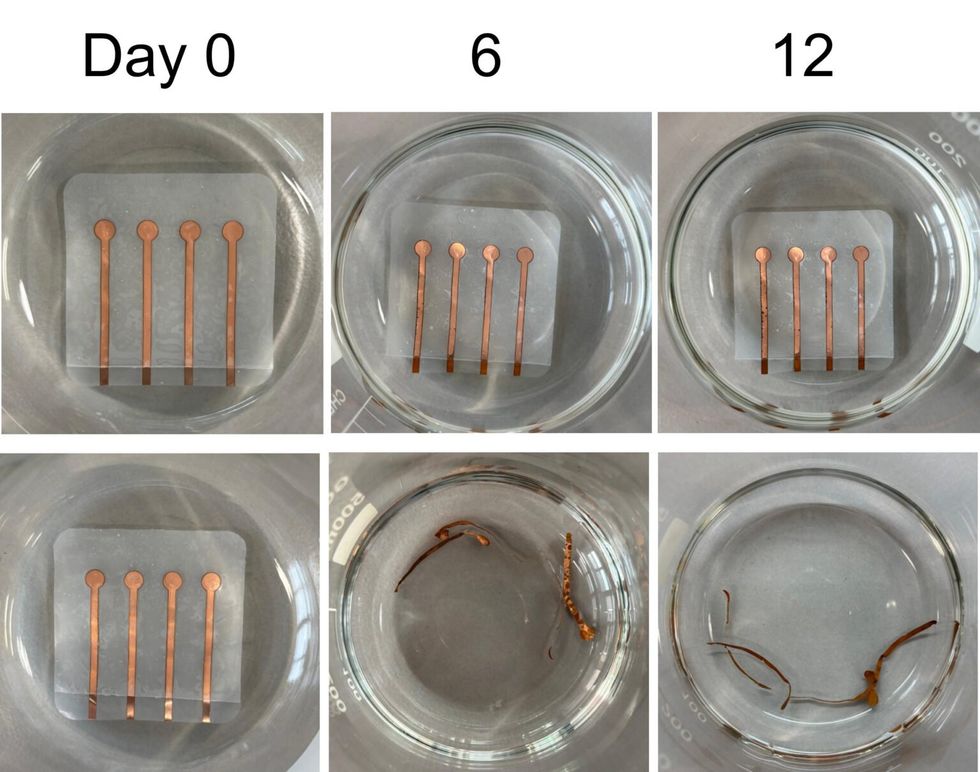
Modified bacterial strains can reduce the material to its fundamental components within just six days
|ACS APPLIED POLYMER MATERIALS
Study author Zhuojun Dai from the Shenzhen Institute of Synthetic Biology said: "The realisation that traditional plastics persist for centuries, while many applications like packaging are short-lived, led us to ask: could we build degradation directly into the material's life cycle?"
"By embedding these microbes, plastics could effectively 'come alive' and self-destruct on command, turning durability from a problem into a programmable feature."
The research team has outlined ambitious plans to extend the technology's applications beyond laboratory conditions.
Future studies will focus on developing a water-based activation trigger for bacterial spores to address the significant proportion of plastic waste that ends up in oceans, lakes and rivers.
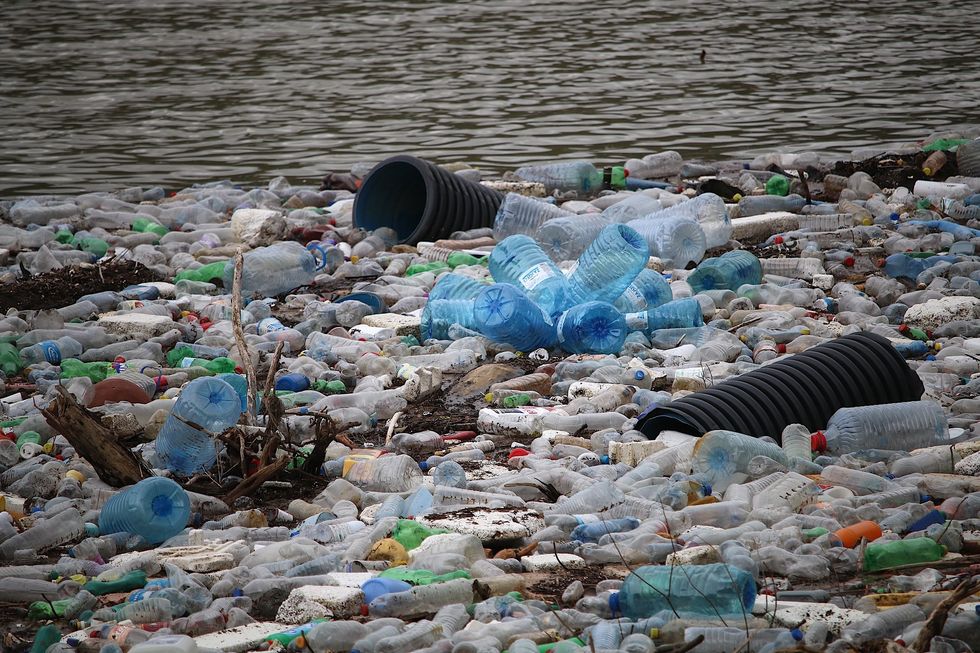
Future studies will focus on developing a water-based activation trigger for bacterial spores to address plastic waste that ends up in oceans, lakes and rivers
|GETTY
The scientists also intend to adapt their dual-enzyme approach for other polymer types, particularly those commonly found in single-use plastics.
Such an expansion could dramatically broaden the technology's potential impact on global waste reduction efforts.
The cooperative enzymatic system within the microbial consortium demonstrated superior performance compared to single-strain approaches.
It achieves a near-complete breakdown of the polycaprolactone matrix within the six-day timeframe.
Our Standards: The GB News Editorial Charter