









The history of an iconic UK landmark could be turned on its head, researchers have revealed.
Scientists have uncovered fresh insights into how the Giant's Causeway came to exist.
Research from the British Geological Survey shows Northern Ireland's volcanic history unfolded far more rapidly than experts previously believed.
The volcanic activity that produced the Causeway's famous columns took place over 5.5 million years - eight million fewer than previously believed.
Dr Simon Tapster, a geochronologist at the BGS, said: "Fundamentally, what we've done is by piecing together this tapestry of volcanic rocks all across the North Atlantic, but focusing on Northern Ireland, we have been able to reassess a major globally impacting volcanic event."
He added: "In doing that, and in reassessing the timescales, we have shown that actually it occurred in a much shorter duration."
The cutting-edge study was conducted jointly by the Geological Survey of Northern Ireland and the BGS.
Researchers have constructed an entirely new timeline for volcanic events across the province.
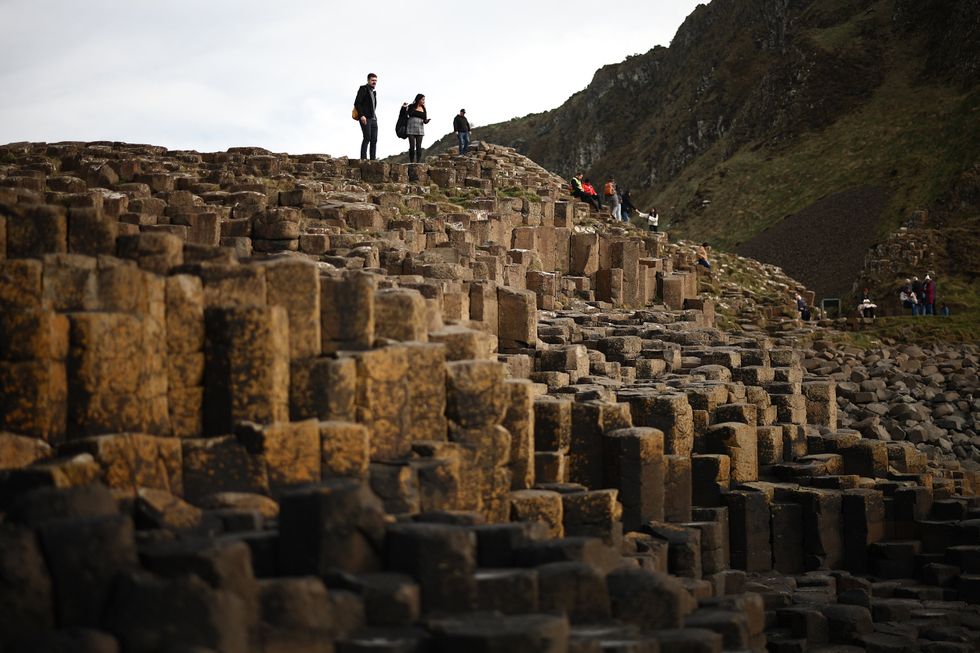
Scientists have uncovered fresh insights into how the Giant's Causeway came to exist
|GETTY
For the first time, this allows the Causeway's formation - 40,000 hexagonal basalt columns - to be placed within a precise global context.
The findings have substantially updated scientific understanding of when specific volcanic eruptions occurred in Northern Ireland.
Scientists can now link these events more confidently to volcanic activity and geological landmarks found elsewhere, particularly in Scotland.
Intense volcanic activity drove molten rock upwards through fissures in the earth's surface, shaping the Causeway's striking landscape.
SCIENCE BREAKTHROUGHS IN BRITAIN - READ MORE:
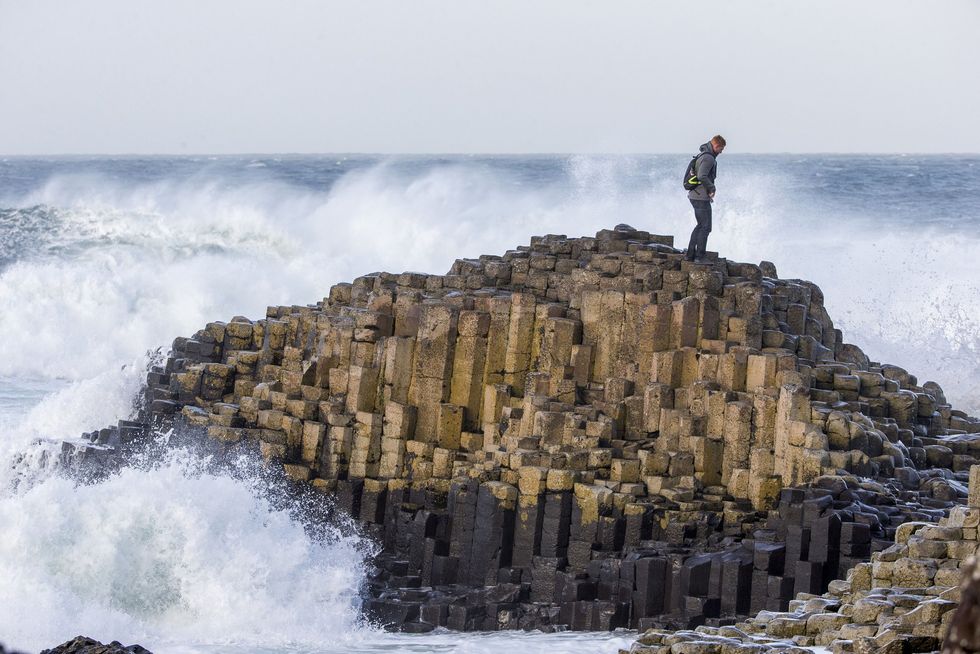
Scientists now have definitive proof the Causeway was created at the same time as Fingal's
|PA
As thick lava flows cooled, they contracted and fractured into the columns that define the site today.
The research also establishes connections between the Causeway's origins and a major volcanic episode visible in rocks stretching as far as Greenland, dating back approximately 60 million years.
Previously, scientists believed the earliest lava flows across Northern Ireland's Antrim Plateau occurred millions of years before Scotland's Staffa basalts and Fingal's Cave formed.
The new timeline now proves these formations were formed as part of the same volcanic period.
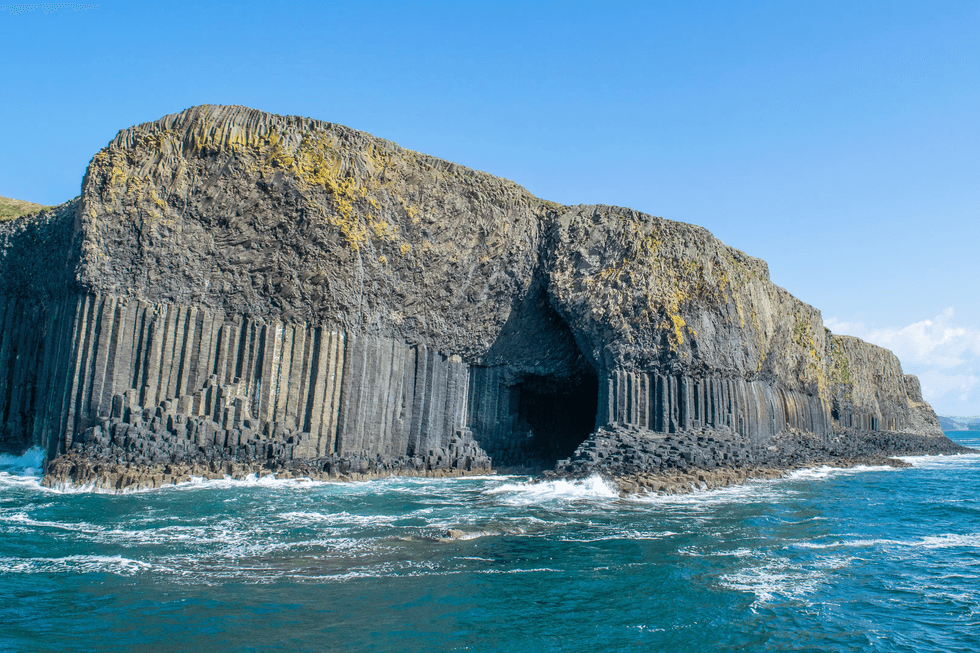
The new timeline proves Fingal's Cave, across the sea in Scotland, was formed at the same time as the legendary Causeway
|GETTY
The processes responsible for the Giant's Causeway also shaped formations on Rum, the Mourne Mountains, and magmatic features on Skye, according to researchers.
Dr Tapster said: "By looking at the timescales and the high resolution timeline, we're able to match it up with various other locations, particularly in the Inner Hebrides in Scotland, the volcanics of Mull, Rum, the Isle of Skye, and taking a bigger view, looking at Greenland and the Faroe Islands."
According to Irish and Scottish folklore, the Giant’s Causeway was built by the giant Fionn mac Cumhaill, or Finn McCool.
The story says that Fionn was challenged by the Scottish giant Benandonner. To confront his rival, Fionn tore up huge chunks of earth and threw them into the sea, creating a stone causeway that stretched from the coast of Giant's Causeway to Scotland.
When Fionn saw that Benandonner was far larger and stronger than he expected, he fled home in fear.
Fionn’s wife disguised him as a baby, and when Benandonner saw the enormous “infant,” he imagined how gigantic the father must be - and rushed back to Scotland, destroying much of the causeway behind him as he escaped.