









Scientists have uncovered a gigantic graveyard more than 745 miles long at the bottom of the Indian Ocean.
The remarkable site lies more than four miles beneath the surface within the Diamantina fracture zone, a seabed terrain characterised by ridges and trenches.
Researchers from China, Italy and New Zealand made the discovery, which was published yesterday in the journal Nature.
Some of the fossilised remains date back 5.3 million years, generating considerable excitement among scientists worldwide.
The underwater necropolis is filled with whales - as well as organisms that "may be new to science," researchers say.
Xiaotong Peng of the Chinese Academy of Sciences, one of the study's authors, said: "Discovering a necropolis of this scale was completely unexpected.
"The size of distribution, the depth and the age range were far beyond anything we had imagined," he added.
The research team used an underwater vehicle called the Fendouzhe submersible to explore the seafloor.
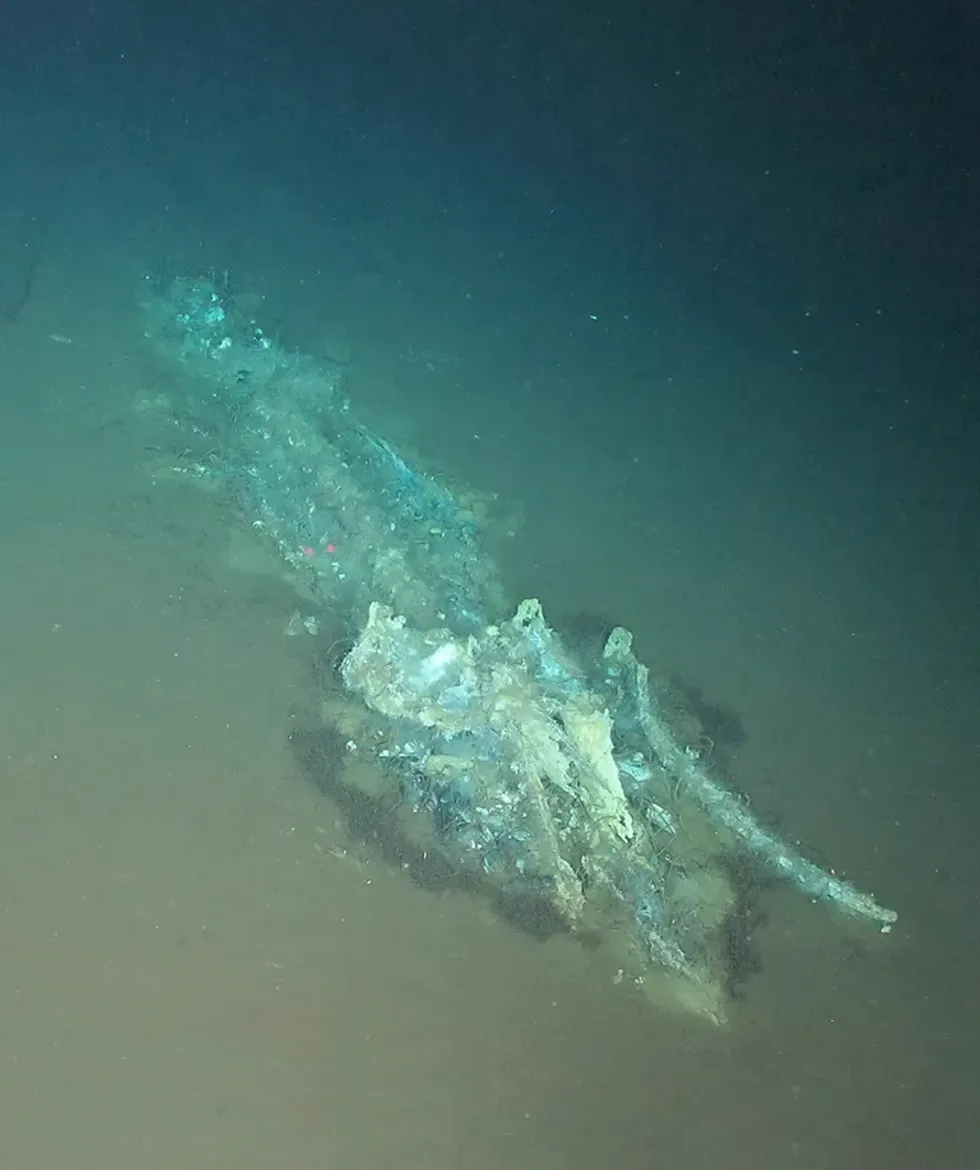
Some of the fossilised remains date back 5.3 million years, generating considerable excitement among scientists worldwide
|IDSSE
Over 32 dives, they gathered samples from 485 whale fossil locations and active whale falls.
In total, the scientists identified 476 whale fossils and five more recently deceased whale carcasses at depths ranging from 4,200 to 7,000 metres.
The researchers estimate there could be seven to eight whale carcasses and roughly 750 fossils per square kilometre throughout the area.
A five-metre-long Antarctic minke whale skeleton was the largest single discovery.
SCIENCE - READ THE LATEST:
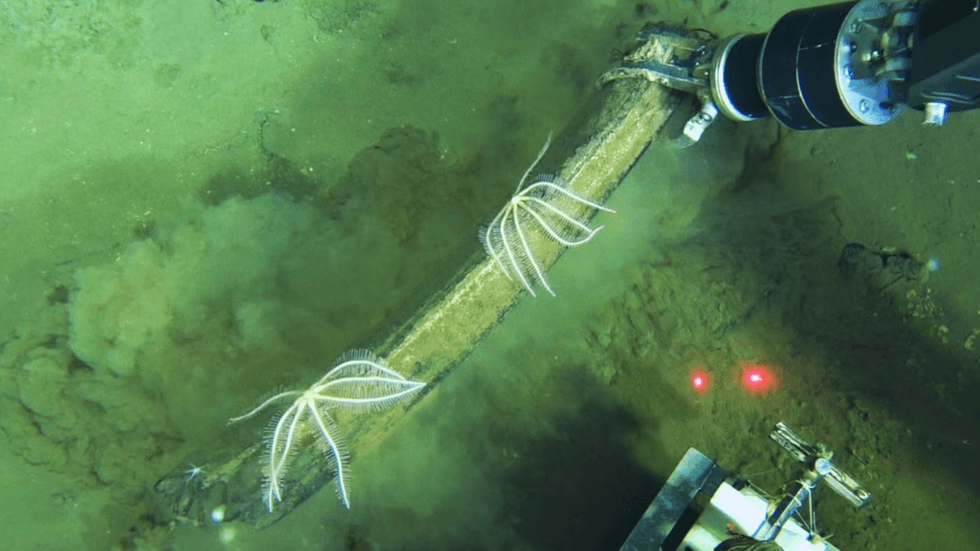
Over 32 dives, they gathered samples from 485 whale-fossil locations and active whale falls
|IDSSE
The majority of remains belong to beaked whales, deep-diving marine mammals that scientists know relatively little about.
Among the finds was a fossilised skull from the extinct beaked whale Pterocetus benguelae, dating back 5.3 million years to the Early Pliocene.
The team also identified an entirely new species, which they have named Pterocetus diamantinae after the location.
Fossils from five beaked whale species and one baleen whale species were recovered and dated using strontium isotope analysis.
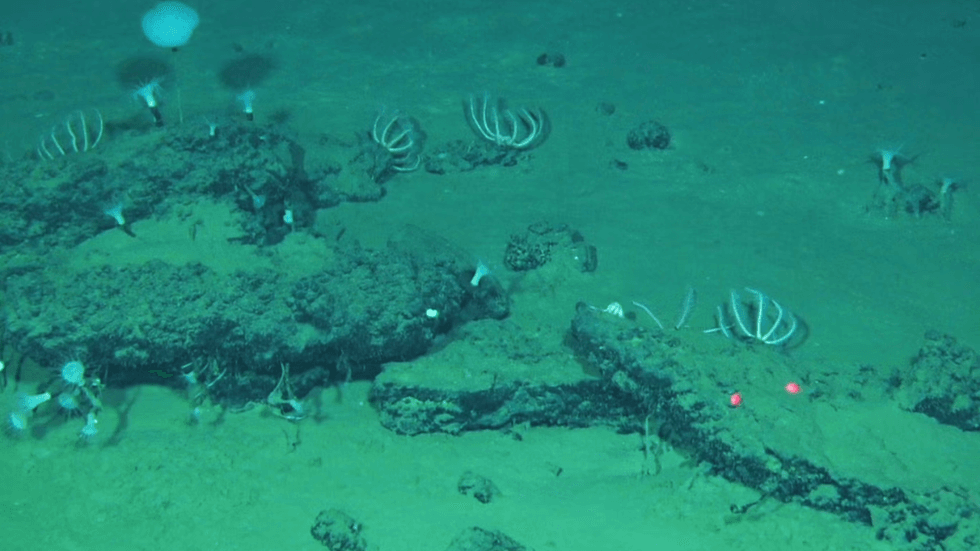
The majority of remains belong to beaked whales, deep-diving marine mammals that scientists know relatively little about
|IDSSE
Stephen Godfrey of the Calvert Marine Museum wrote in Nature: "Peng and colleagues' encounter with a vast fossil graveyard is a truly unique discovery."
"It's like each one of these whale falls is a new little restaurant that opens up in a 1,200-kilometer-long strip mall," he told Live Science.
Nick Pyenson, a curator at the Smithsonian National Museum of Natural History who was not involved in the research, said: "It covers over 1,200 kilometers, which just defies belief."
"'Megasite' is a totally appropriate term. I think they've uncovered something really special," he added.
Our Standards: The GB News Editorial Charter