










Scientists have reconstructed the face of a man believed to be a "vampire" for the first time in more than four centuries.
The remains were unearthed at Racesa, a fortress located in eastern Croatia.
His body had been dug up after burial, decapitated, and placed face down in the grave with heavy stones on top.
Experts concluded environmental causes could not explain the desecration.
They believe the mutilation was carried out to stop him rising from the dead.
Researchers used the skull to digitally rebuild his appearance.
The man lived during the 15th or 16th century and stood approximately five feet, four inches tall.
He is thought to have died aged between 40 and 50.
Archaeologist Dr Natasa Sarkic, who worked on the excavation, said the terror he provoked after death may have originated from fear during his lifetime.
She said: "Bioarchaeological analysis showed that this man often participated in violent conflicts, and died a violent death."
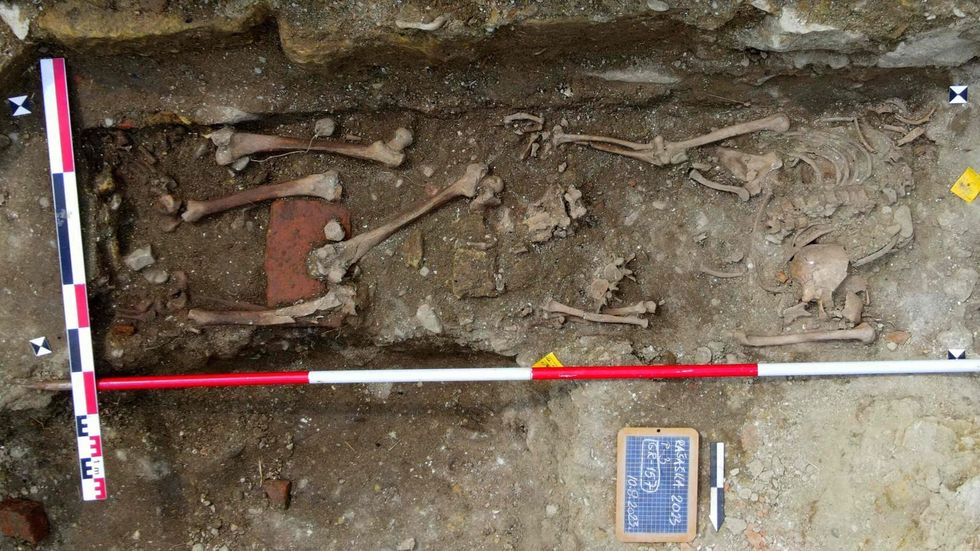
The vampire's body had been dug up after burial, decapitated, and placed face down in the grave
|NATASA SARKIC
She said: "He experienced at least three episodes of serious interpersonal violence during his lifetime.
"One of those attacks left his face disfigured, which could cause fear and repulsion, leading to social exclusion.
"Before even recovering from the penultimate trauma, he sustained a final fatal attack."
She continued: "Individuals who died violently, behaved violently in life, or were considered sinful or socially deviant, were believed to be at risk of becoming vampires."
SCIENCE MARVELS - READ MORE:
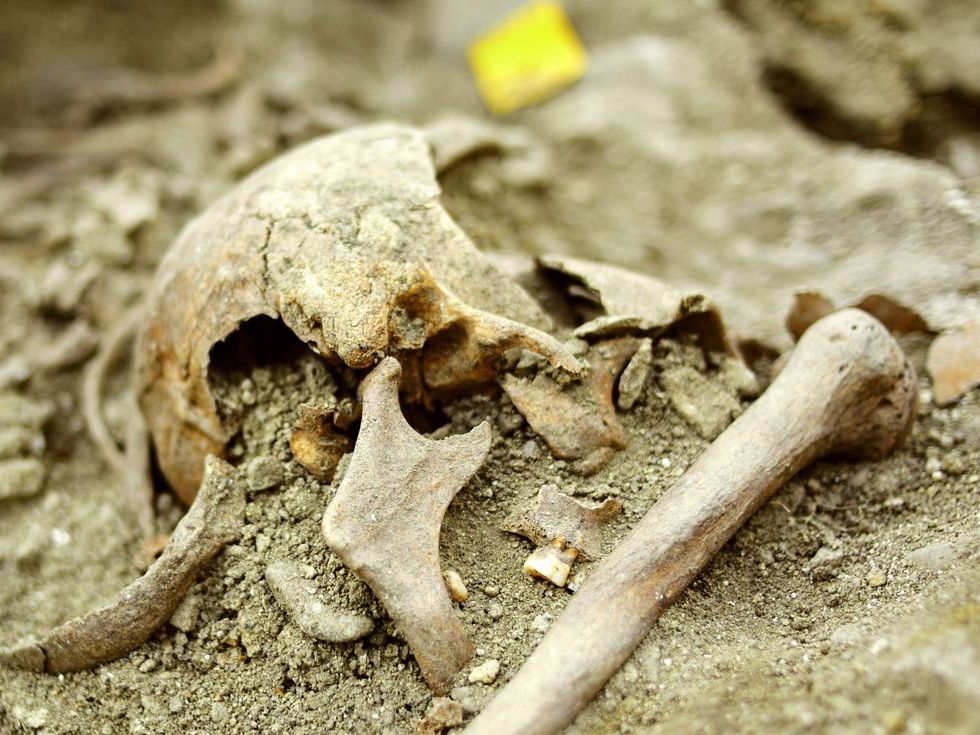
Experts believe his mutilation was carried out to stop him rising from the grave
|NATASA SARKIC
Dr Sarkic added: "He may have been regarded as a 'vampire', or a supernatural threat due to his facial disfigurement and his marginal lifestyle, characterised by repeated interpersonal violence."
"Such beings were thought to be restless, vengeful, and capable of harming the living, spreading disease and killing people or livestock."
In old Slavic tradition, the soul was thought to stay connected to the body for 40 days following death.
During this period, various methods could be employed to prevent the deceased from returning as vampires.
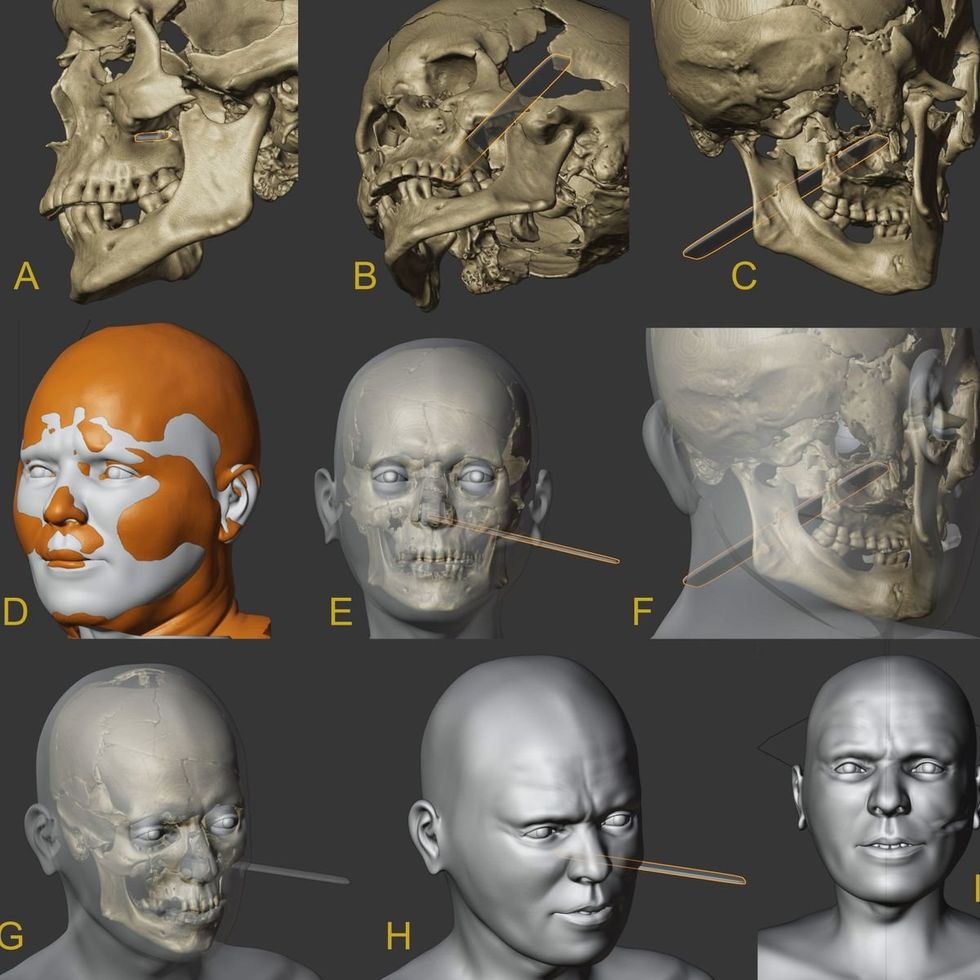
PICTURED: The ancient vampire's skull is pieced together over time to form the likeness of his face
|CICERO MORAES
These included staking, burning or beheading the corpse, burying it face down, weighing it down with stones and binding the limbs.
This burial therefore showed "practices commonly associated with 'anti-vampire' rituals at the time", Dr Sarkic said.
Graphics expert Cicero Moraes, known for his work on the Turin Shroud, reconstructed the skull digitally using CT scan data.
Dr Sarkic said: "Although the skull was somewhat fragmented at the time of its discovery, it was possible to reconstruct and digitise it."
Information from living donors helped determine where facial features would sit and how thick soft tissue would be across different parts of the skull.
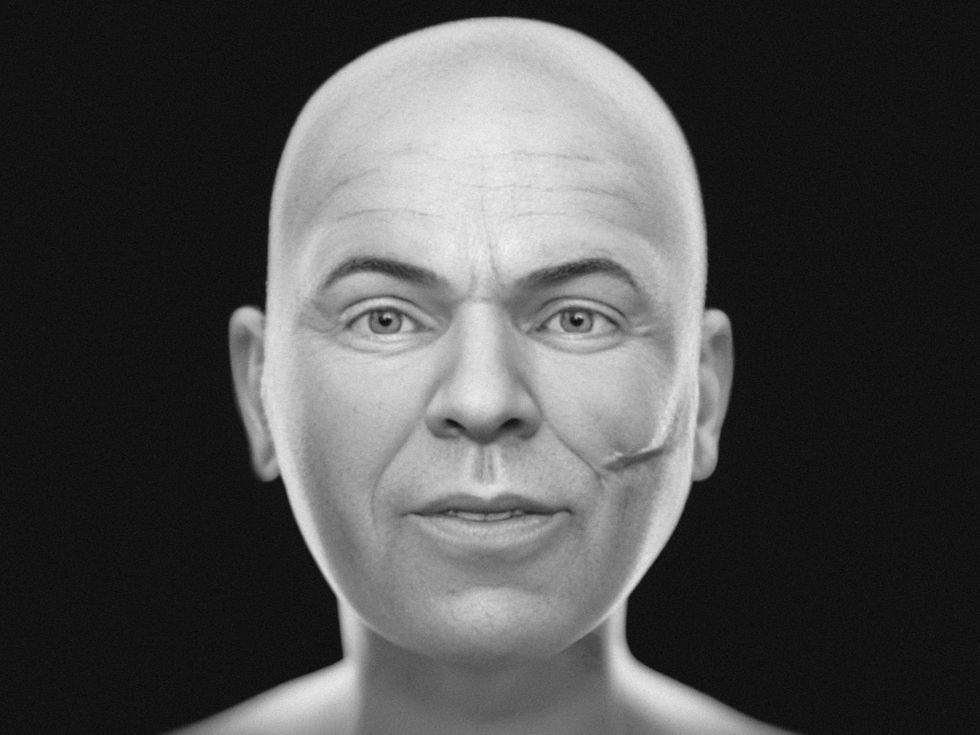
Mr Moraes first created an 'objective face' based purely on skull shape, without subjective elements like hair or skin colour
|CICERO MORAES
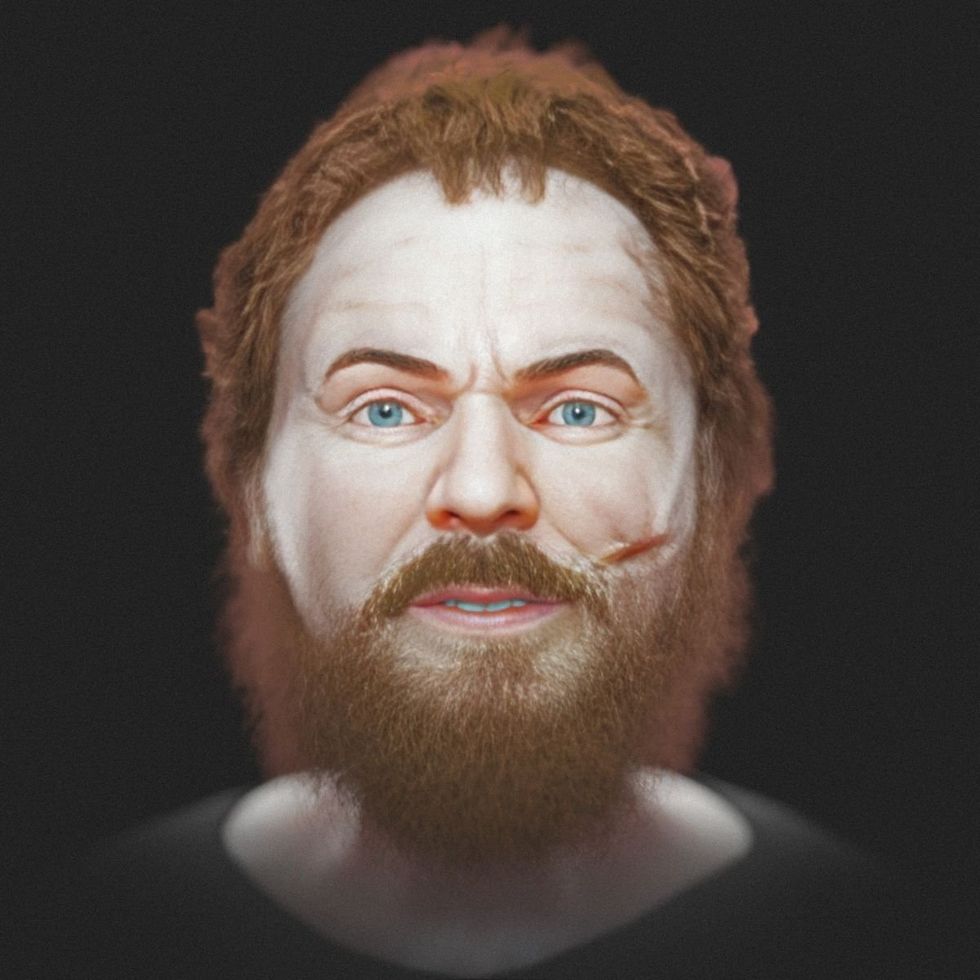
He then added hair, colour and a scar to create the 'vampire' as he would have looked
|CICERO MORAES
A method called anatomical deformation was also applied, adjusting a donor's head virtually until it matched the subject's skull.
The result was an objective face based purely on skull shape, without subjective elements like hair or skin colour.
Mr Moraes said it was a "hostile, threatening" likeness.
He said: "The facial scar and other injuries obtained during his life are quite a significant sign that his life may have been rather turbulent."
Mr Moraes, Dr Sarkic and their co-authors published their study in the journal OrtogOnLineMag.