










Astronomers have operated under the assumption for 50 years that a colossal black hole lurks at the heart of our galaxy, but a new space theory now poses a bold challenge.
Research published in Monthly Notices of the Royal Astronomical Society suggests the Milky Way's centre may instead harbour a vast concentration of dark matter rather than the black hole known as Sagittarius A*.
The notion of a central black hole derives from the late 1960s and early 1970s, following the detection of intense radiation towards the constellation Sagittarius.
By the 1990s, observations of stars racing around an invisible point had seemingly confirmed the presence of an object containing several million solar masses.
TRENDING
Stories
Videos
Your Say
Yet this new study suggests an alternative explanation may prove more plausible.
The researchers instead propose that dark matter composed of subatomic particles called fermions could form a distinctive cosmic structure.
This configuration would feature an extraordinarily dense core enveloped by a far more expansive, diffuse halo. Together, these two components would function as a single unified entity.
The compact inner core would possess sufficient mass and density to replicate the gravitational influence traditionally attributed to a black hole.
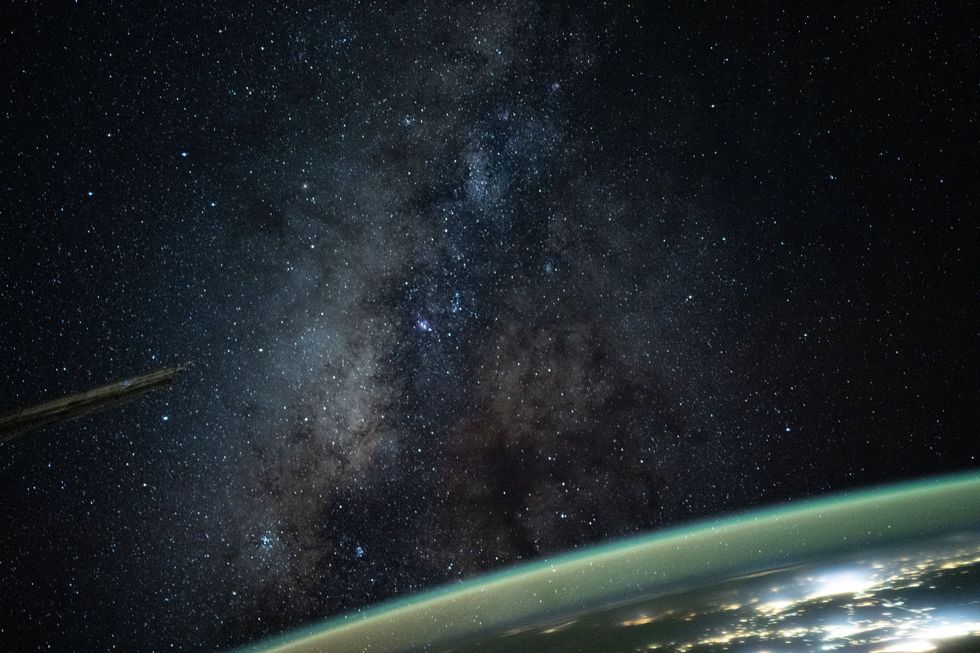
A new space theory now poses a bold challenge to the theory that a black hole is at the centre of the Milky Way
|NASA
Such a structure could account for the behaviour of the S-stars, which hurtle around the galactic centre at velocities reaching several thousand kilometres per second.
These stars execute remarkably tight orbital loops around something invisible, movements long considered proof of a supermassive black hole.
The fermionic model could also explain the trajectories of nearby dust-shrouded objects known as G-sources.
The model draws additional support from data gathered by the European Space Agency's GAIA DR3 mission, which has carefully charted how stars and gas rotate in the Milky Way's outer regions.
LATEST DEVELOPMENTS
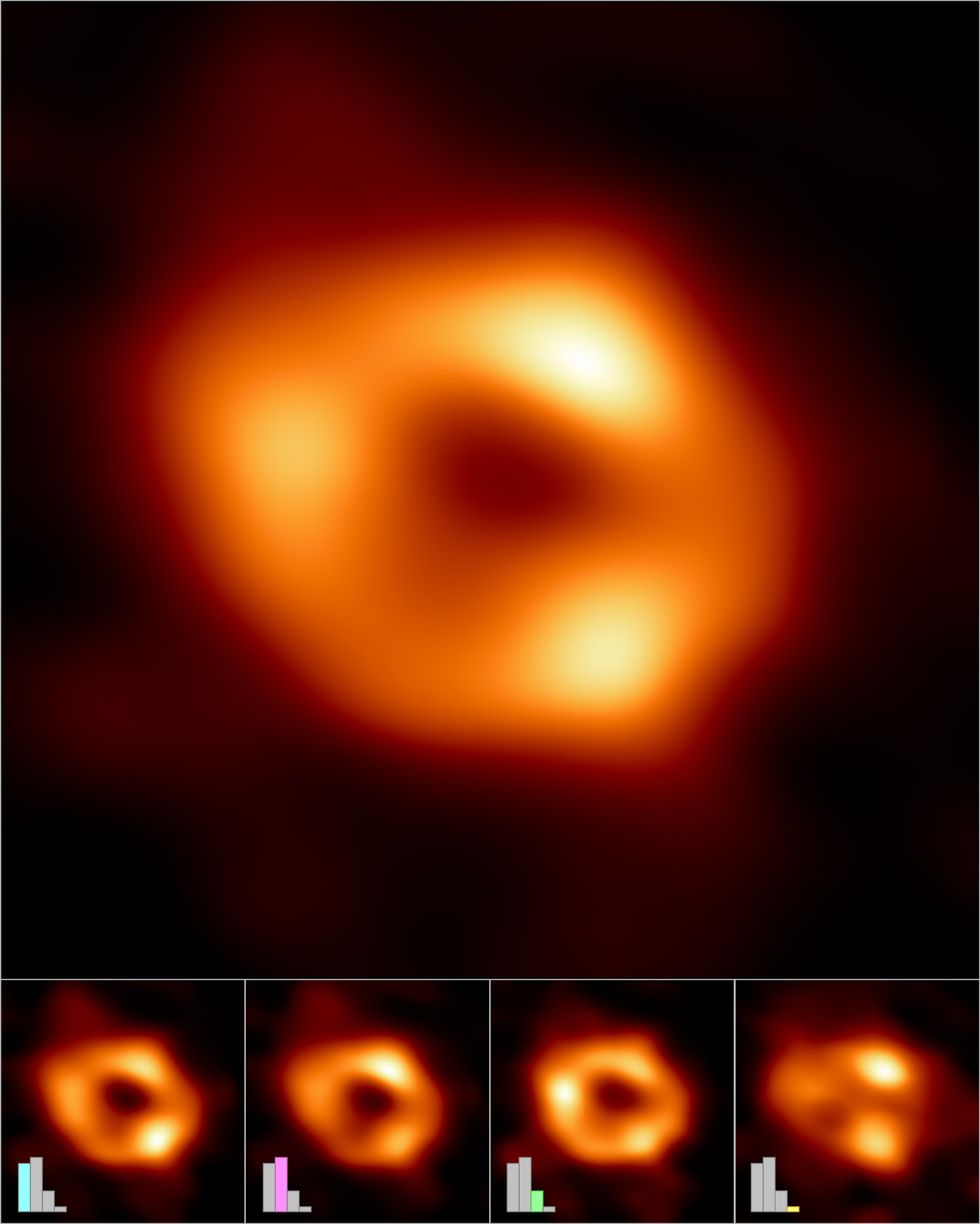
Sagittarius A* is the supermassive black hole believed to be at the centre of the Milky Way
|GETTY
This mapping revealed a gradual slowing of galactic rotation, termed the Keplerian decline, which the researchers believe their dark matter halo can explain.
The theory also aligns with the celebrated image captured by the Event Horizon Telescope.
A previous study demonstrated that glowing gas swirling around a dense dark matter core would cast a shadow strikingly similar to the one photographed at our galaxy's centre.
"This is a pivotal point," said Valentina Crespi of the Institute of Astrophysics La Plata, the lead author.
"Our model not only explains the orbits of stars and the galaxy's rotation but is also consistent with the famous 'black hole shadow' image.
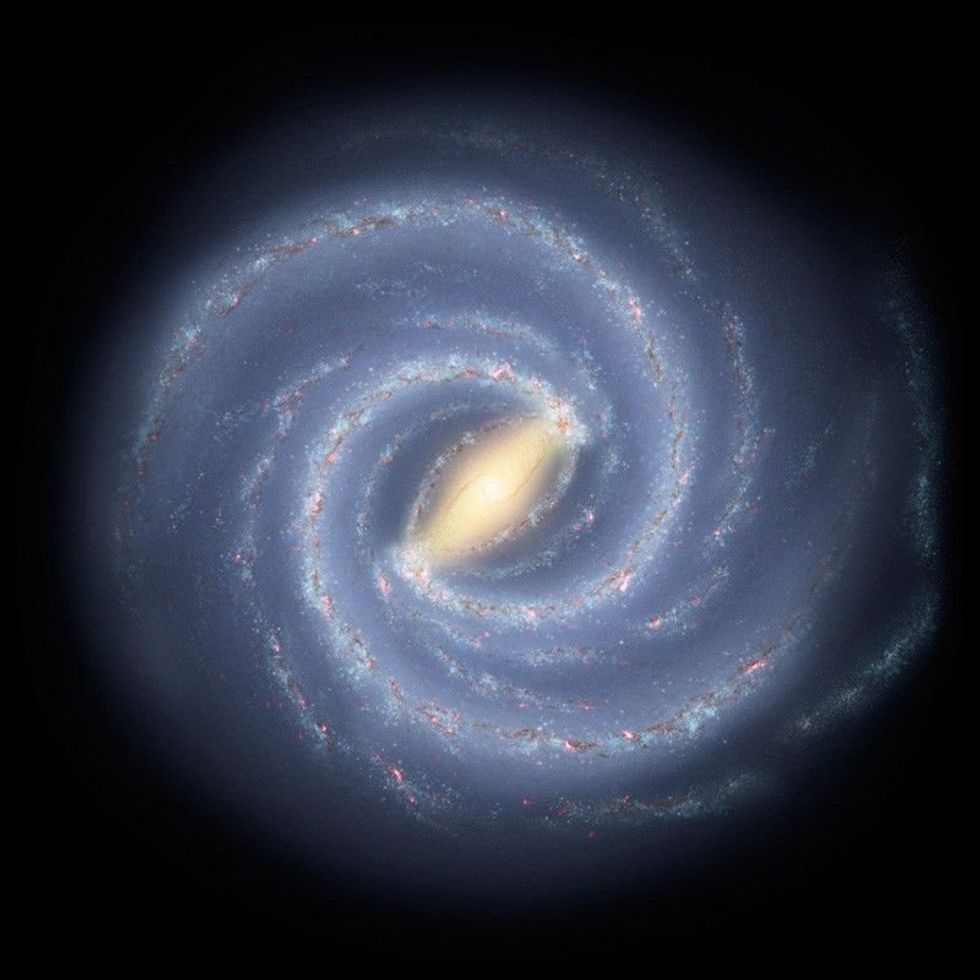
Lead author of the Institute of Astrophysics, Valentina Crespi, said: 'This is a pivotal point'
|NASA
"The dense dark matter core can mimic the shadow because it bends light so strongly, creating a central darkness surrounded by a bright ring."
The investigation brought together researchers from the Institute of Astrophysics La Plata in Argentina, institutions in Italy, Colombia and Germany.
"This is the first time a dark matter model has successfully bridged these vastly different scales and various object orbits, including modern rotation curve and central stars data," said study co-author Dr Carlos Argüelles of the Institute of Astrophysics La Plata.
"We are not just replacing the black hole with a dark object; we are proposing that the supermassive central object and the galaxy's dark matter halo are two manifestations of the same, continuous substance."
Statistical comparisons between the fermionic model and traditional black hole theory proved inconclusive with current observations.
Future instruments, including the GRAVITY interferometer at Chile's Very Large Telescope, may prove decisive.
The detection of photon rings, a distinctive black hole signature absent from dark matter cores, would be particularly telling.
Our Standards: The GB News Editorial Charter