









Artificial intelligence-powered robocops could be patrolling streets within the next two years, according to a leading American academic.
Professor Ivan Sun, from the University of Delaware's Department of Sociology and Criminal Justice, believes these machines will revolutionise law enforcement by identifying suspects through facial recognition technology.
The robots would possess the capability to determine whether an individual is carrying a weapon from a distance of 200 metres, he explained.
"The sky is really the limit," Professor Sun stated at the American Association for the Advancement of Science conference in Phoenix, Arizona.
TRENDING
Stories
Videos
Your Say
"My predictions are these robots will do straight law enforcement, probably within a couple of years."
Such machines would be faster and more resilient than human officers, although they would likely work alongside their flesh-and-blood colleagues.
These robotic officers would be capable of pursuing suspects for five miles without experiencing fatigue, a significant advantage over their human counterparts.
"They could chase you for five miles, and they won't get tired," Professor Sun explained. "At the same time, while they are chasing the suspect, they can scan the suspect's bio and characteristics."
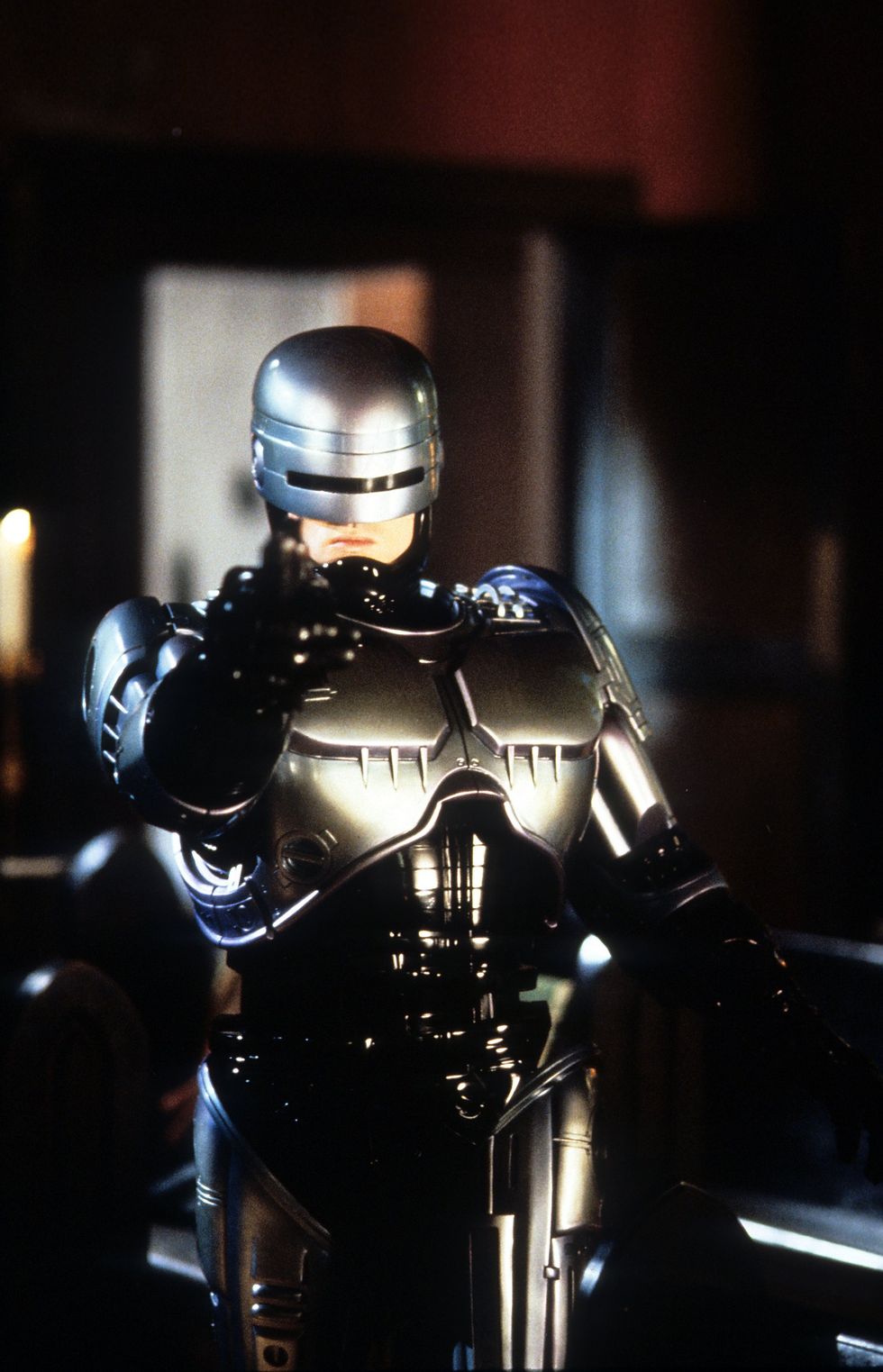
Artificial intelligence-powered robot police officers could be patrolling streets within the next two years
|GETTY
The academic suggested a single robot could potentially perform the duties of three police officers, requiring neither rest nor breaks.
In high-risk scenarios such as armed robberies, these machines could take command of the situation whilst simultaneously analysing threats.
"Their AI can detect from 200 metres away if the suspect has a weapon or not. A human officer would not be able to do that," he added.
Human officers would also benefit from AI-enhanced helmets to improve their decision-making capabilities.
LATEST DEVELOPMENTS
Police forces across the globe have already begun deploying robotic technology in various capacities.
Singapore's Xavier robot monitors public areas for antisocial behaviour, including smoking, before alerting human officers to any incidents.
China has integrated AI-powered machines such as the AnBot into its security infrastructure, where they conduct surveillance, verify identities and patrol transport hubs.
The United Arab Emirates has taken a different approach, utilising robots primarily for customer service roles such as welcoming tourists and offering multilingual assistance at major events.
Wheeled machines also patrol casinos and shopping centres in the United States and Singapore.
Closer to home, the British Transport Police has commenced a trial of live facial recognition technology at railway stations.
A six-month pilot programme at London Bridge Station will alert officers when the system identifies individuals wanted by police or the courts.
Professor Sun acknowledged significant legal and moral questions must be addressed before such technology becomes commonplace in local communities.
The academic is currently surveying police officers across the world, including those serving in Britain, to gauge their attitudes towards AI-powered colleagues.
Officers participating in the research are presented with footage of two distinct robot types: one designed for community engagement and public relations, the other built for apprehending criminals.
Professor Sun anticipates that British officers will favour the crime-fighting variant.
"The fighting robots can really reduce the possible danger [of situations] and the unpredictability associated with them," he explained.
"You already have bomb robots – you send the bomb robot so you don't need to send a human being to take care of the bombed."
Our Standards: The GB News Editorial Charter