










Scientists have identified a new species of marine reptile which dominated the oceans more than 80 million years ago.
The creature, named Tylosaurus rex, was a massive 43-foot-long mosasaur that inhabited waters covering present-day northern Texas.
Researchers chose the name, which translates to "king of the tylosaurs," to set it apart from the famous land-dwelling Tyrannosaurus rex, meaning "tyrant lizard", according to a new study published in the journal Bulletin of the American Museum of Natural History.
"If any animal deserves it, it's this animal," co-author Amelia Zietlow, a paleontologist at the History Museum at the Castle in Wisconsin, told National Geographic.
"Half of its characteristics are around it having a bigger jaw and bite."
Fellow co-author Michael Polcyn, a palaeontologist at Southern Methodist University, first spotted unusual anatomical features in an oversized specimen of the related Tylosaurus proriger around 15 years ago.
Ms Zietlow later observed that a T proriger fossil at the American Museum of Natural History appeared remarkably large.
When compared against the holotype fossil - the "benchmark" used to define a species, the team concluded the specimen had been wrongly classified.
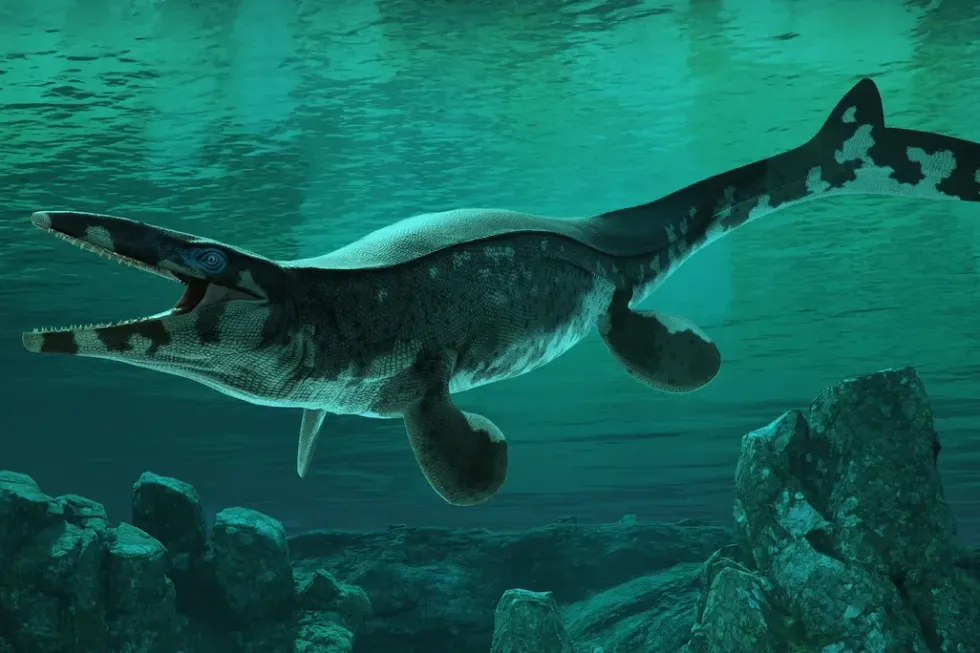
The creature, named Tylosaurus rex, was a massive 43-foot-long mosasaur that inhabited waters covering present-day northern Texas
|ALDERON GAMES - PATH OF TITANS
The researchers then examined collections across North American museums, uncovering more than a dozen similarly oversized beasts.
They all had finely serrated teeth, a rare characteristic among mosasaurs.
The fossils were approximately four million years younger than typical T proriger specimens and mainly came from Texas rather than Kansas.
The newly-discovered species displayed far more aggressive behaviour than its relatives.
DINOSAUR DISCOVERIES - READ MORE:
"Besides being huge, roughly twice the length of the largest great white sharks, T-rex appeared to be a much meaner animal than other mosasaurs," said Ron Tykoski, author of the study.
"Through our study and examination of well-preserved fossils collected throughout the north Texas region, we have evidence of violence within this species to a degree not previously seen in other Tylosaurus specimens."
The creature had exceptionally powerful jaw and neck muscles, indicating it was a formidable hunter.
One specimen at the Perot Museum, dubbed the "Black Knight," has a missing snout tip and fractured lower jaw, injuries scientists believe could only have been caused by another member of its own species.
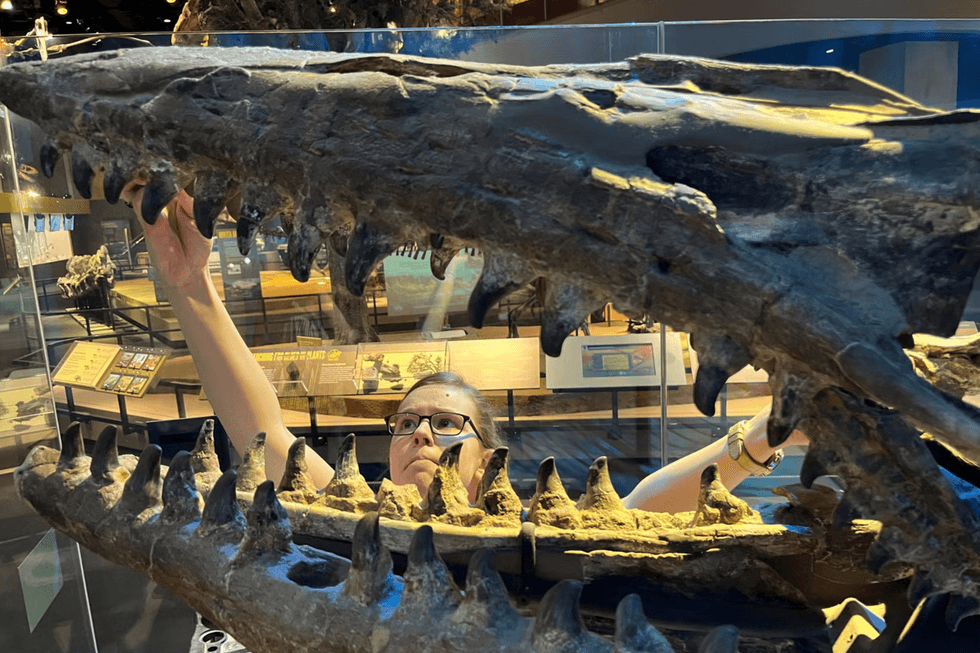
One specimen dubbed the 'Black Knight' has a series of bone-chilling injuries thought to have been caused by another member of its own species
|PEROT MUSEUM OF NATURE AND SCIENCE
Scientists now think they need to launch a fresh probe into the species as a whole.
They have put together a thoroughly revised collection of mosasaur fossil data, which could reshape our understanding of how the monstrous tylosaurs evolved.
"It highlights the need to revisit long-standing assumptions about mosasaur evolution and to modernise the tools we use to study these iconic marine reptiles," said Ms Zietlow.
"These findings reshape both the physical and evolutionary picture of mosasaurs, underscoring Texas as a key region for understanding ancient marine ecosystems and signalling a new era of research into the evolutionary history of these formidable predators," said Mr Polcyn.