









A prehistoric sea monster survived in the face of a severe injury, fossils have revealed.
The giant marine reptile - a Temnodontosaurus, a type of ichthyosaur - was discovered by palaeontologists at the Mistelgau clay pit near Bayreuth in Germany.
The creature resembled modern dolphins and was estimated to be about 6.6 metres long.
Ulrike Albert, the author of the study, said: "Our Temnodontosaurus fossil is one of the youngest finds of this ichthyosaur genus to date.
"Until now, representatives of this genus have mainly been known from older geological layers."
The research, published in the journal Zitteliana, revealed the Temnodontosaurus genus may have survived longer in the Southwest German Basin than previously thought, Dr Albert, researcher for the Bavarian State Collections of Natural History said.
Researchers have, however, stopped short of a species-level assignment due to the absence of a complete fossil specimen.
Several parts of the skeleton have been able to be preserved, including fragments of the skull, lower jaw, shoulder girdle, forefins, spine, and over 100 teeth.
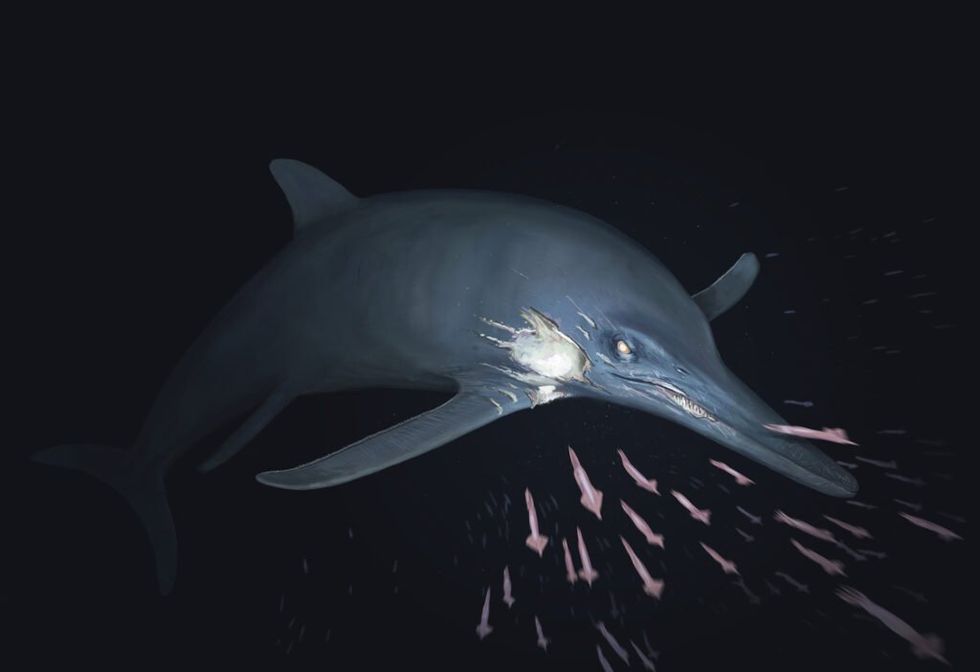
Artist depiction of the Temnodontosaurus discovered by researchers
|BAVARIAN STATE COLLECTIONS OF NATURAL HISTORY
The researchers noted there were clear similarities to Temnodontosaurus trigonodon, but noted there were also differences.
The fossil found by the German paleontologists included modifications to the skeleton - likely as a result of injuries.
These would have affected its shoulder and jaw joints and would have made its life difficult.
The study reads: "Pathologies primarily affecting the pectoral girdle and mandibular joint likely influenced the animal’s hunting and feeding behaviour, resulting in abraded teeth and the presence of gastroliths."
MORE SCIENCE BREAKTHROUGHS:
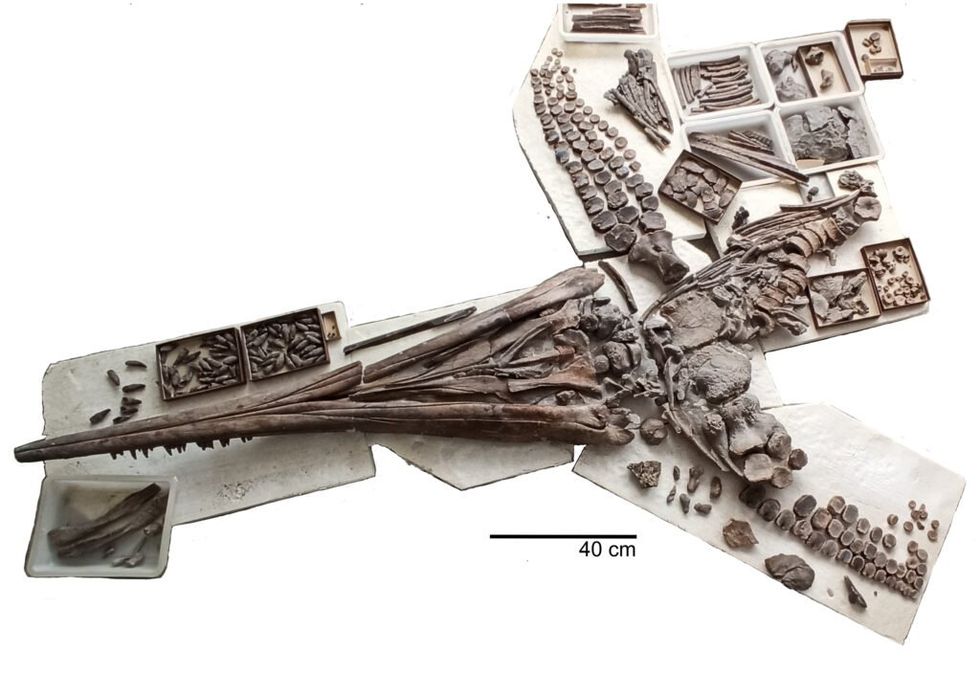
The collection of fossils found by researchers, more well-preserved than previous findings
|BAVARIAN STATE COLLECTIONS OF NATURAL HISTORY
Gastroliths or "stomach stones" are rocks consumed by animals to aid with the crushing and digestion of food.
However, they are extremely rare among ichthyosaurs, and the creature likely would have had to change its diet to survive, according to Stefan Eggmaier, preparator at the Urwelt-Museum and author of the study.
Dr Eggmaier added: "The injuries likely significantly limited the animal’s ability to catch prey."
The findings are are part of research into the ecology of the Jurassic Sea.
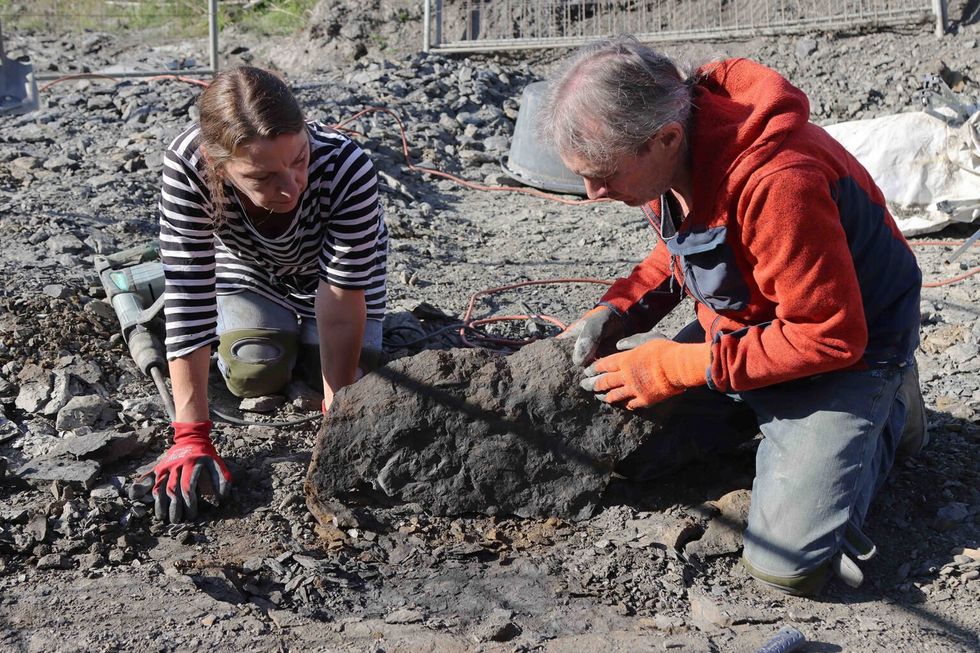
Ulrike Albert and Stefan Eggmaier from the Urwelt-Museum Oberfranken at the excavation site in Mistelgau
|BAVARIAN STATE COLLECTIONS OF NATURAL HISTORY
Further analysis of teeth and bone structures are planned in the hopes of further understanding the Temnodontosaurus genus.
The Mistelgau excavation site is known for its well-preserved marine fossils.
In 2025, the new species Eurhinosaurus mistelgauensis was named after the site.
Eurhinosaurus mistelgauensis is also an ichthyosaur with a an elongated and slender snout with an extreme overbite.