










A molar unearthed from a cave in southern Siberia has revealed Neanderthals carried out dental drilling nearly 60,000 years ago, making it the earliest documented instance of such medical intervention.
The ancient tooth, dated to 59,000 years ago, contains a deep cavity which researchers believe was created deliberately using a sharp stone tool whilst the individual was still alive.
The discovery, found in Chagyrskaya Cave, represents the first evidence of dental drilling by any species other than Homo sapiens.
It predates the previous oldest known example of primitive dentistry by more than 40,000 years, according to research published in the journal PLOS One.
The find has been described by scientists as providing extraordinary new insight into the sophisticated cognitive abilities and medical practices of Neanderthal populations.
Dr Kseniya Kolobova, an archaeologist at the Siberian branch of the Russian Academy of Sciences in Novosibirsk, said the finding challenges outdated assumptions about Neanderthal capabilities.
"This discovery powerfully reinforces the now well-supported view that Neanderthals were not the brutish, inferior cousins of outdated stereotypes but a sophisticated human population with complex cognitive and cultural capacities," she said.
Dr Kolobova said it "adds an entirely new dimension - invasive medical treatment - to the growing list of advanced Neanderthal behaviours".
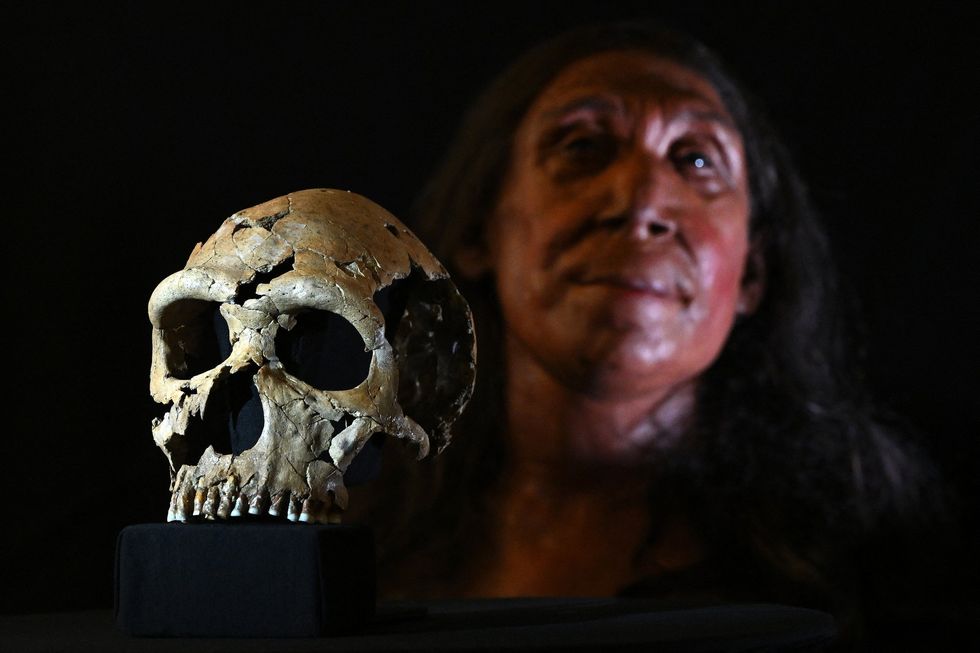
The discovery represents the first evidence of dental drilling by any species other than Homo sapiens
|GETTY
Justin Durham, a professor of orofacial pain at Newcastle University and chief scientific adviser to the British Dental Association, assessed the work as "a decent job".
He said: "If I was marking this for a dental student, I wouldn't give it an A, but given the circumstances it's pretty impressive."
Professor Durham explained that creating an opening in the tooth would have released built-up pressure from infection, thereby providing relief from severe toothache.
The scientists validated their findings by conducting replica experiments using three modern human teeth and reconstructed jasper stone tools similar to implements discovered at the same archaeological location.
LATEST DEVELOPMENTS:
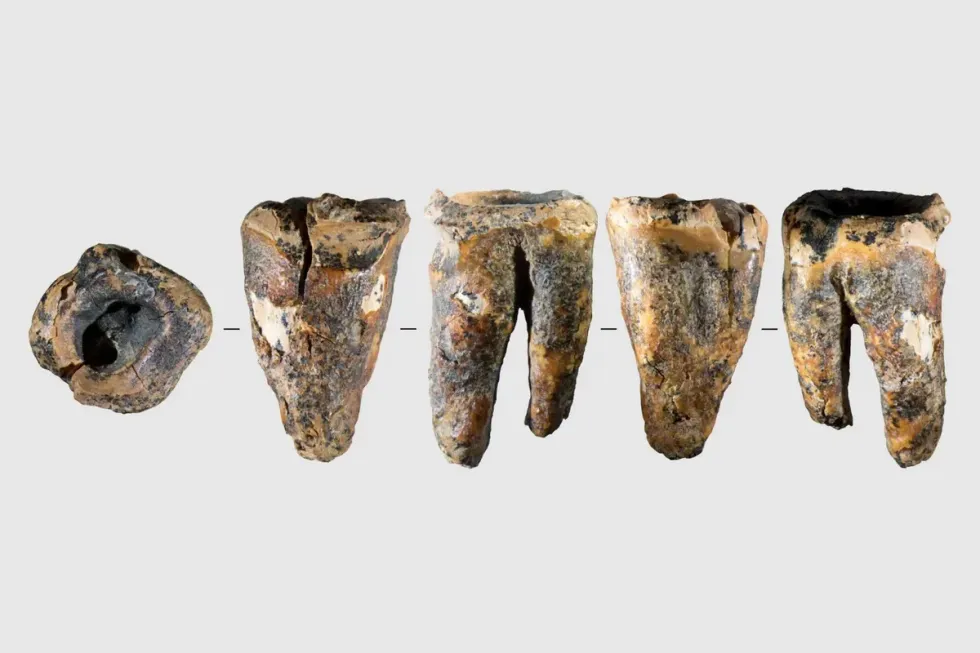
The tooth - Chagyrskaya 64, from five different angles
|ZUBOVA ET AL., PLOS ONE 2026
Working the pointed instrument manually between their fingers in rotating motions, researchers successfully produced comparable holes in approximately 35 to 50 minutes of sustained effort.
The technique demanded considerable precision and practice to avoid fracturing the tooth structure.
Dr Kolobova noted the procedure would have been excruciating for the patient.
Microscopic X-ray analysis of the original specimen identified mineralisation changes consistent with serious bacterial decay.
Evidence from polished edges and internal wear patterns indicates the individual survived the intervention and continued using the tooth for chewing, possibly for an extended period afterwards.
Dr Lydia Zotkina, an archaeologist at the Russian Academy of Sciences and co-author of the study, emphasised the remarkable willpower required of the patient.
"What struck me, and continues to strike me, is what an incredibly strong-willed person this Neanderthal must have been," she said.
"They must have surely understood that although the pain of the procedure was greater than the pain of the inflammation, it was only temporary and had to be endured."
The ordeal may have been particularly intense as genetic evidence suggests Neanderthals possessed greater pain sensitivity than Homo sapiens.
Dr Kolobova has called on palaeontologists worldwide to re-examine Neanderthal collections for additional traces of dental intervention.
"We may have missed many because we weren't looking for them," she said.
Roger Forshaw, an expert on ancient dentistry at the University of Manchester who was not involved in the research, cautioned against drawing broad interpretations from a single specimen, though he acknowledged the evidence adds to growing documentation of deliberate behaviours previously associated primarily with modern humans.