










Scientists at the University of Oxford have discovered hedgehogs possess remarkable hearing abilities extending into the ultrasonic range, detecting frequencies as high as 85 kHz—well beyond what humans, dogs or cats can perceive.
The groundbreaking research, published today in Biology Letters, opens up the possibility of fitting vehicles with ultrasound-emitting devices that could warn hedgehogs away from approaching traffic.
Road collisions currently account for the deaths of approximately one in three hedgehogs, making this discovery potentially significant for conservation efforts.
The researchers believe such technology could dramatically reduce fatalities among Britain's dwindling hedgehog population.
TRENDING
Stories
Videos
Your Say
Britain's hedgehog numbers have plummeted catastrophically over recent decades, falling from an estimated 30 million animals during the 1950s to fewer than one million today.
The International Union for Conservation of Nature classified the European hedgehog as "near threatened" in 2024, reflecting the severity of the population collapse.
Vehicle strikes represent one of the most significant threats facing the species, with traffic accidents responsible for killing up to a third of hedgehogs in local populations.
The Oxford team suggests gaining deeper insight into hedgehog hearing could provide novel approaches to safeguarding these beloved mammals from extinction.
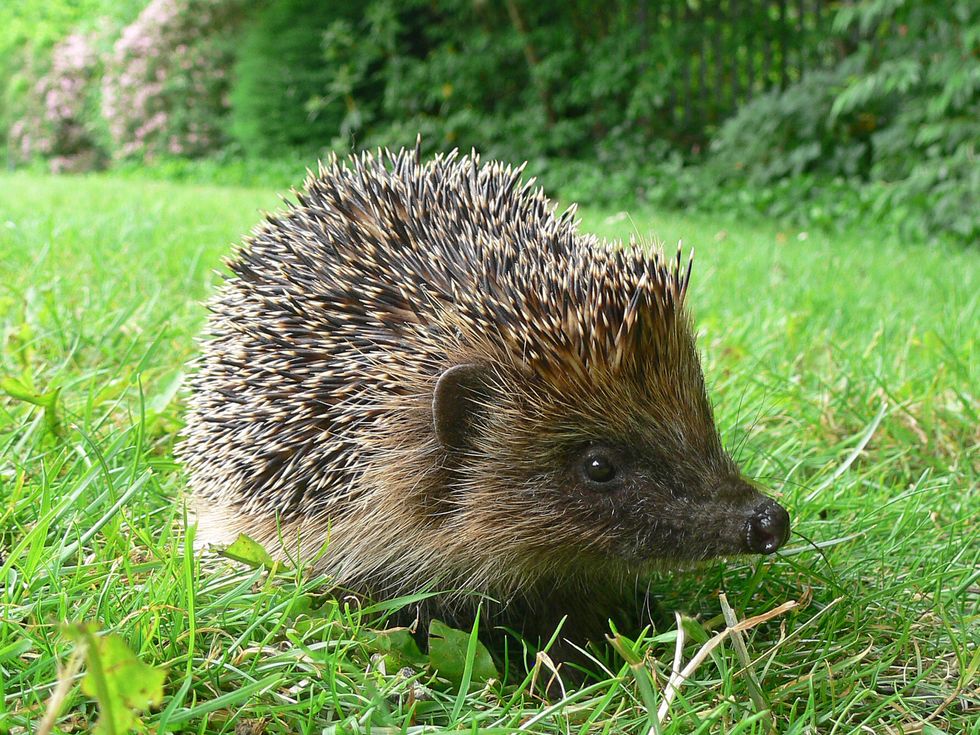
Britain's hedgehog numbers have plummeted
|GETTY
Oxford researchers worked alongside Danish colleagues to examine 20 hedgehogs that had been rehabilitated at wildlife rescue centres across Denmark.
The team employed a technique measuring electrical activity between the inner ear and brain, attaching small electrodes to the animals while playing sounds through a speaker.
Their measurements revealed the hedgehogs' brains responded to frequencies spanning 4kHz to 80kHz, with the strongest reactions occurring around 40kHz.
Using high-resolution CT scanning of a deceased hedgehog, the scientists constructed a detailed three-dimensional model of the ear's internal structure.
LATEST DEVELOPMENTS

Oxford University conducted the research
| PAThis revealed unusually rigid middle-ear bones resembling those found in echolocating bats, along with a compact cochlea suited to processing ultrasonic vibrations.
Dr Sophie Lund Rasmussen, assistant professor at Oxford's wildlife conservation research unit, said: "Having discovered that hedgehogs can hear in ultrasound, the next stage will be to find collaborators within the car industry to fund and design sound repellents for cars."
She added effective devices could substantially reduce the road traffic threat facing declining European hedgehog populations.
Professor David Macdonald, co-author of the study, said: "It is especially exciting when research motivated by conservation leads to a fundamental new discovery about a species's biology which, full circle, in turn offers a new avenue for conservation."
Beyond vehicles, similar ultrasonic technology could potentially be incorporated into robotic lawnmowers and garden strimmers.
Our Standards: The GB News Editorial Charter