










British engineers at a satellite facility in Cornwall will play a crucial role in helping Nasa monitor the Artemis II spacecraft during its voyage to the Moon.
The mission is scheduled to lift off on Wednesday from the Kennedy Space Center in Florida.
However in addition to the site in the US, the Goonhilly satellite station, situated on the Lizard peninsula in England's southwest region, will support Nasa in tracking the four-person crew on its more than half-a-million-mile journey through space.
The mission marks humanity's return to deep space for the first time in more than five decades.
TRENDING
Stories
Videos
Your Say
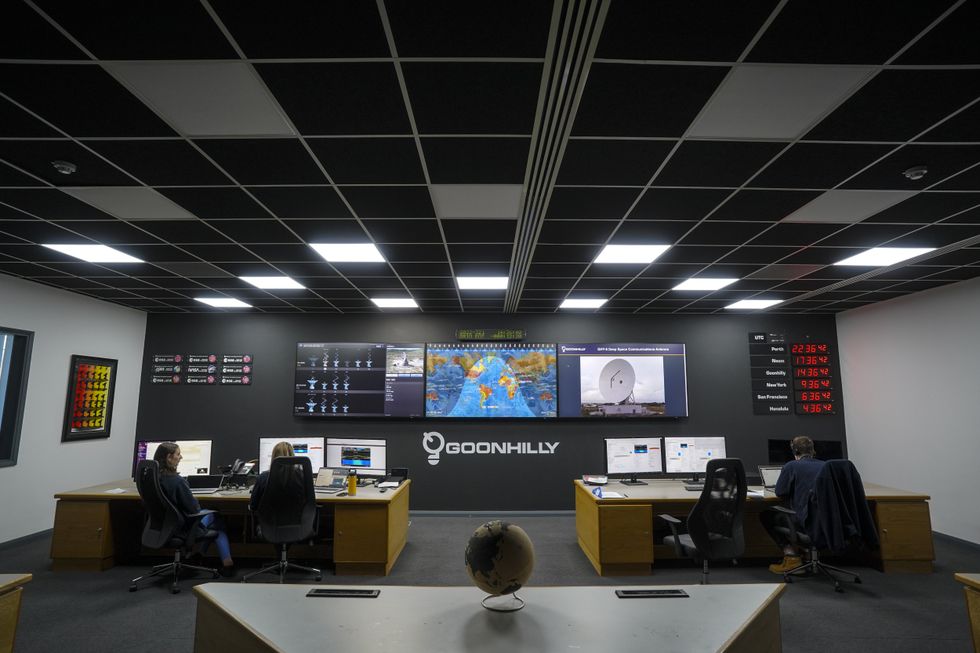
Matthew Cosby, director of space engineering at the facility, confirmed that five to six operators will manage the tracking systems.
The launch window extends from Wednesday through to next Monday, with a subsequent opportunity available from April 30 if required.
The facility has a distinguished history stretching back to the Second World War, when it operated as the RAF Dry Tree radar base detecting incoming German aircraft.
An antenna was established at the site in 1962 to capture the first live television images transmitted across continents via satellite.
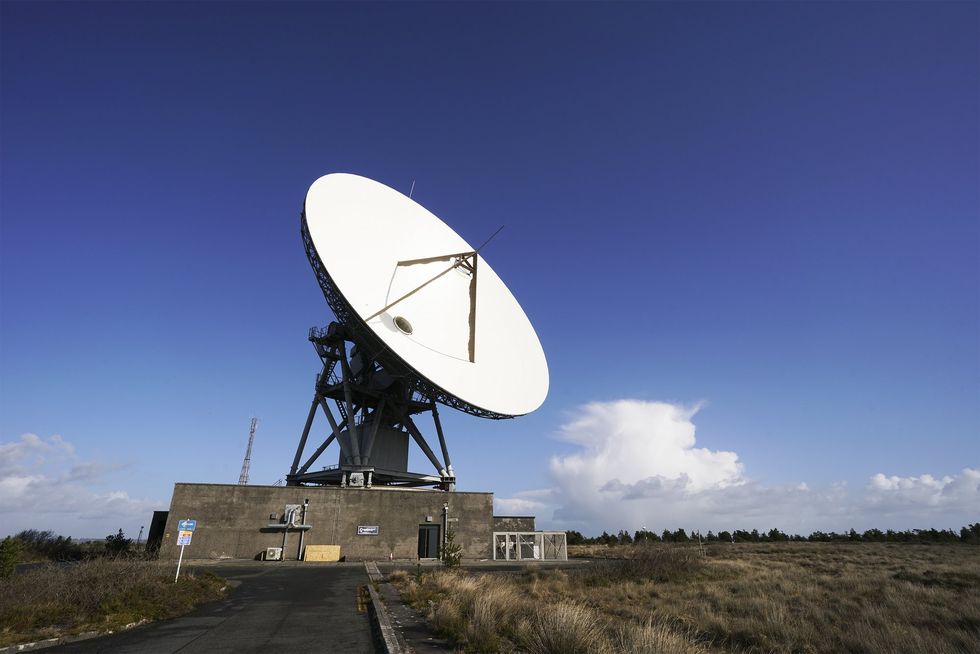
The British site at Goonhilly satellite station will help Nasa track the Artemis II as it journeys to the Moon
|GETTY
The station gained international prominence by transmitting footage of Neil Armstrong's lunar steps to European viewers numbering in the millions.
It subsequently relayed coverage of major sporting and cultural events, including boxing matches featuring Muhammad Ali and the Live Aid charity concerts.
The location also served as an important connection point during the internet's formative years.
Equipment at the facility underwent significant modernisation in 2018, transforming it into a deep-space tracking antenna.
The site at Goonhilly helped broadcast Neil Armstrong's lunar steps across Europe
|GETTY
Since that upgrade, the station has provided support for automated lunar landing missions and spacecraft exploring Mars.
The facility will receive data transmitted directly from the Orion capsule across approximately a quarter of a million miles of space.
According to Mr Cosby, the signal strength from Artemis II will exceed that of Apollo 11.
"What we're demonstrating with Artemis II is that we can receive the data directly from the Orion capsule," Mr Cosby said.
Information received at the Cornish site will undergo processing before being forwarded to Nasa's American space centre.
LATEST DEVELOPMENTS:
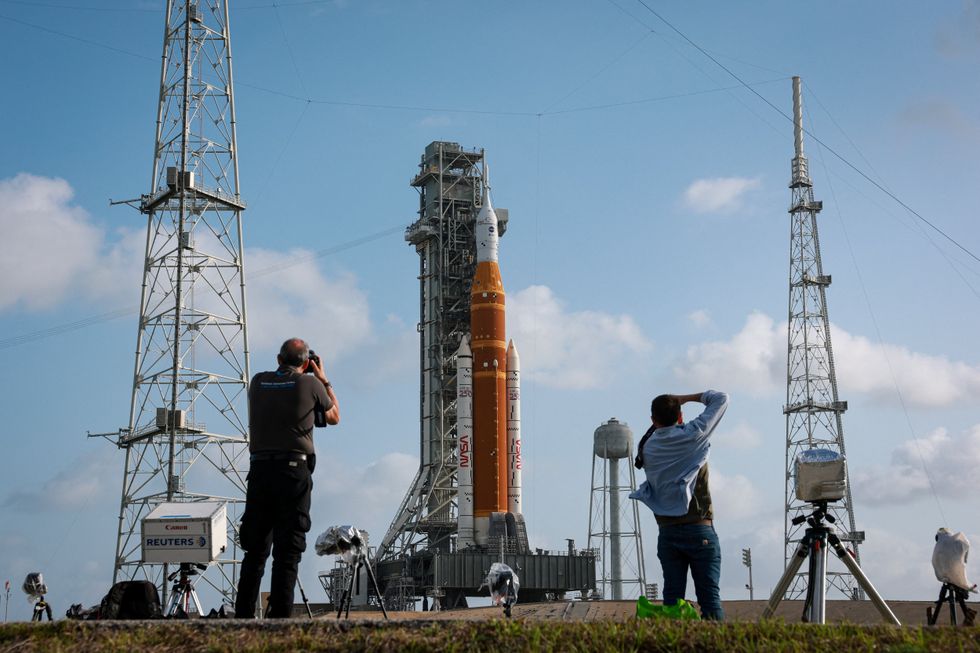
Artemis II will launch this week and attempt to travel around the Moon and back in the first mission to deep space in more than 50 years
|REUTERS
The agency will use Doppler shift analysis in the signal to determine the spacecraft's exact location, similar to how an ambulance siren's changing pitch reveals its speed.
"We're effectively tracking its location so they can feed that into trajectory models and know exactly where it is," Mr Cosby added.
The peninsula's coastal positioning provides advantages for signal reception.
"We've got a great view of the horizon so we can pick up the moon as soon as it comes [up]," Mr Cosby said.
"Where the Lizard is has very low radio frequency 'noise'. There are no cities around there so no human activity that causes a lot of interference. It is a great location."

The four-person crew comprises Nasa commander Reid Wiseman, pilot Victor Glover, mission specialist Christina Koch, and second mission specialist Jeremy Hansen
|REUTERS
The four-person crew comprises Nasa commander Reid Wiseman, pilot Victor Glover, and mission specialist Christina Koch.
Jeremy Hansen from the Canadian Space Agency will serve as the second mission specialist.
The ten-day voyage will involve a flyby manoeuvre around the moon before returning to Earth.
The astronauts will venture several thousand miles past the Moon's far side, reaching distances from our planet never before achieved by humans.
No person has departed the immediate vicinity of low Earth orbit since the final Apollo mission left the lunar surface in 1972.
Should the Cornish facility demonstrate successful tracking capabilities, it may be assigned to assist in transmitting commands to the Artemis IV mission, which aims to return humans to the Moon's surface for the first time since the 1970s.
"We have an opportunity to be part of something great, all from Cornwall," Cosby said.