










Greenhouse gases were not to blame for prehistoric climate change, a study of ancient ice samples has found.
Previous research suggested carbon dioxide and methane, the gases most associated with manmade global warming, helped drive plummeting temperatures around three million years ago. This was when the warm climate of the Pliocene epoch began to give way to the rolling ice ages of the Pleistocene.
But a new study, published in Nature, questions this belief. Rather than fluctuating with the temperatures, the amount of both carbon dioxide and methane remained stable, it finds.
Factors other than the greenhouse gases “may have had a key role in global cooling”, the team believe. They suggest ocean circulation, ice cover and the Earth’s reflectivity as possible candidates.
TRENDING
Stories
Videos
Your Say
Dr Steven Koonin said the paper showed how forces beyond carbon dioxide affected the planet – and how complex climate science is.
The senior fellow at Stanford University's Hoover Institution, who served as the US Department of Energy’s undersecretary for science under President Obama, said: “The results remind us how ‘unsettled’ climate science is, since they show CO2 is not the control knob of the climate.”
Other scientists insist, regardless of the findings, “it is an undisputed fact that increasing greenhouse gases are currently heating our climate up”. The samples used in the study were found in the Allan Hills in Anarctica’s Victoria Land.
Powerful winds have eroded the terrain and helped bring older “blue” ice closer to the surface. These ice cores confirmed temperatures had fallen as the epochs changed – but found that greenhouse gases were unlikely to have been the cause.
Levels of carbon dioxide began at a lower than expected 250 parts per millions (PPM), with just a 20ppm movement over a three million year period. Methane levels were constant throughout.
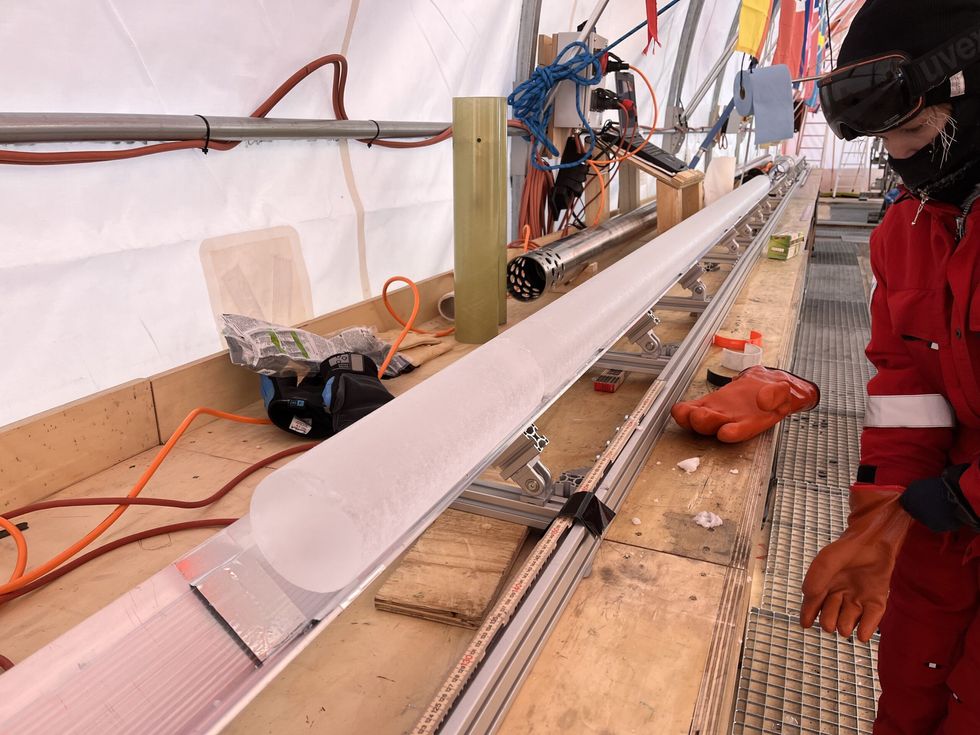
Greenhouse gases were not to blame for prehistoric climate change
| PNRA, IPEVResearchers had previously predicted carbon dioxide would have needed to drop from 400ppm in the warm Pliocene to 250ppm in the later epoch to bring about the cooling.
Joint author Julia Marks-Peterson, of Oregon State University, wrote: "At face value, our results indicate that the contribution of changes in carbon dioxide and methane changes in direct radiative forcing during long-term Pleistocene cooling was small.
"Importantly, we find no discernible change in mean methane concentrations across the Pleistocene, in spite of global cooling.
"The relatively modest change in average concentration of atmospheric carbon dioxide, and no change in methane, stand in contrast to evidence of significant cooling over the Pleistocene from the same ice core samples."
Ms Marks-Peterson said the findings suggest the climate system is more complex than once thought. She said: “Our hope is that this work will refine our view of past warmer climates and sharpen our understanding of how different elements of the Earth system interact.”
Ed Brook, director of the project, said the discoveries are pushing climate records back further than ever before. He said: “These longer records are now raising new questions about Earth’s climate evolution and how far back in time we might be able to go with ice core data.”
Responding to the study, Professor Carrie Lear, of Cardiff University, said the research showed “how sensitive the climate system is to even small nudges”. She said: “This new work does not change our understanding of how strongly Earth’s climate responds to greenhouse gases. Modern CO₂ levels are rising far faster, and to far higher values, than anything seen in these ancient records.”
LATEST DEVELOPMENTS:
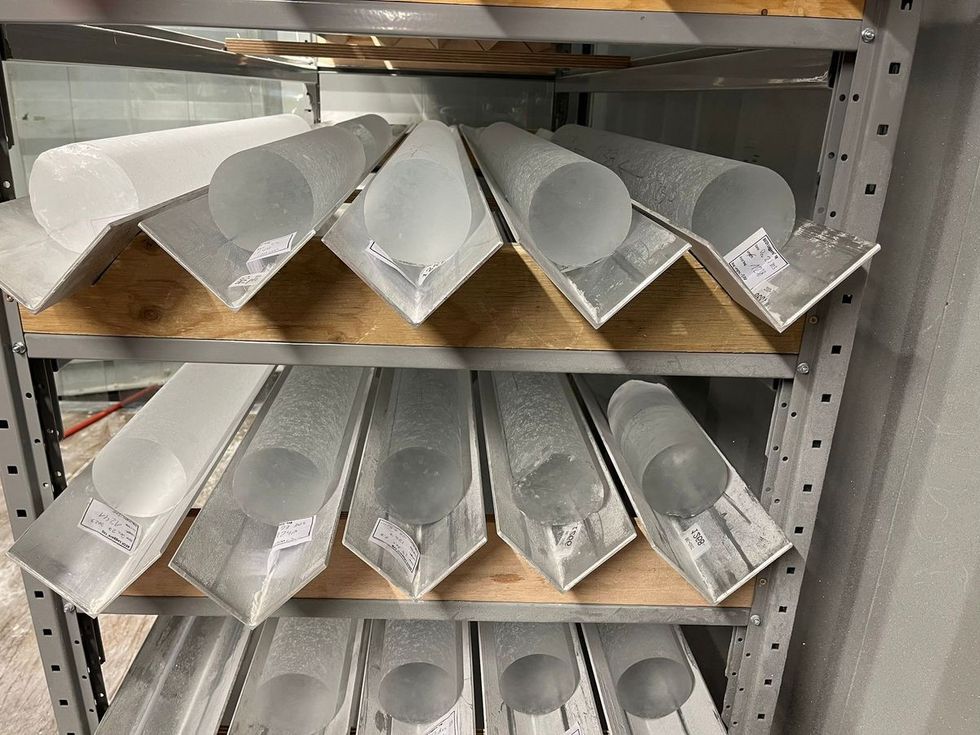
Ed Brook, director of the project, said the discoveries are pushing climate records back further than ever befor
| PNRA, IPEVProfessor Richard Allan, climate scientist at the University of Reading, said: “Improved measurements and techniques show that greenhouse gas changes were not the main player in this ancient global cooling.
"However, present day carbon dioxide is massively above the levels seen in these natural glacial cycles over the past million years and multiple lines of evidence show it is an undisputed fact that increasing greenhouse gases are currently heating our climate up.”
But Toby Young, whose Daily Sceptic website reported on the research, said that the findings asked questions of accepted climate wisdom.
He said: “The scientific findings highlighted blow a hole through the hypothesis that variations in the level of CO2 in the Earth’s atmosphere are responsible for climate change.
"Turns out, CO2 has remained more or less stable for the past three million years, while average global temperatures have fluctuated wildly.
“So much for the science of climate change being ‘settled’.”