









A new exhibition has shown off the agonising final moments of the residents of Pompeii after they were buried in volcanic ash.
Pompeii's Archaeological Park has put 22 plaster casts on show, taken from the ruins of the city destroyed by Mount Vesuvius nearly two millennia ago.
The volcanic eruption of AD 79 stands among history's deadliest, claiming an estimated 16,000 lives.
Archaeologists created the haunting figures by filling body-shaped voids left in the hardened ash with plaster.
The resulting moulds reveal victims frozen in positions of suffering, their bodies curled and contorted.
The display opened on 11 March 2026, offering visitors an unprecedented glimpse into the catastrophe that buried the Roman city beneath layers of scorching volcanic debris.
One cast depicts two individuals clutching each other in their final embrace.
Another figure appears to show a man with clenched fists, a young child resting upon his knees.
Nearby, a teenage boy wrapped in a cloak lies displayed alongside a woman positioned on her side.
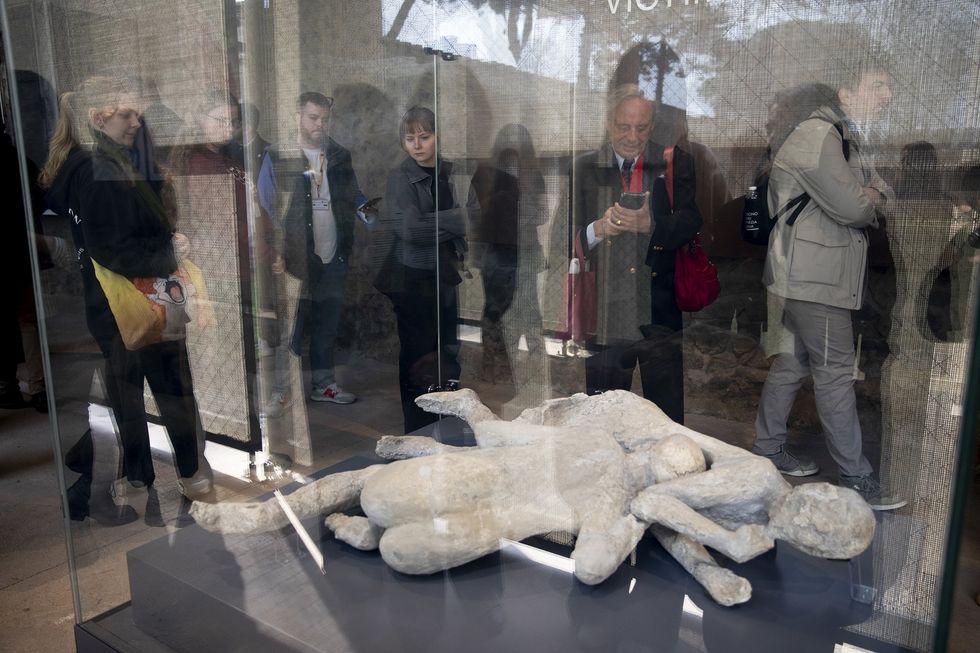
The moulds reveal victims frozen in positions of suffering, their bodies curled and contorted
|GETTY
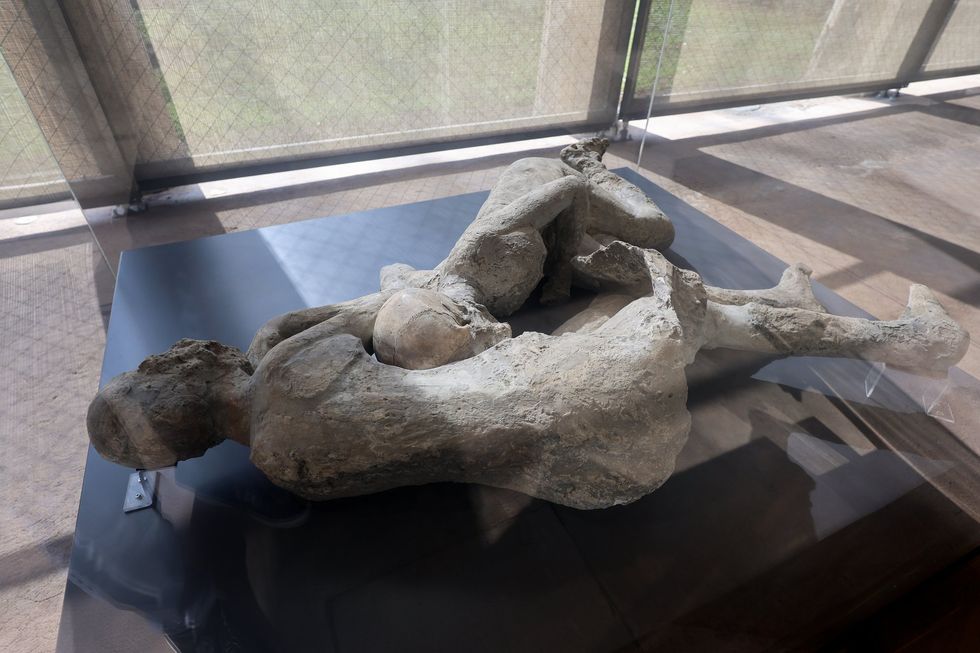
One cast depicts two individuals clutching each other in their final embrace
|GETTY
This woman was unearthed close to a city gate in 1976.
She had attempted to escape carrying gold and silver rings, coins, and a small statue of the goddess Isis.
A separate cast reveals a man seated with knees drawn to his chin, hands pressed against his face, seemingly using his cloak to shield his mouth.
Perhaps the most moving figure in the collection is that of a three-year-old child wearing a tunic, discovered in Pompeii's House of the Golden Bracelet.
READ MORE ON POMPEII:
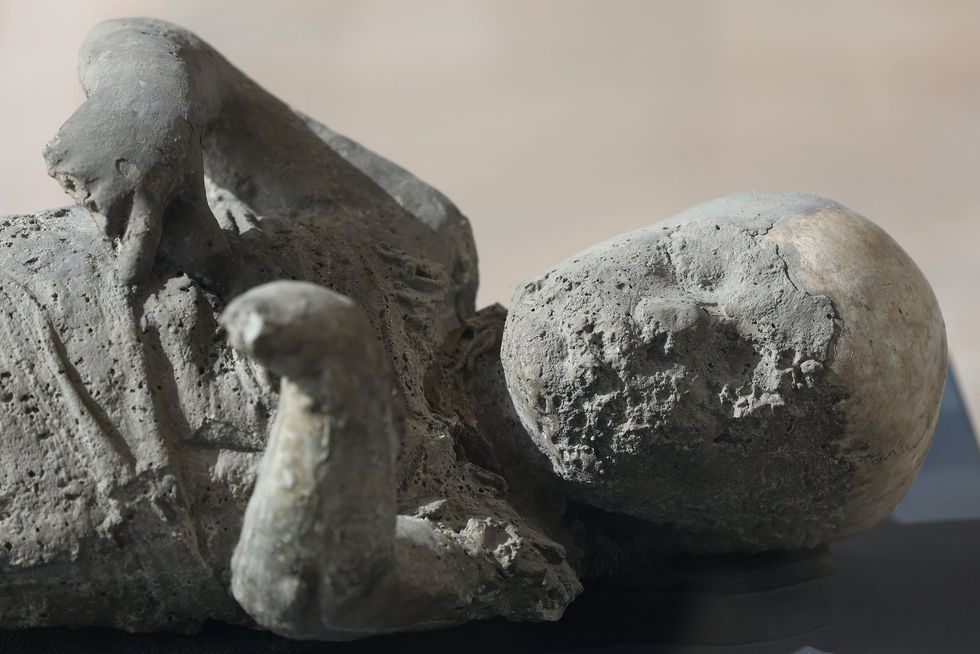
Perhaps the most moving figure in the collection is that of a three-year-old child wearing a tunic
|GETTY
The intense heat left the child's lips visibly swollen.
Gabriel Zuchtriegel, the Pompeii director, said at the opening of the exhibition at the site: "We want to tell the story of a tragedy that destroyed a city, the biggest natural disaster in antiquity, but also left us with an archaeological and historical treasure."
Archaeologist Silvia Bertesago said: "We are recounting in a scientific way, for the first time, what happened in those hours."
A sign positioned just outside the exhibition requests visitors to proceed with respect and in silence.
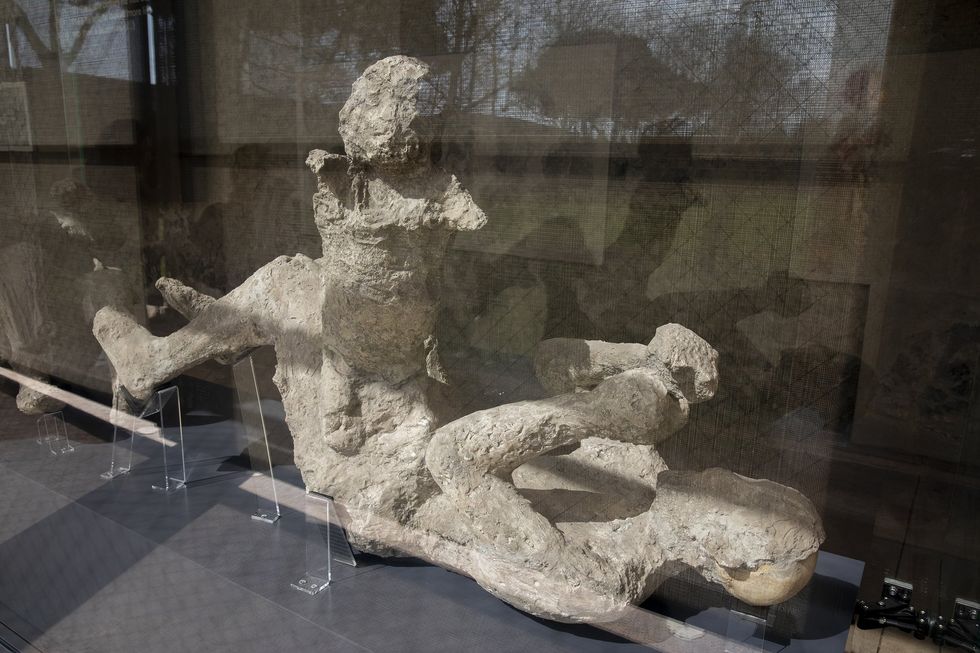
One cast appears to show a man with clenched fists, a young child resting upon his knees
|GETTY
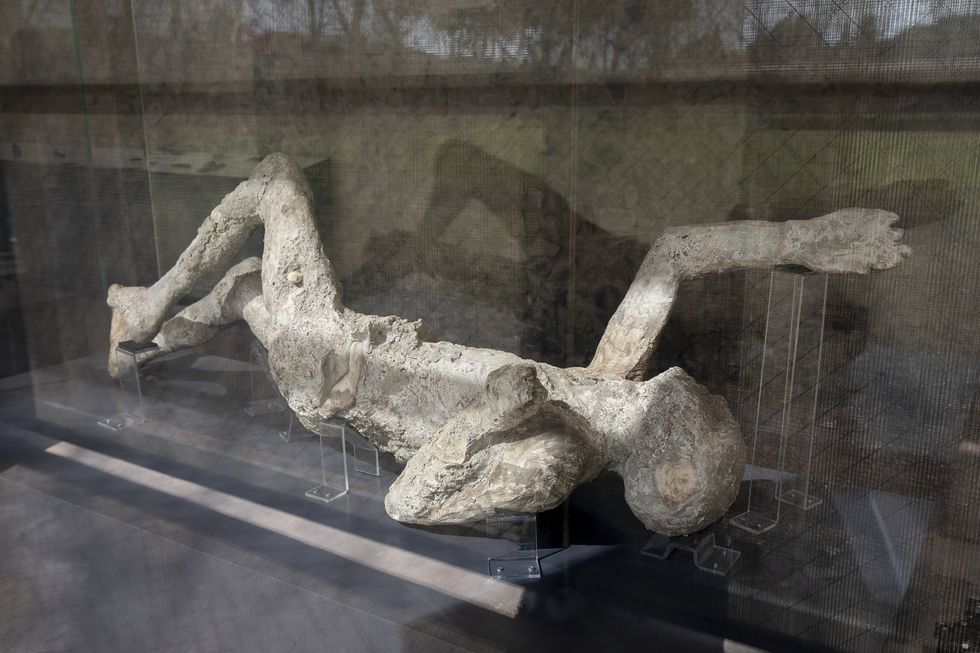
The vast majority of those who perished in Pompeii succumbed to asphyxiation from the enormous cloud of searing volcanic ash and gases
|GETTY
Every plaster cast comes with a comprehensive description detailing its discovery location, date, and condition when found.
The vast majority of those who perished in Pompeii succumbed to asphyxiation from the enormous cloud of searing volcanic ash and gases released during the eruption.
The ancient city lay concealed for approximately 1,700 years before Spanish military engineers stumbled upon it during the mid-18th century.
Today, Pompeii's ruins remain a major draw for tourists, attracting roughly one million visitors each year.