










Anthropologists have uncovered evidence of an ancient ape species that roamed Africa on two feet seven million years ago, potentially rewriting the timeline of human evolution.
Scientists at New York University have employed advanced 3D imaging techniques to examine fossils of what could be humanity’s earliest ancestor.
The research focused on the ape known as Sahelanthropus tchadensis, whose remains were first unearthed in Chad's Djurab desert over two decades ago.
By analysing the shape and structure of leg and arm bones, the team found indicators suggesting this creature walked on two feet rather than moving about on all fours.
TRENDING
Stories
Videos
Your Say
If confirmed, this would establish Sahelanthropus as the earliest known member of the human lineage, predating the previously recognised oldest bipedal ancestor, Ardipithecus, by approximately two million years.
The investigation identified a distinctive bump on the thigh bone known as the femoral tubercle, which serves as the anchor point for the iliofemoral ligament, the body's largest and most powerful connective tissue essential for upright movement.
"It's the attachment point for the largest and most powerful ligament in our bodies," said Dr Scott Williams, associate professor at New York University and lead author.
"When we're seated, that ligament is loose and when we stand it tightens up. It prevents your torso from falling backward or from side to side as you walk around, so it's a really important adaptation for bipedal walking. As far as I know, this has only been identified in bipedal hominins."
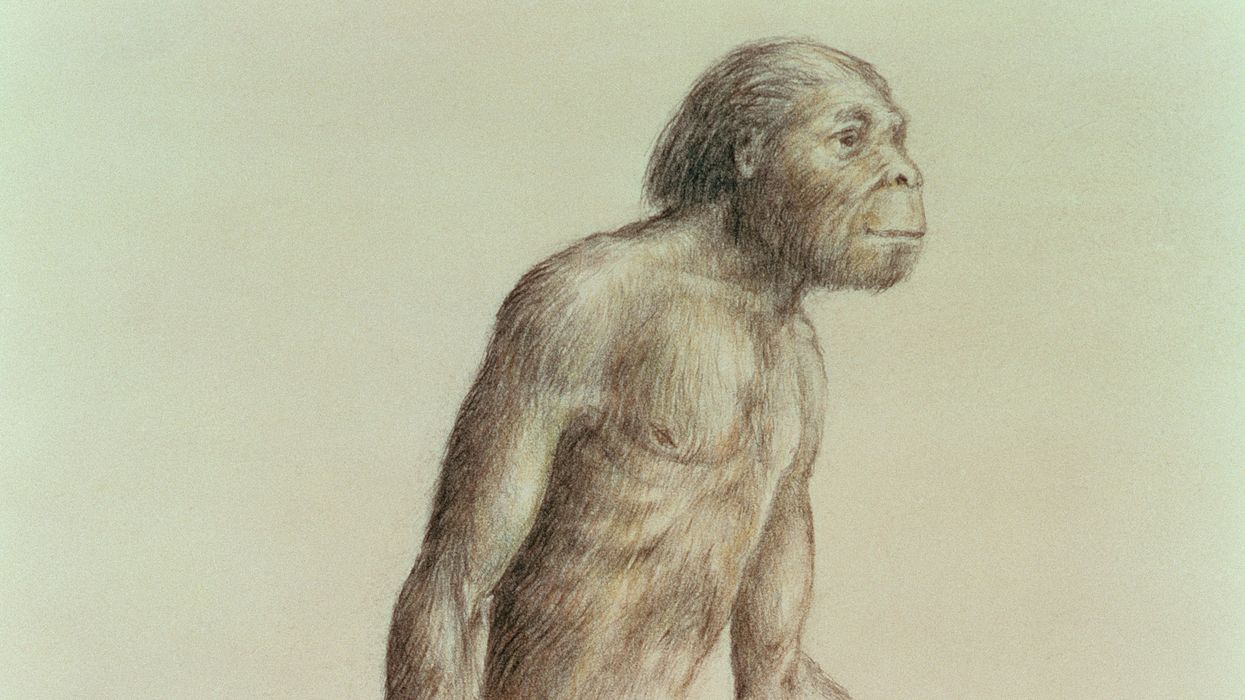
Anthropologists have discovered a seven-million-year-old walking ape that could be the earliest human ancestor (stock pic)
|GETTY
Additional markers included a natural rotation in the femur helping legs face forward, plus gluteal muscles resembling those found in early human ancestors.
The fossils were originally recovered from the Djurab desert in 2001, with Professor Michel Brunet at the University of Poitiers leading the excavation team.
Sahelanthropus's skull proved so remarkably preserved that researchers gave it the nickname Toumai, which translates to "hope of life" in the local Dazaga language.
Professor Brunet initially proposed that the species walked upright based on how it carried its head, declaring it "the ancestor of all humankind".
LATEST DEVELOPMENTS
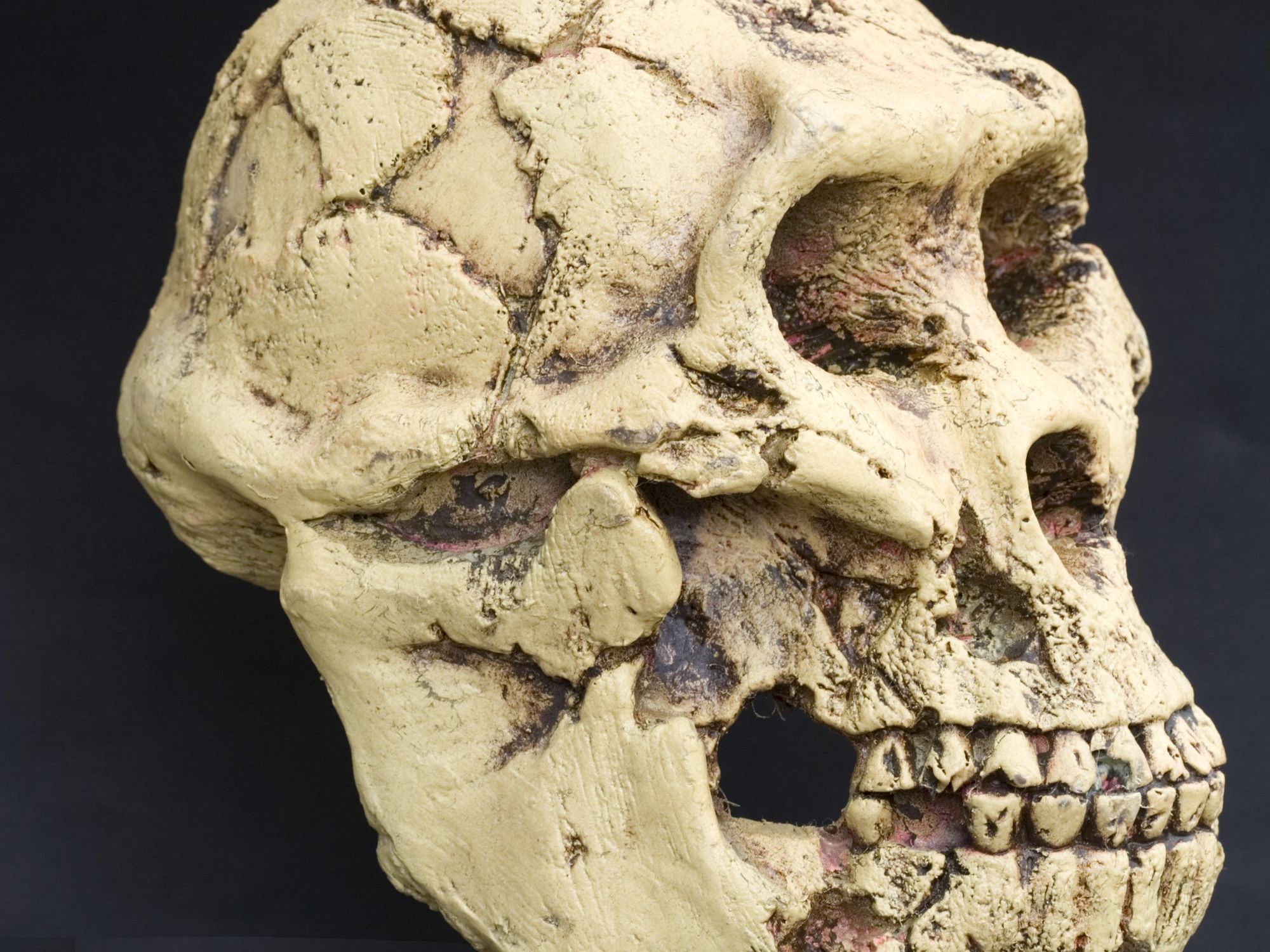
The findings are based on fossils unearthed more than 20 years ago (stock pic)
|GETTY
The specimen displayed small canine teeth and a relatively flat facial structure, characteristics suggesting closer ties to humans than to chimpanzees.
However, subsequent analysis of curved femur bones led some researchers to argue Sahelanthropus was likely a knuckle-walker similar to modern gorillas, sparking a debate that has persisted for over two decades.
Despite the new findings, several scientists remain unconvinced by the conclusions.
Dr Marine Cazenave at the Max Planck Institute for Evolutionary Anthropology described the evidence for upright walking as "weak," noting that most results pointed to similarities with African great apes or extinct apes.
She found the femoral tubercle unconvincing, adding that it is not directly related to upright walking and was "very faint" in a "highly damaged" region of the thigh bone.
Dr Rhianna Drummond-Clarke, at the same institute, said: "More work is needed to clarify whether walking on two feet was used to walk in the trees, or to move on the ground, the latter of which is a defining feature of the human lineage."
Dr Scott Williams himself acknowledged the limitations: "I think it's a case of too few fossils and too many researchers."
Our Standards: The GB News Editorial Charter