






A 540-year-old love letter has revealed a 15th century bride's choice between the man of her dreams and her family's money.
The letter, penned by Margery Brews in February 1477, was addressed to her fiancé John Paston III, whom she called her "beloved Valentine."
MyHeritage's newly launched Scribe AI tool unpicked the document, which had remained hidden in a British estate archive for over five centuries.
The correspondence reveals Miss Brews was caught between her devotion to Mr Paston and a financial disagreement between their families.
Her father had offered £200 but wished to pay in instalments, while Mr Paston's mother demanded different terms.
Despite the financial tensions, Miss Brews made clear her commitment to Paston would not waver.
"But if that you love me, as I trust truly that you do, you will not leave me therefore," Miss Brews wrote to her lover, "for if you had not half the livelihood that you have, for to do the greatest labour that any woman alive might, I would not forsake."
She declared she would marry him even if he possessed only half his wealth.
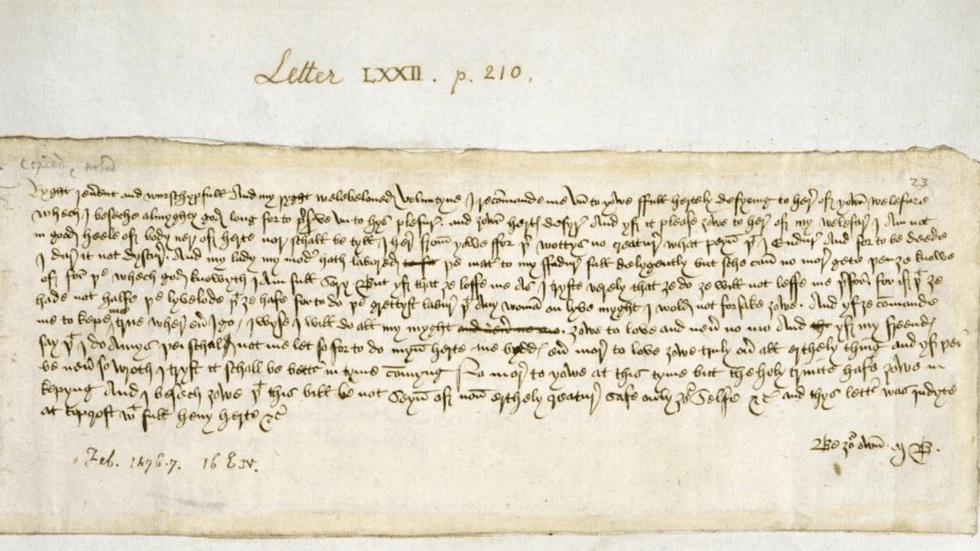
The document is the first time AI has been deployed to reveal the romantic secrets of the past
|MYHERITAGE
Her mother had attempted to persuade her father to increase the dowry, but he refused to offer more money.
Miss Brews concluded her letter "with a very heavy heart", requesting Paston keep its contents secret.
The letter proved challenging to decipher due to Miss Brews' use of the Anglo-Saxon letter thorn and archaic abbreviations.
Faded ink had rendered portions nearly invisible over the centuries.
LATEST SCIENTIFIC DISCOVERIES:
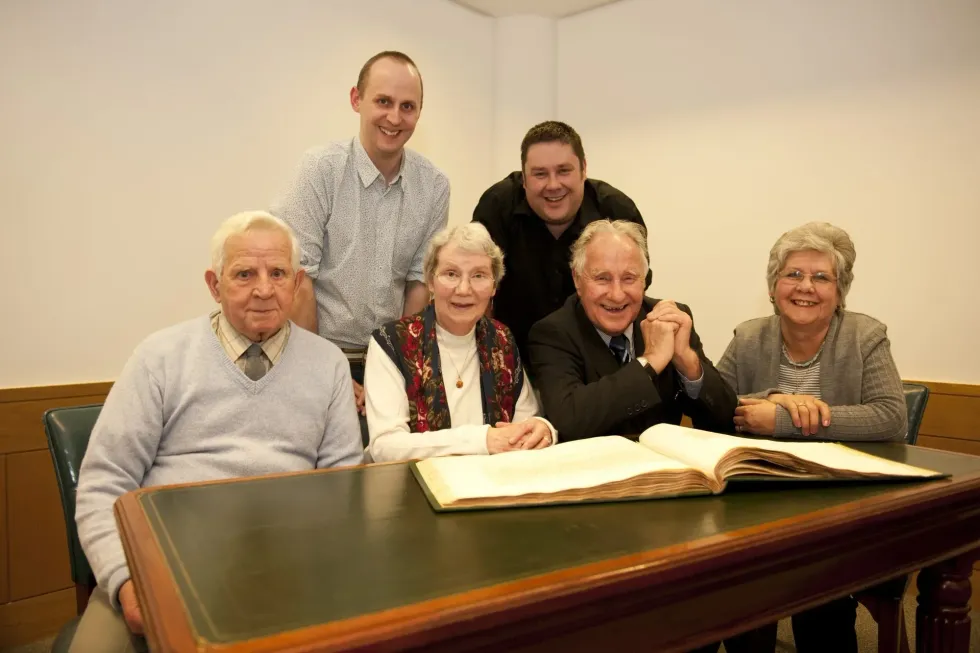
The descendants of the love birds gathered around the original letters
|MYHERITAGE
The couple ultimately married in autumn 1477, their love prevailing over the families' financial dispute.
"The language can feel unfamiliar to modern readers because spelling, grammar and pronunciation were very different from the English we use now," a MyHeritage spokesman explained.
The document forms part of the renowned Paston Letters, a collection of over 1,000 letters and records spanning 1422 to 1509.
The British Library owns this archive, which offers an unmatched window into the lives of England's landed gentry before the Tudor era.
Scholars have described the document as the world's oldest documented love letter in English.
The discovery is the first occasion AI has revealed the emotional stakes underlying a medieval marriage contract.
The feature is designed to transcribe, translate, analyse and explain historical letters, handwritten documents, records and old photographs.
The feature can assist with older documents penned in unfamiliar handwriting, older forms of English or foreign languages.
For this example, MyHeritage used the famous 1477 Paston letter, widely regarded as the earliest surviving Valentine letter in English, to show off Scribe AI’s capabilities.
"It really reminds you that the people you are studying are very much like ourselves," said archaeologist Rob Edwards.
"They have the same feelings and the fact that they are related really does add an extra dimension."