







Fresh bread baked according to traditions nearly two millennia old are now being sold at the world's most renowned Roman archaeological site.
Farrell Monaco, a specialist in Roman bread archaeology and food writing, brought several hundred recreated loaves to what marks the first agricultural fair ever held within ancient Pompeii.
The Canadian-born British archaeologist spent a decade examining carbonised loaves in laboratory settings before embarking on experimental baking to test her culinary archaeology theories.
She holds an honorary fellowship and is pursuing a PhD at the University of Leicester School of Archaeology and Ancient History.
TRENDING
Stories
Videos
Your Say
The recipe represents an approximation, Ms Monaco acknowledges, drawing upon available research concerning grains, leavening agents, milling techniques and extraction methods. Some of these practices were first documented by Pliny the Elder.
Her signature creation, the panis quadratus loaf, emerged from eight years of practical baking experiments.
"I was interested in Roman food and diet, and as soon as I saw there was a gap in the research, I decided I was going to try to fill in the bread blank," Ms Monaco told The Telegraph.
Excavations have so far revealed 35 ancient bakeries across Pompeii, with Ms Monaco anticipating further discoveries as work continues in the site's north-eastern corner.
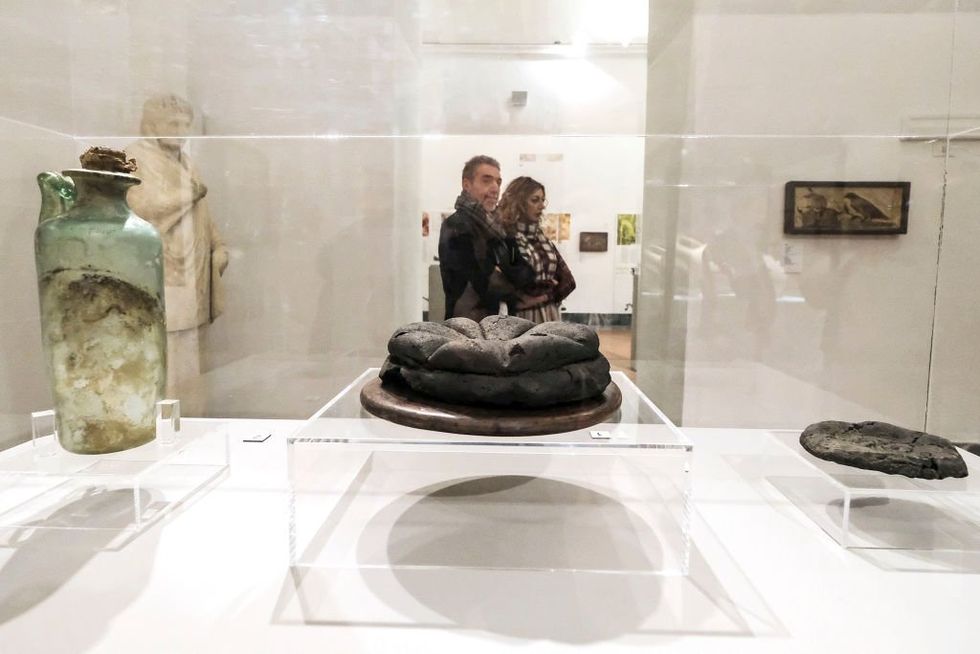
Carbonized bread has long been kept in Laboratory of Applied Research in the archaeological area of Pompeii
|GETTY
Within these establishments, giant volcanic millstones once ground through the night whilst slaves or convicts laboured in scorching conditions around brick ovens, overseen by bakery foremen.
A fresco uncovered in 2023 depicted what appeared to be an Italian flatbread adorned with fruits, nuts and condiments alongside a wine goblet.
Ms Monaco swiftly dispels any misconceptions about this image. "It's not pizza," she states firmly. "It's a sacrificial cake."
Three bread varieties dominated Pompeian life: sacrificial cakes used as supports for altar offerings to the gods, sweet bread rings called Arculata, and the sectioned panis quadratus most frequently depicted throughout the city.
LATEST DEVELOPMENTS
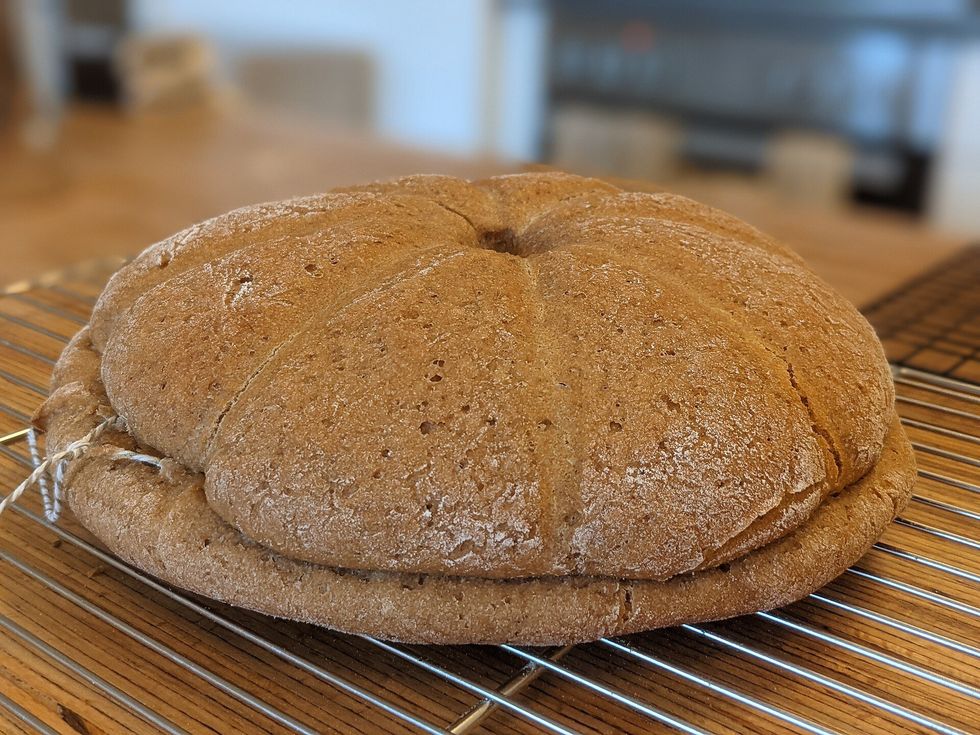
A modern recreation of the Herculaneum loaf
|WIKICOMMONS
In 1862, archaeologists made a remarkable discovery: 81 loaves preserved within a sealed oven at what is now called the Bakery of Modestus.
Whether these loaves were baking when Vesuvius erupted or had been stored for safekeeping remains uncertain.
Ms Monaco said: "Did they cut and run as the bread was baking or were they lobbed in there by bakers expecting to come back, maybe to protect them from looting? We may never know, but it is a mystery that obsesses me."
Fingerprints remain visible on some rounds. A reed was used to press radiating wedges into each loaf's surface, enabling division into eight equal portions.
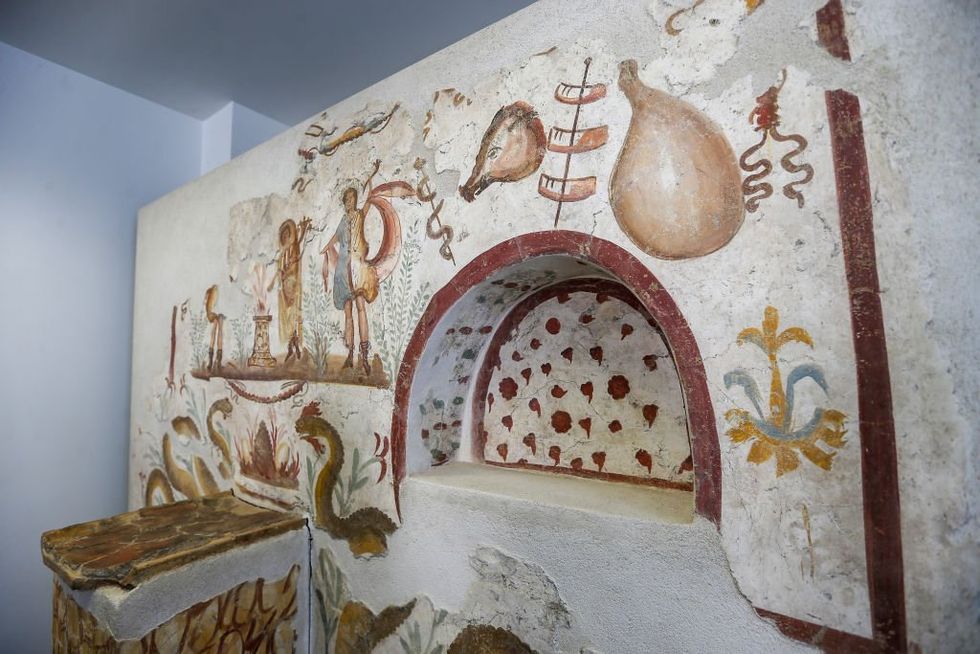
One of the frescos surrounding the ovens in Pompeii
|GETTY
The recent event drew enthusiastic responses from visitors.
Taiwanese tourist Huang Jing Lun approached Ms Monaco for a photograph, exclaiming: "Hey, you're the bread lady! I used your recipe. But I made it without the poppy seeds – they're illegal in my country!"
Retired Canadian chef Terence Hopman, 76, sampled a portion and declared: "It's fantastic. What's special is that the recipe is so ancient."
The Unesco site currently welcomes approximately 20,000 visitors daily.
Monaco's Italian business partner, Raffaele Cirillo, offered a reflection whilst sharing bread with visitors: "When you share food, you share sentiments. Bread unites people."