










Medieval toilets still smell foul after 800 years, archaeologists have revealed.
Archaeologists from the Regional Association of Westphalia-Lippe (LWL) excavated a loo in the northern German city of Paderborn.
The researchers found five sealed and airtight medieval latrines - which preserved a number of artefacts which would have otherwise decomposed - but also, smelled.
Susanne Bretzel, a conservator at LWL, said: "Even after so many centuries in the ground, the latrine find still had a rather unpleasant odour."
The team at LWL examined the site during construction for a new building.
Inside one toilet was a perfectly preserved wood-and-wax notebook, possibly dropped into the latrine as its owner was wiping.
The foul-smelling latrine proved to be ideal for preserving the notebook.
Ms Bretzel said: "I only had to clean the outside of the book, as the inner pages were so tightly bound that there was no dirt on them.

The north medieval latrine still had a foul smell as it was excavated
|LWL/SVEVA GAI
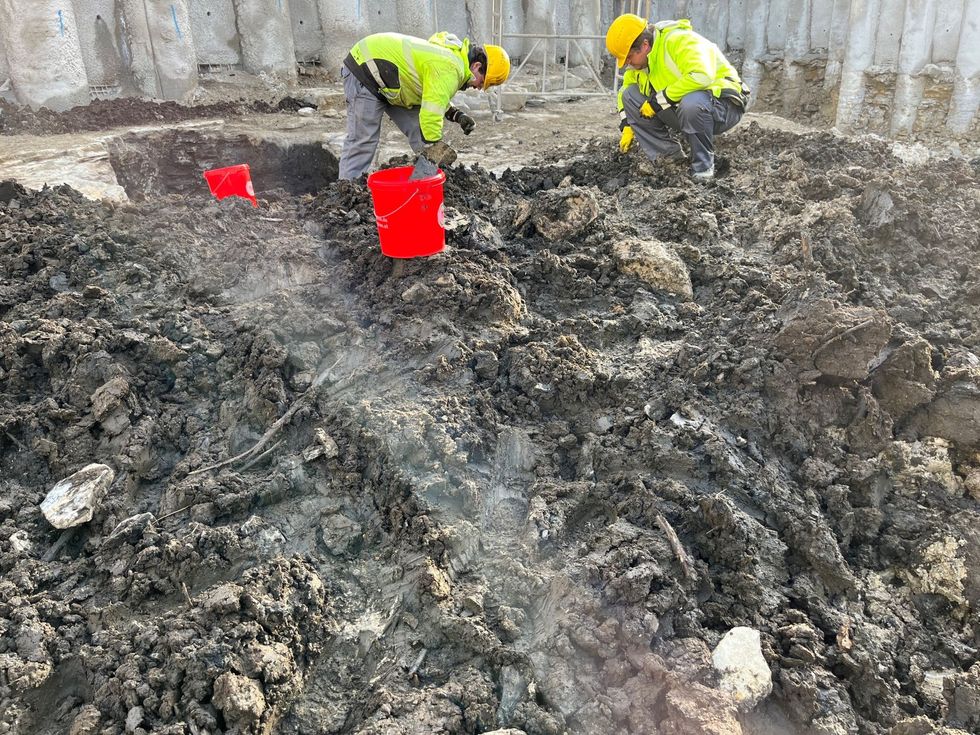
Archaeologists had to closely examine the contents of the medieval latrines
|LWL/SVEVA GAI
"The wood also hadn't warped, so the wax is still intact and the writing itself is easily legible."
The notebook measured about 3.4 by 2.23 inches, and kept in a leather case - decorated with a fleur-de-lis.
Inside the book were 10 wax pages, eight of which were double-sided and two single-sided.
Written in the book were numerous lines of cursive Latin text, some of which was written over other lines and in different directions, suggesting it was "used spontaneously", said Sveva Gai, the LWL city archaeologist in Paderborn.
LATEST ARCHAEOLOGICAL DISCOVERIES:
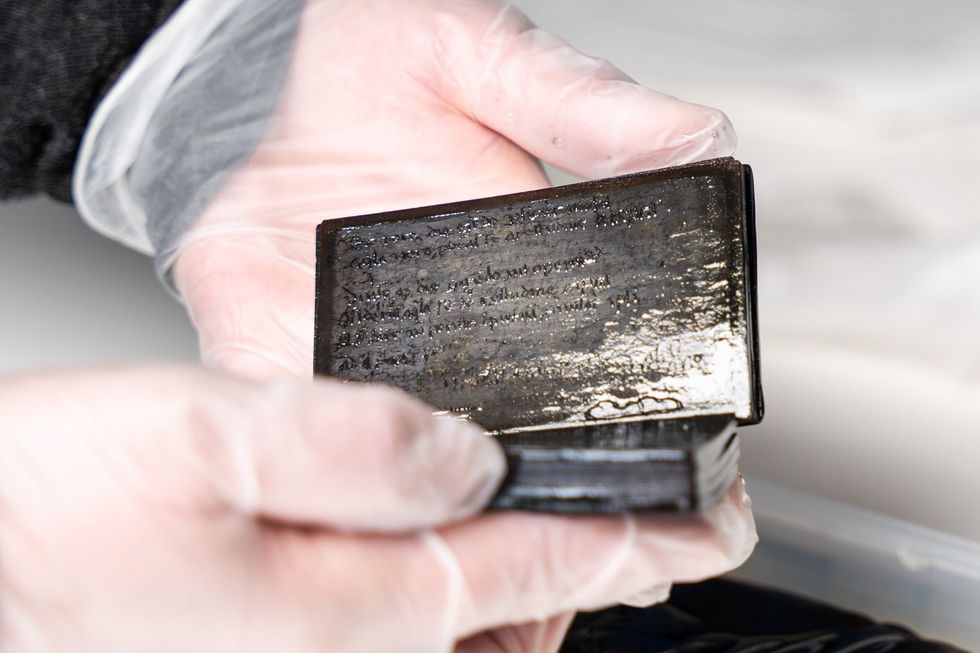
One medieval toilet contained a preserved notebook, which may have fell into the latrine as its owner was wiping
|LWL
Barbara Ruschoff-Parzinger, an archaeologist and the head of cultural affairs at LWL, said individual words were recognisable, but a full transcription was likely to take some time.
The owner of the book remains a mystery, as its fleur-de-lis embossed case suggested it belonged to an elite member of society.
Dr Gai said: "A Paderborn merchant may have been the author, jotting down business transactions and recording his thoughts."
Other artefacts within the latrine include barrels, stoneware, a knife, pieces of baskets and fragments of silk fabric.
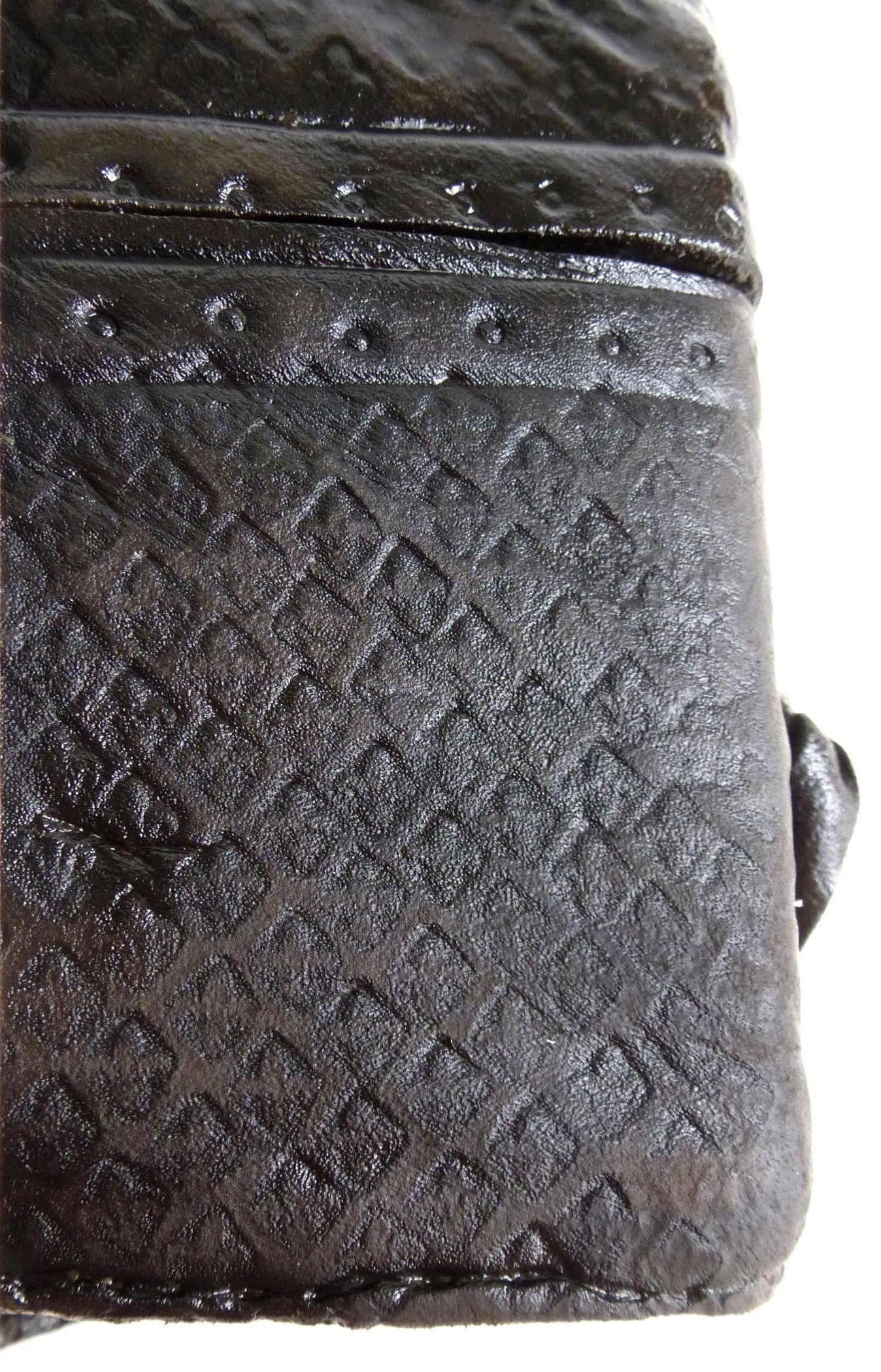
The notebook likely belonged to an elite member of society due to its engraving.
|LWL/S. BRETZEL
These other artefacts have been used to confirm the 13th-to-14th century date of the notebook.
Ms Bretzel said the fragments of silk fabric - some of which were extremely finely woven and decorated - were used as toilet paper.
Further research, which could take up to a year, may be required to identify the owner of the book
Dr Gai said: "As soon as this latrine can be assigned to a specific plot of land, archival research could be used to try to identify the residents of that plot.
"Then, in the best-case scenario, it would be possible to link the wax tablet to the name of a specific person."