










Undersea archaeologists have uncovered what they describe as a medieval "super ship" in Danish waters, representing the largest cog ever discovered anywhere in the world.
The 600-year-old vessel, dubbed Svaelget 2 after the channel where it lay hidden, stretches approximately 28 metres in length, stands six metres tall and spans nine metres across.
With a cargo capacity of roughly 300 tonnes, this colossal trading vessel offers an unparalleled window into seafaring life during the 1400s.
"The find is a milestone for maritime archaeology," excavation leader Otto Uldum said.
"It is the largest cog we know of, and it gives us a unique opportunity to understand both the construction and life on board the biggest trading ships of the Middle Ages."
The wreck's remarkable state of preservation stems from its resting place 13 metres beneath the surface, where a protective blanket of sand shielded it from the destructive forces that typically ravage coastal shipwrecks.
Divers exploring the site recovered traces of the vessel's original rigging system, including ropes and cables used for manoeuvring cargo.
Personal belongings scattered throughout the wreck paint a vivid picture of daily existence aboard the merchant ship.
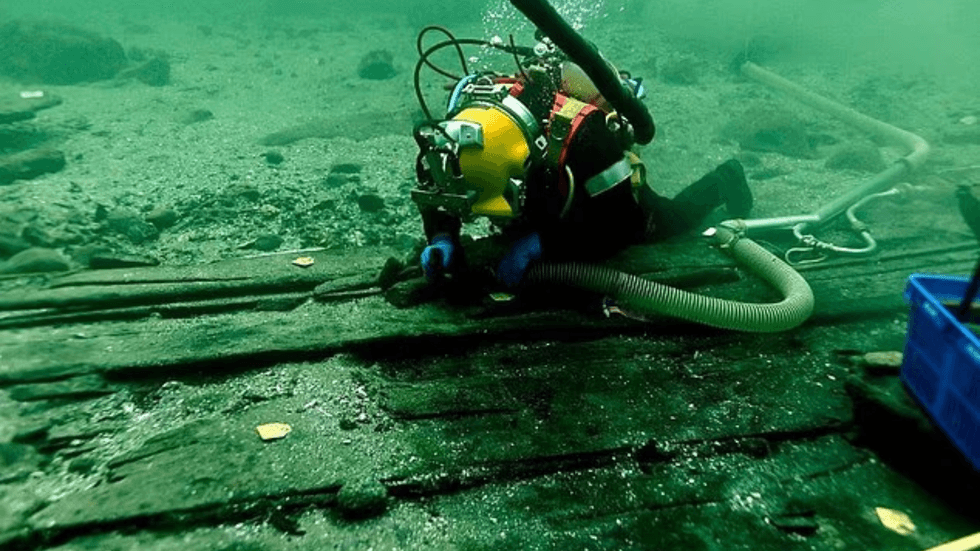
Divers exploring the site recovered traces of the vessel's original rigging system
|VIKING SHIP MUSEUM
Among the artefacts retrieved were painted wooden dishes, footwear, combs and rosary beads, items that would have accompanied sailors on their lengthy voyages.
The excavation team also discovered extensive remains of a timber-constructed stern castle, a covered deck structure that provided crew members with shelter from harsh weather conditions.
These stern castles, timber platforms positioned at each end of the vessel, had previously been documented only through historical drawings and illustrations.
"We have plenty of drawings of castles, but they have never been found because usually only the bottom of the ship survives," Mr Uldum said. "This time we have the archaeological proof."
He noted that such structures marked a significant advancement from Viking-era vessels, which left crews exposed to the elements on open decks.
REMARKABLE FINDS - READ THE LATEST:
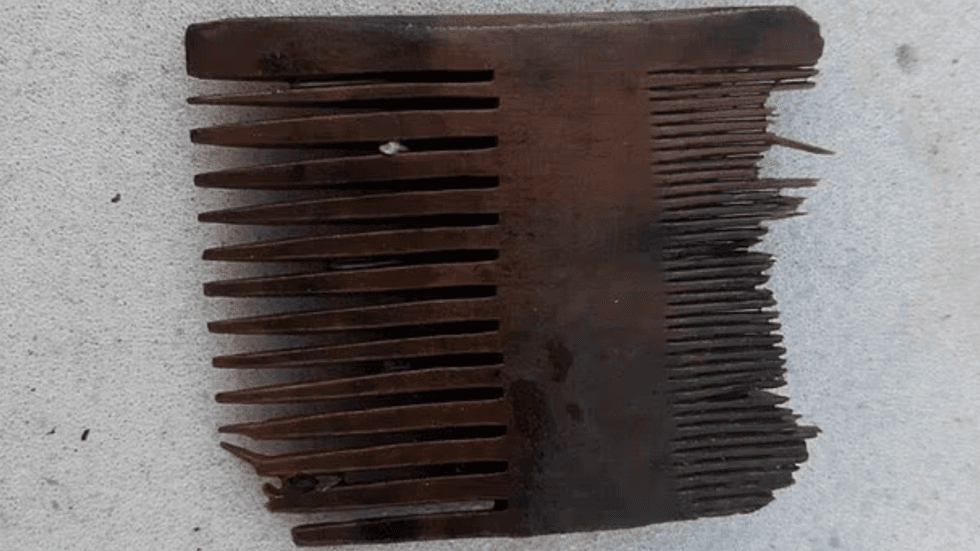
Personal belongings scattered throughout the wreck paint a vivid picture of daily existence aboard the merchant ship
|VIKING SHIP MUSEUM
Divers also stumbled upon a brick-constructed galley, the earliest such cooking facility ever found aboard a medieval ship in Danish waters.
Approximately 200 bricks and 15 tiles formed this kitchen area, where sailors could prepare hot meals over an open flame.
Bronze cooking vessels, ceramic bowls and remnants of fish and meat were recovered nearby.
"We have never before seen a brick galley in a medieval ship find from Danish waters," Mr Uldum said.
"It speaks of remarkable comfort and organisation on board. Now sailors could have hot meals similar to those on land, instead of the dried and cold food that previously dominated life at sea."
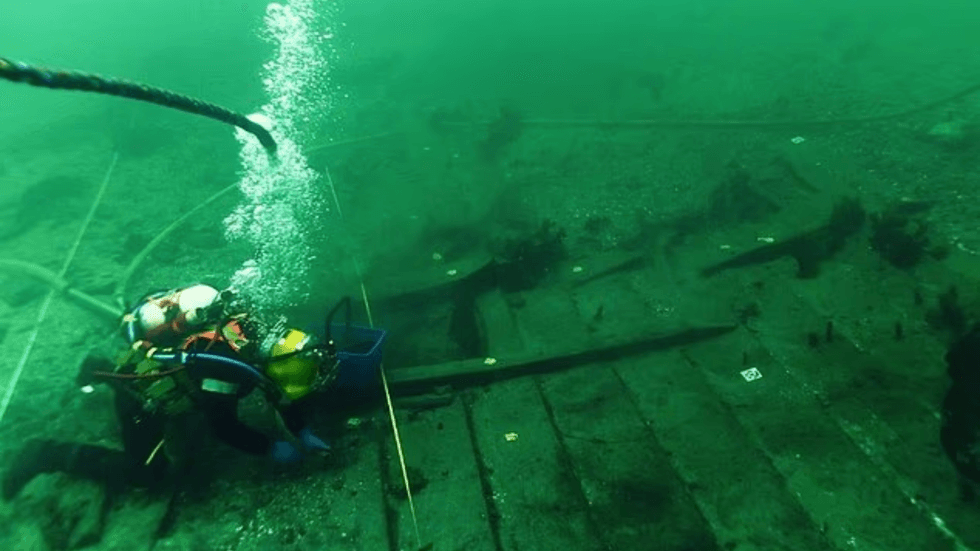
Despite its impressive size, the vessel's original cargo remains a mystery
|VIKING SHIP MUSEUM
Despite its impressive size, the vessel's original cargo remains a mystery, with researchers finding no trace of what it carried.
The uncovered hold suggests barrels of salt or fabric bundles would have drifted away when the ship sank, as would timber.
Experts confirmed the absence of ballast indicates the vessel was fully laden with heavy goods, while no evidence of military equipment was found.
The ship's components are currently being conserved at the National Museum in Brede.
"Svaelget 2 gives us a tangible piece of the puzzle and makes it possible to understand how technology and society evolved side by side in an era when shipping was the driving force behind international trade," Mr Uldum declared.