










Archaeologists have discovered remains of an ancient weapon that spread “terror and confusion” among the Roman army.
In Southern Spain, an elephant foot bone has been found, which may be evidence that the mammal stomped through ancient Europe.
Hannibal, the Carthaginian general, embarked on one of history’s most daring military campaigns in 218 BC, is thought to have had a herd of elephants among his arsenal.
The legendary elephants became synonymous with the Second Punic War, the conflict where Hannibal attempted to dismantle Roman rule across the Mediterranean.
TRENDING
Stories
Videos
Your Say
Whilst drawings, paintings and coins immortalised the animals, there was no hard evidence that backed the theories of this unique military unit, until now.
The creatures’ remains appear to have been discovered in an Iron Age dig near Córdoba, in southern Spain.
A small elephant bone, roughly 10cm long, has been discovered.
The team of archaeologists behind the discovery wrote in an academic journal: “Beyond ivory, the discovery of elephant remains in European archaeological contexts is exceptionally rare.
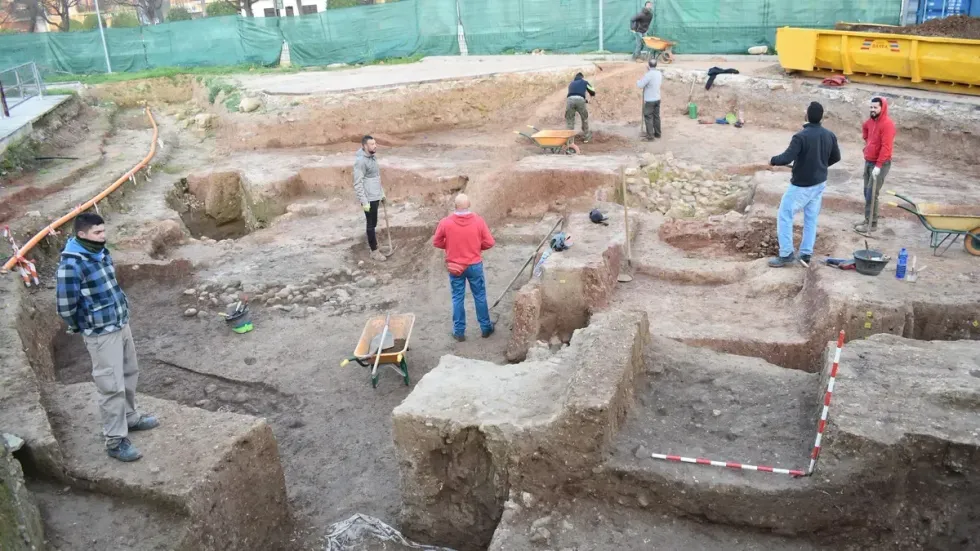
Elephant remains have been discovered at the site
|AGUSTÍN LÓPEZ/RAFAEL MARTÍNEZ
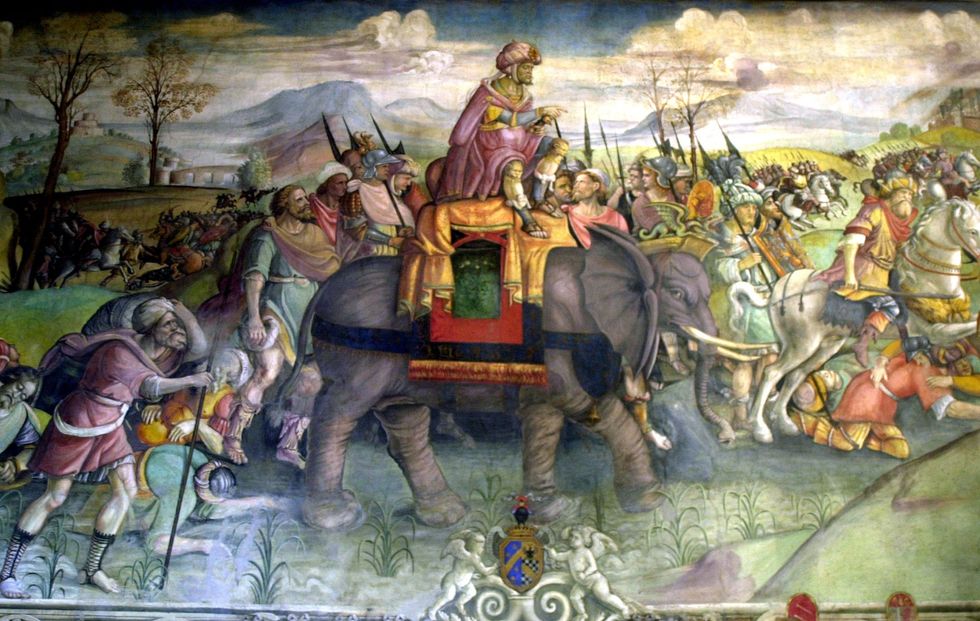
The discovery confirms the theory that the military commander used elephants in his arsenal
|GETTY
“As non-native species and the largest living terrestrial animals, these imported beasts would have required transportation by ship.
“While the import of items such as skins or bones does not necessarily imply live animals, transport of osteological remains seems highly unlikely.”
The remains were found at Colina de los Quemados, the site of a fortified Iron Age settlement.
In the same excavation, archaeologists found 12 stone spheres, roughly 11cm in diameter and weighing about 1.4kg, believed to be ammunition for torsion catapults known as lithoboloi.
LATEST DEVELOPMENTS:
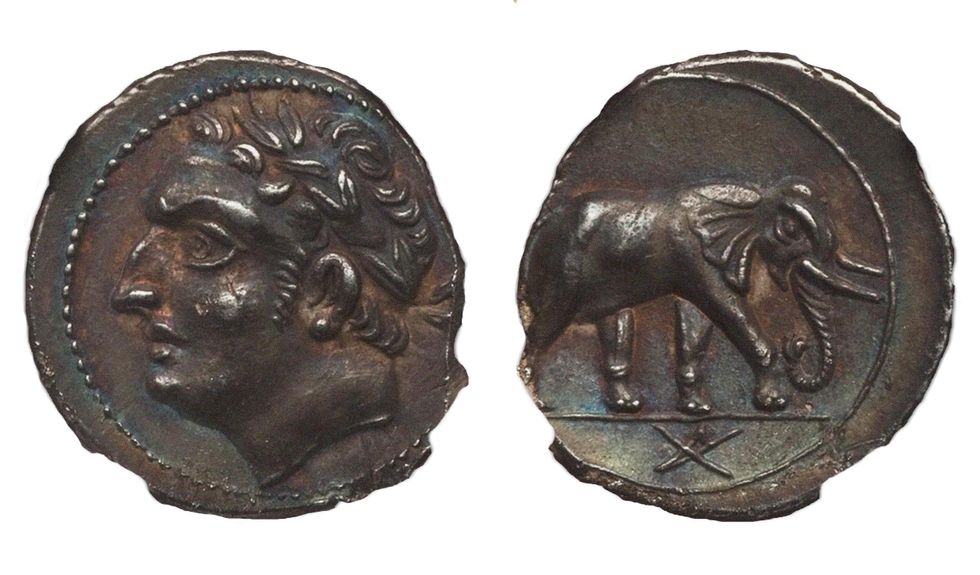
Drawings, paintings and coins immortalised elephants despite there previously being no hard evidence that they were used by Hannibal
|GETTY
A pointed metal top of a bolt from a scorpio siege engine, like a giant mounted crossbow, was also located nearby, as well as a Carthaginian bronze coin minted between 237 and 206 BC.
In the same journal entry, the researchers argue the culmination of evidence suggests that the elephant they’ve discovered was being used in the war, describing the bone points to “unequivocally to a military event”.
Debated as one of the most successful military commanders of classical times, Hannibal, from the imperial city of Carthage, in modern Tunisia, led his army in Europe to gain control of the Mediterranean.
It is understood that Hannibal transported people and animals from Carthage through Spain and France to invade Italy, crossing the Alps with 37 elephants in 218 BC during the second of the Punic Wars.
A pointed metal top of a bolt from a scorpio siege engine, like a giant mounted crossbow, was also located nearby, as well as a Carthaginian bronze coin minted between 237 and 206 BC.
In the same journal entry, the researchers argue the culmination of evidence suggests that the elephant they’ve discovered was being used in the war, describing the bone points to “unequivocally to a military event”.
Debated as one of the most successful military commanders of classical times, Hannibal, from the imperial city of Carthage, in modern Tunisia, led his army in Europe to gain control of the Mediterranean.
It is understood that Hannibal transported people and animals from Carthage through Spain and France to invade Italy, crossing the Alps with 37 elephants in 218 BC during the second of the Punic Wars.
At the Battle of the Trebia in 218 BC, these animals that had survived the journey were used against the Roman forces.
Polybius, a Greek writing in the second century BC relayed how Roman horses were scared of the “smell and sight” of the elephants.
Two centuries later, Livy, described the elephants as spreading terror and confusion.
Hannibal's campaigns are still studied in military academies.