










A jawbone fragment unearthed from a Somerset cave has transformed our understanding of when humans first formed bonds with domesticated dogs.
DNA testing has confirmed the specimen from Gough's Cave in Cheddar Gorge belonged to one of the earliest known domestic dogs, living alongside people in Britain roughly 14,300 years ago.
This remarkable finding pushes back confirmed evidence of dog domestication by an astonishing 5,000 years.
The discovery predates the domestication of farm animals and cats by thousands of years.
TRENDING
Stories
Videos
Your Say
Dr William Marsh, of the Natural History Museum, said: "It shows that by 15,000 years ago dogs and humans already had an incredibly tight, close relationship and this tiny jawbone, which seems like such a small thing, has helped to unlock the whole human story of how that partnership began."
The breakthrough came about entirely by chance during Marsh's doctoral research.
The jawbone had been recovered during excavations at Gough's Cave in the 1920s and subsequently stored away in museum drawers for decades, dismissed as an unremarkable wolf specimen.
However, Dr Marsh stumbled upon an obscure academic paper from ten years prior suggesting the bone might actually have canine origins.
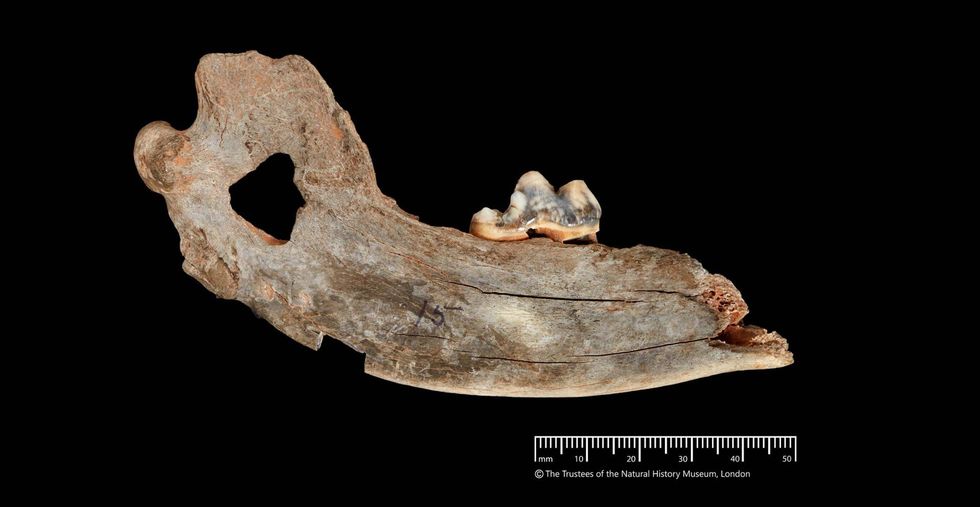
A fragment unearthed from a cave has transformed our understanding of when humans first formed bonds with domesticated dogs
|NATURAL HISTORY MUSEUM
Recalling the discovery, Dr Lachie Scarsbrook said: "William tells me: 'I found dog from the early stone age,' and I'm like, 'No you haven't every other dog has been a wolf,' but he's super confident of it,
"He then shows us his results, and we're like, '(Gosh), this guy might have actually found a dog that far back in time."
Once the Gough's Cave specimen was definitively identified as canine, its genetic signature unlocked a far broader picture.
Researchers used this breakthrough to test similar-aged remains from across western Europe and central Anatolia in modern Turkey.
Every specimen proved to be a dog rather than a wolf.
LATEST DEVELOPMENTS
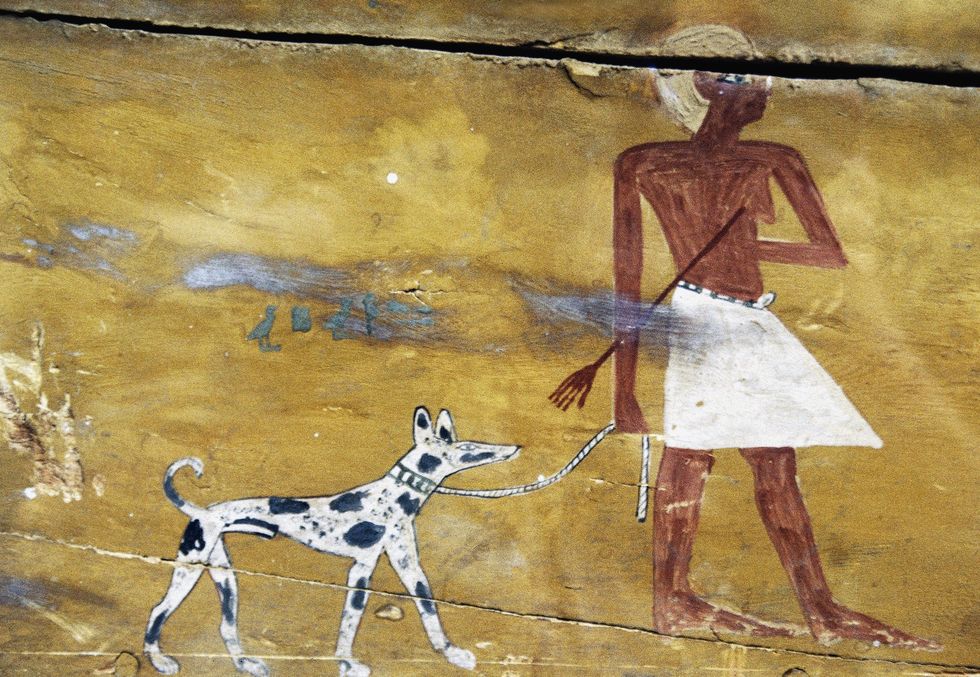
The relationship between dogs and humans goes back thousands of years
|GETTY
Most striking was the discovery that animals separated by 2,500 miles were close genetic relatives, despite belonging to entirely different human cultures.
"We've spent years trying to make sense of ancient samples whose DNA sits between wolves and dogs," Dr Scarsbrook explained. "Everything sat in no man's land because we simply couldn't tell where dogs truly began."
"Then this little jawbone turns up and it is the key to then identifying other ancient dogs all across Europe that had just been sitting under our noses this whole time."
Dr Selina Brace of the Natural History Museum noted that dogs in Turkey shared fish with their owners, whilst those at Gough's Cave ate identical meat and plant diets to the people there.
"And isn't that amazing? 15,000 years ago, we see that level of companionship that we still see today. That's a really long relationship," she said.
The Somerset dog lived among the Magdalenians, hunter-gatherers known for their dark ritualistic practices including funerary cannibalism and fashioning human skulls into drinking vessels.
The research suggests dogs first emerged between 20,000 and 25,000 years ago, more than 10,000 years before any other domestic plants or animals appeared.
Dr Scarsbrook believes the Ice Age itself catalysed this unique partnership, as kilometre-thick ice sheets forced both humans and wolves into closer proximity in southern refuges.
"You're both stuck in the same place, you need to co-operate in order to make it through and then, once you've made it through, you've got this partnership that endures," he said.
Dogs were likely first valued as guard animals capable of warning against approaching threats.
Dr Anders Bergstrom, of the University of East Anglia and the Francis Crick Institute, confirmed: "Wherever dogs were first domesticated, they had already reached Europe by at least 14,000 years ago and they go on to contribute quite substantially to the dogs we see today."
Our Standards: The GB News Editorial Charter