










Prince William travelled to North Yorkshire today to shine a spotlight on rural communities and their efforts towards environmental sustainability.
The Prince of Wales’s engagements across the region are designed to highlight how countryside residents contribute to protecting natural landscapes whilst maintaining viable livelihoods.
The royal visit emphasises the crucial function these communities serve in caring for some of Britain's most cherished environments for generations to come.
Throughout the day, the heir to the throne is meeting with farmers and local people to gain insight into both the possibilities and difficulties confronting rural areas in the present day.
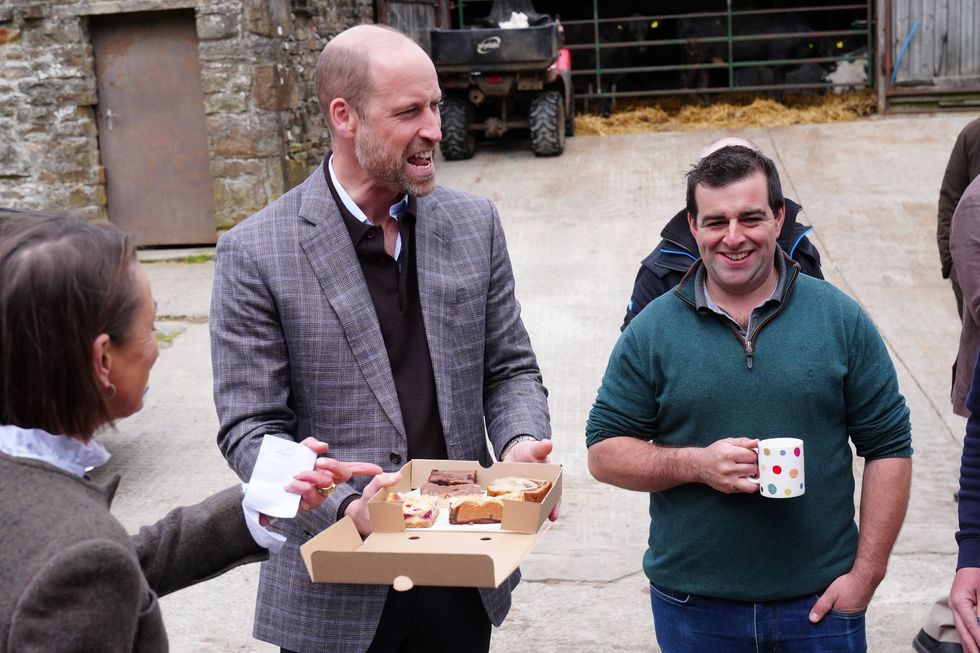
Prince William travelled to North Yorkshire today to shine a spotlight on rural communities and their efforts towards environmental sustainability.
|PA
The programme includes stops at a working farm in Swaledale and a community-owned renewable energy facility in the village of Bainbridge.
At a family farm in Swaledale, the prince spent time with agricultural workers from across the dale, exploring their experiences of running multi-generational farming operations.
William sat down with a group of young farmers, all parents themselves, to discuss how they are adapting to contemporary pressures on the industry.
The conversation centred on income diversification as a means of building long-term financial stability in an increasingly challenging sector.
Farmers present have pursued various supplementary revenue streams, from transforming traditional stone barns into holiday lets to establishing campsites that complement rather than detract from the surrounding landscape.

The Prince of Wales’s engagements across the region are designed to highlight how countryside residents contribute to protecting natural landscapes whilst maintaining viable livelihoods.
|PA
Participation in agri-environment schemes over extended periods has also provided additional income for those in attendance.
The Prince of Wales additionally met with the farmers' partners and children, learning how rural family life remains deeply connected to both work and the land.
Beyond food production, the farming community fulfils a significant environmental guardianship role across the region.
Sections of Swaledale and the adjacent uplands hold designations as Special Areas of Conservation and Special Protection Areas, recognising habitats and bird populations of international significance.
Local agricultural workers actively support nature recovery through traditional, environmentally conscious land management techniques that have been practised for generations.
These farmers are also capitalising on developing opportunities within nature finance markets to sustain their conservation efforts.
The protected landscapes and distinctive scenery draw considerable numbers of tourists, particularly during the summer months.
This visitor economy depends heavily on the farming community's continued stewardship of the terrain, demonstrating how agricultural and environmental interests can align in these rural settings.
Later in the afternoon, William is visiting Bainbridge, a picturesque village that hosts the River Bain Hydro plant.
The facility, owned by the local community, has been producing clean electricity since 2011 and supplies power to approximately 30 homes in the area.
An Archimedes screw mechanism sits visibly at the heart of the village, turning over the River Bain to generate energy.
The plant produces an average daily output of 224 kilowatt hours across the year, with surplus electricity fed into the National Grid.
Over its projected 40-year operational lifespan, the scheme is anticipated to prevent more than 3,000 tonnes of carbon dioxide emissions.
The National Park Authority's Sustainable Development Fund provided partial start-up funding for the project, which reduces reliance on fossil fuels whilst promoting local energy independence.
The hydroelectric scheme was engineered to operate harmoniously within its environment, avoiding disruption or damage to the natural landscape.
An additional benefit has emerged through reduced heavy goods vehicle traffic, with fewer oil tankers now required to deliver fuel supplies, easing pressure on local roads and bridges.
A complementary environmental initiative has blocked historic drainage channels across the surrounding moorland, trapping carbon within the ground.
This moorland restoration work has simultaneously created more consistent water flow to the hydro plant, improving its operational efficiency whilst lowering flood risk for Bainbridge and downstream communities.
During his visit, the prince is meeting community members responsible for maintaining the site and learning how this model of renewable energy generation could be replicated in other locations throughout Britain.
Our Standards: The GB News Editorial Charter