









A global recession threatens the worldwide economy as oil prices risk surging towards $130 per barrel next year, the International Monetary Fund (IMF) has warned.
The financial institution has cautioned that crude oil remaining at $120 to $130 per barrel until 2027 risks plunging the world economy into a technical recession.
A recession is defined as a period of economic decline when a country experiences two consecutive quarters of negative gross domestic product (GDP).
While the UK under Prime Minister Keir Starmer has so far avoided this crisis, the IMF has signaled that the country's economy is at risk of seeing its growth downgraded.
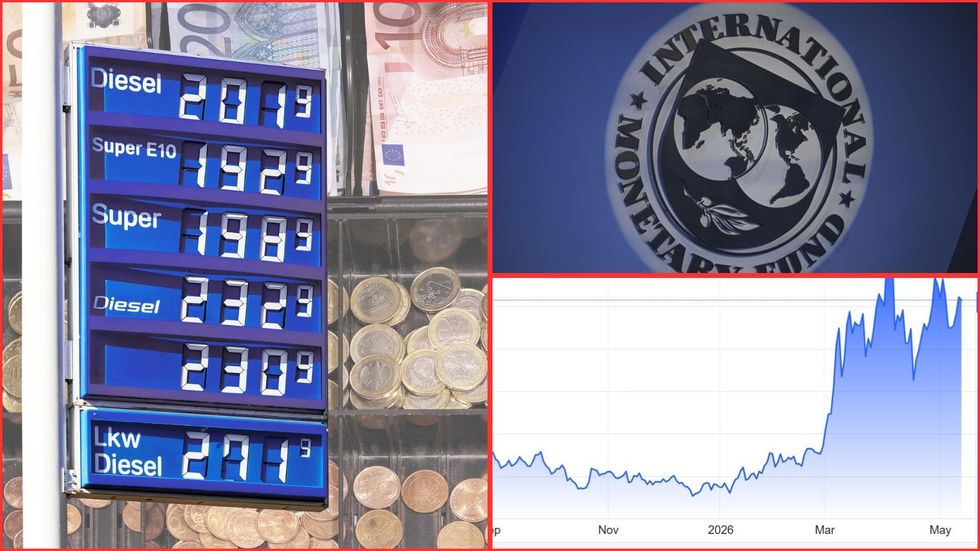
The IMF has issued a recession warning
|GETTY / TRADING ECONOMICS
IMF Managing Director Kristalina Georgieva delivered the stark assessment during remarks in Poznań, warning that such elevated energy costs would drag worldwide growth down to approximately two per cent.
This level of expansion is consistent with recession-like conditions, she indicated. The Fund's chief added that persistent pressure from high energy prices would place considerable strain on both global demand and broader economic stability.
Britain has suffered the most severe growth downgrade among G7 nations in the IMF's latest economic projections, unveiled at its spring gathering in Washington DC.
The Fund now anticipates UK GDP expanding by merely 0.8 per cent this year, slashed from an earlier prediction of 1.3 per cent. This half-percentage-point reduction exceeds cuts applied to other major economies.
The Prime Minister has struggled to course correct the economy
| REUTERSLATEST DEVELOPMENTS
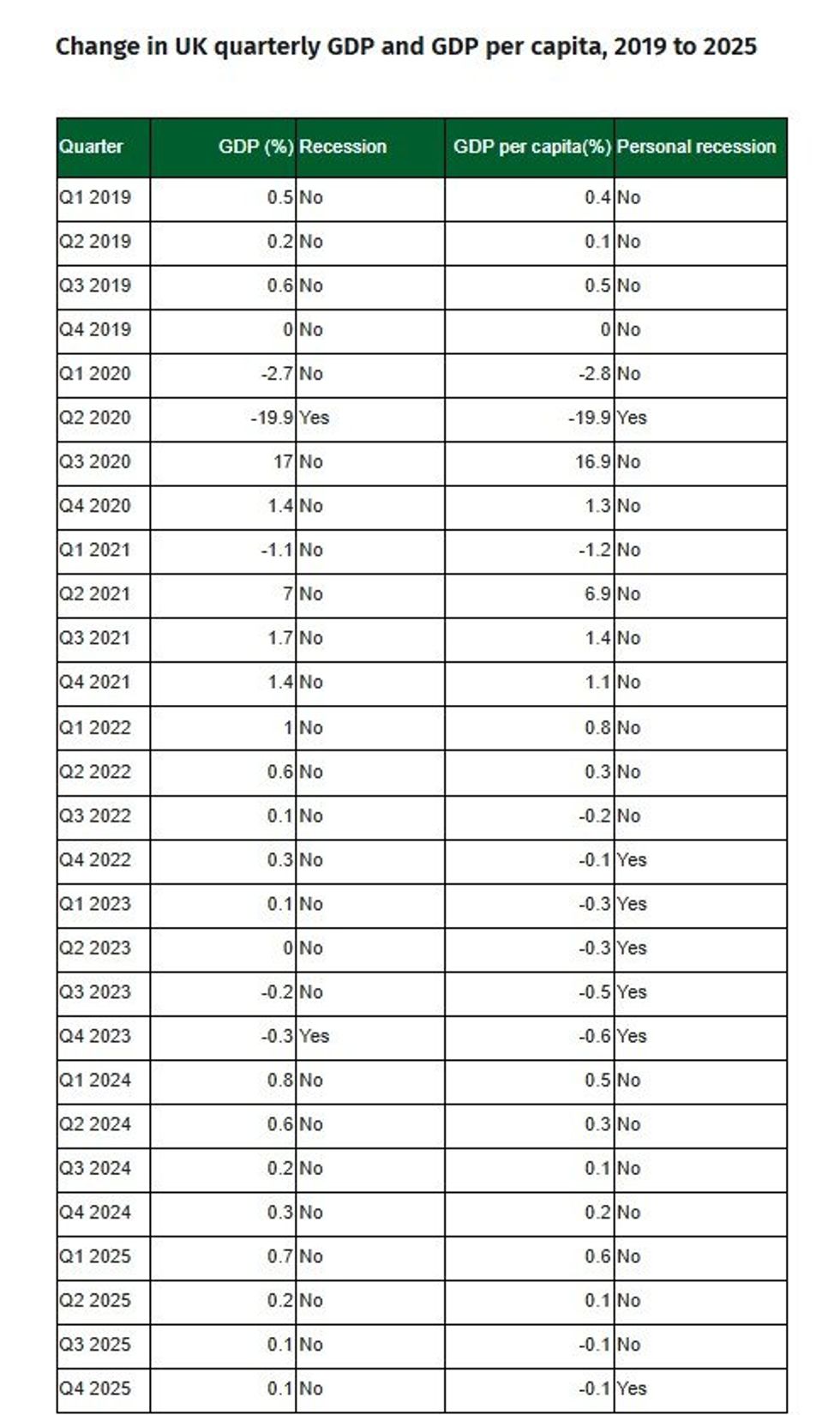 Are Britons experiencing a 'personal recession'? | TAXPAYERS ALLIANCE
 Looking ahead to 2027, the outlook has also been trimmed from 1.5 per cent to 1.3 per cent. According to the IMF, the conflict and a more gradual approach to loosening monetary policy explain the deteriorating picture, with elevated energy costs expected to continue weighing on growth even as recovery takes hold.
British households face a particularly painful squeeze, with IMF economists forecasting inflation climbing towards four per cent. The Fund has revised its inflation projections upward to 3.2 per cent for 2026 and 2.4 per cent for 2027, compared with previous estimates of 2.5 per cent and 2.0 per cent, respectively.
This represents the highest inflation rate among G7 countries over the coming two years. Even before the Middle East conflict erupted, Britain was already contending with the steepest inflation and borrowing costs in the G7.
The IMF expects price rises to moderate back to target by late 2027 as energy costs ease and a softening jobs market dampens wage growth.
Simon Pittaway, the senior economist at the Resolution Foundation, said: "The IMF's World Economic Outlook shows why British households are more vulnerable than their peers to the economic fallout from war in the Middle East."
He warned that while attention has focused on the growth downgrade, families will be far more concerned about facing the worst inflation in the G7 over the next two years.
Mr Pittaway urged ministers to proceed cautiously in their response to the crisis.
The economist added: "Support for households should be temporary, targeted, and timely to protect vulnerable households while avoiding stoking inflation and putting the public finances under even greater strain."