









Prince William has made his first public appearance since admitting he was not in "a calm state" just days after his uncle, Andrew Mountbatten-Windsor, was arrested on suspicion of misconduct in public office.
On Sunday, the Prince of Wales spoke while attending the Baftas alongside his wife as part of his role as president of the arts charity.
William was speaking with Elaine Bedell, chief executive of the Southbank Centre, and Allison Kirkby, chief executive of BT Group, when he made the admission after being asked if he had seen Hamnet.
The future king said: "I need to be in quite a calm state and I'm not at the moment. I will save it."
Last Thursday, Andrew Mountbatten-Windsor was arrested by police on his 66th birthday and spent 11 hours in police custody before being released.
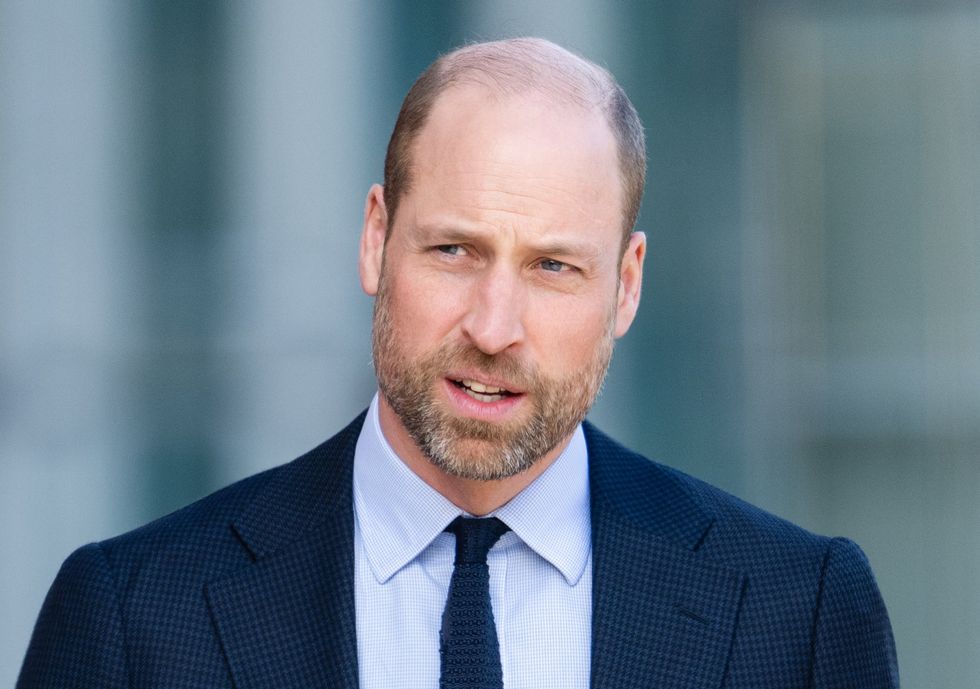
Today, the Prince of Wales has visited the Francis Crick Institute, a pioneering British centre for research in biomedicine, ahead of its 10-year anniversary later this year.
|GETTY
TRENDING
Stories
Videos
Your Say
Today, the Prince of Wales has visited the Francis Crick Institute, a pioneering British centre for research in biomedicine, ahead of its 10-year anniversary later this year.
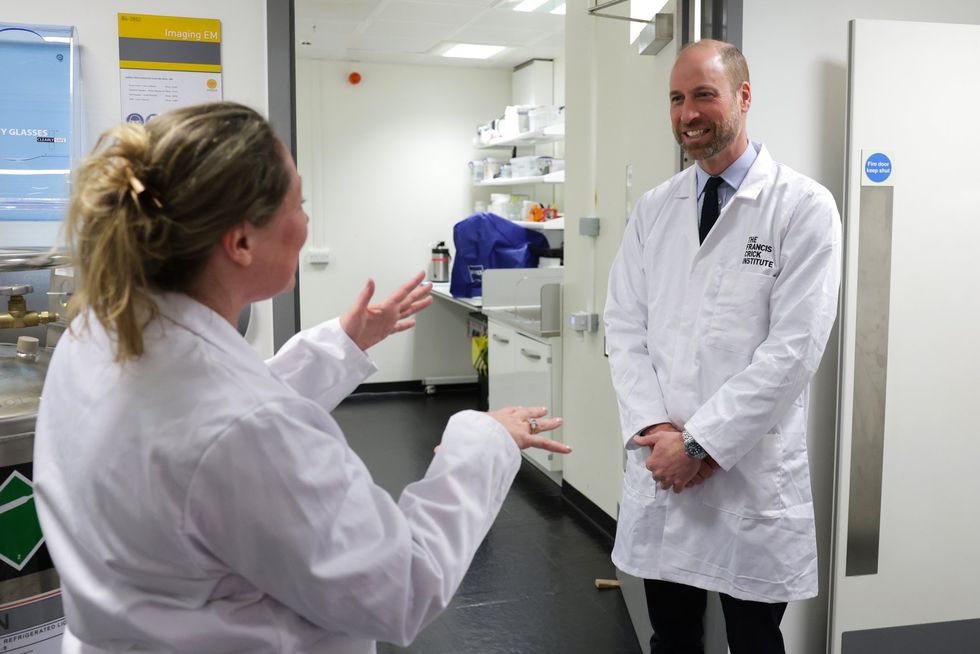
At the Institute, William spent time with scientists investigating brain function, including research into how humans process sensory information and the relationship between the immune system and mental health. Researchers shared their work on olfactory processing and the biological underpinnings of mental health conditions.
The heir to the throne also toured the facility's cutting-edge electron microscopy suite, where experts use sophisticated imaging technology to examine biological structures at atomic scale, revealing details invisible through conventional microscopes.
William was given a guided tour and had the chance to prepare a sample himself to expose its internal composition.

William was given a guided tour and had the chance to prepare a sample himself to expose its internal composition.
|GETTY
He subsequently met the team studying how tuberculosis bacteria evade the body's immune defences and persist within human cells. TB claims millions of lives annually and poses an increasing threat as strains develop antibiotic resistance.
Crick scientists are striving to develop novel treatment approaches that could help eliminate the disease by better understanding cellular processes during infection.
The Institute, one of Britain's foremost research facilities, has amassed an impressive record of scientific breakthroughs since opening. Among its notable accomplishments, researchers pinpointed the genetic origins of inflammatory bowel disease and established a biological connection between air pollution and lung cancer in non-smokers.
Scientists at the centre have also pioneered an innovative light therapy system that enhances the effectiveness of antibiotics, offering potential solutions as antimicrobial resistance grows worldwide.
Crick scientists are striving to develop novel treatment approaches that could help eliminate the disease by better understanding cellular processes during infection.
|GETTY
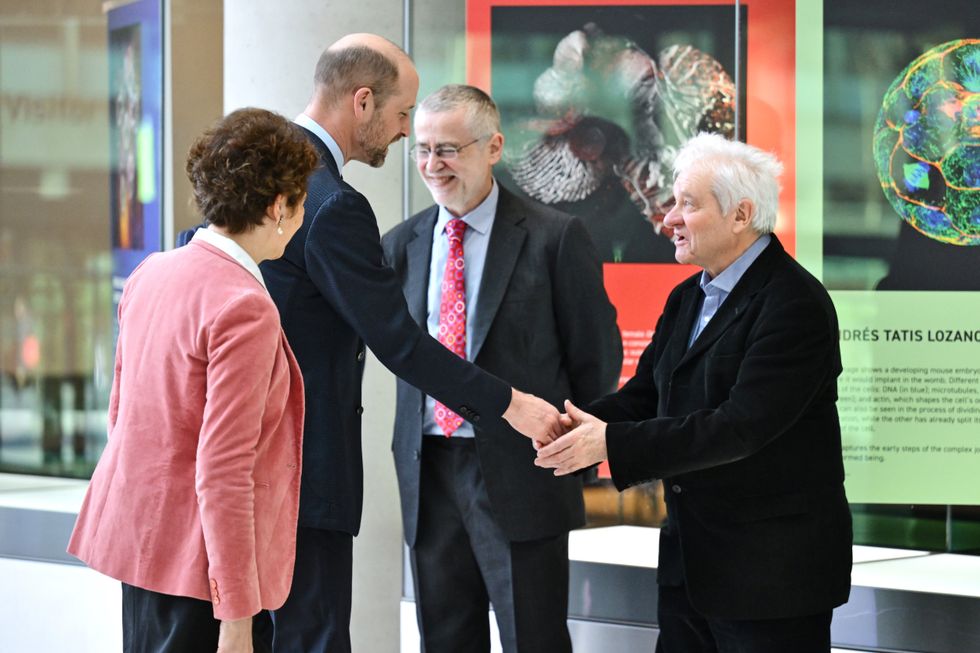
William has maintained a sustained commitment to scientific and medical advancement through various patronages.
|GETTY
The facility focuses on uncovering the fundamental biological processes that govern health and illness, translating laboratory discoveries into practical methods for preventing, diagnosing and treating conditions including cancer and cardiovascular disease.
The prince's visit concluded with an encounter with A-level biology students from a nearby school who were participating in a genetic engineering workshop. The Crick's educational outreach programme aims to provide young people with hands-on laboratory experience, demonstrating how classroom concepts translate into real-world scientific practice whilst introducing them to potential career paths in research.
William has maintained a sustained commitment to scientific and medical advancement through various patronages. He serves as President of the Royal Marsden, a leading institution in cancer research, and supports the campaign to establish The Fleming Centre, an ambitious new facility dedicated to combating antimicrobial resistance.
The prince's tour of the Francis Crick Institute celebrated the centre's achievements as it approaches its tenth anniversary later this year.
Our Standards: The GB News Editorial Charter