

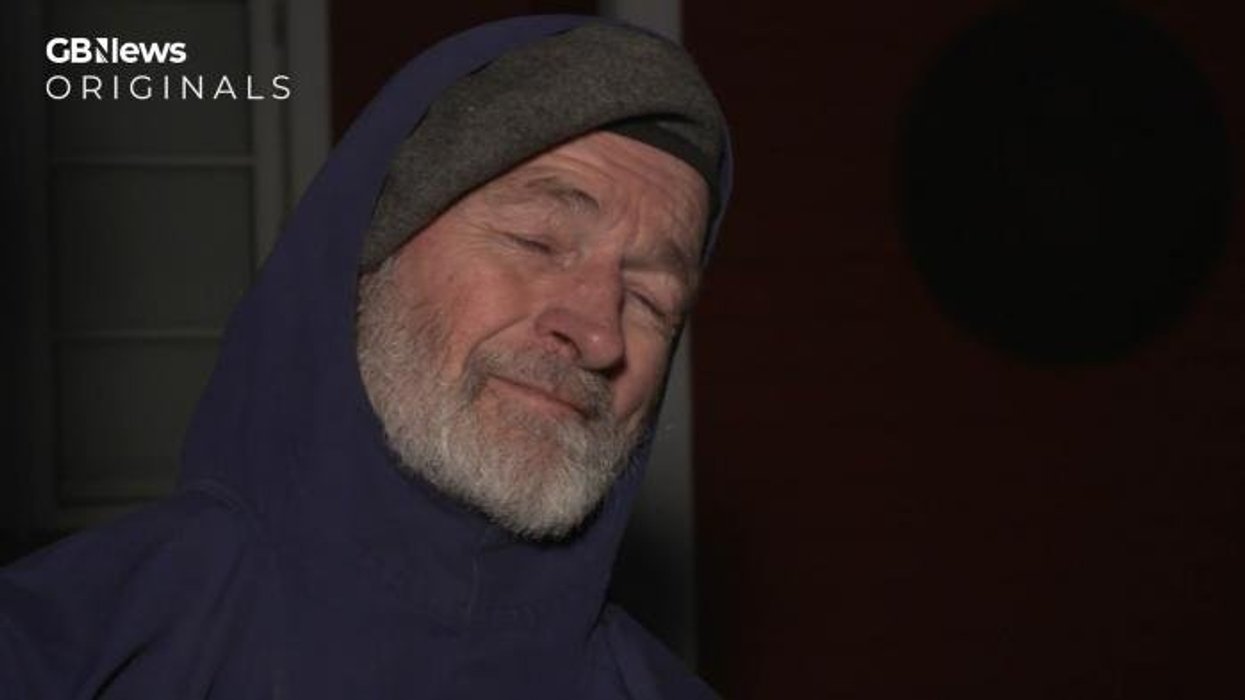



Liv Aurora Jensen took out her rifle and pretended to shoot, exclaiming a little “bang”. In the remote and icy town of Nuuk, Greenland’s capital, Mrs Jensen discusses the possibility of a US invasion.
“We have guns in our house, we have weapons… we can defend ourselves if it came [sic] to this,” she said, with a little smile.
For the past few weeks the media’s spotlight has been on Greenland following Donald Trump’s repeated public remarks that he plans to take over. In a documentary for GB News, I travelled to Greenland to gauge local reactions to Trump’s threats.
The probability of Greenland being invaded by the United States may seem remote, yet Venezuela's President Maduro may have thought the same of his country, until one day the American special forces were inside his secure military compound with a one way ticket to New York City. Certainly the people of Nuuk took Donald Trump’s threats to take over their country seriously.
TRENDING
Stories
Videos
Your Say
“There is no doubt that everyone would come and fight,” one Greenlander said. Nearly everyone on the streets of Nuuk were keen to stress locals are well armed, and good shots. “We are hunters,” Mrs Jensen told me. She described how difficult it was to shoot a seal, a staple in Greenlandic diets, from a boat rocking in the waves. Greenlanders would need more than accuracy to defend themselves from a different type of SEAL; America’s elite special forces unit that could likely crush any resistance from Greenlandic hunters in little time.
Despite the difference in the military capabilities of Greenland, whose population numbers just over 56,000, and the United States, the US President has ruled out any invasion plans.
At Davos last week, Donald Trump said: “I don't have to use force, I don't want to use force. I won't use force,”
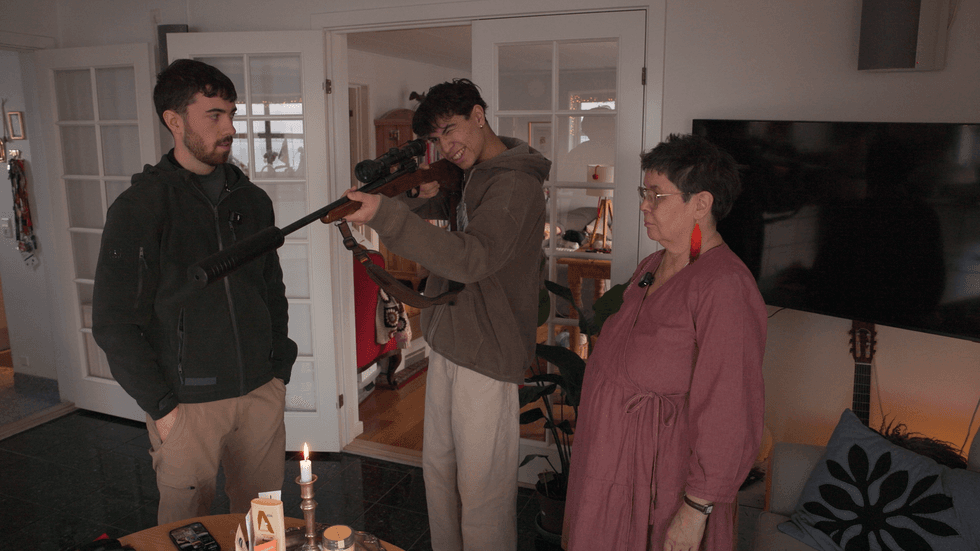
A Greenlander holds his rifle
He added: “All the United States is asking for is a place called Greenland.”
His Davos remarks were the latest in a long crusade by Trump to try and add Greenland to the United States. For years he has expressed interest in the island, and has joked about building vast golden Trump hotels there.
Why is Trump so interested in Greenland? According to American foreign policy expert John Hulsman, there are three reasons. “If you look at a map, the Arctic is an area which has untapped natural resources, particularly rare earths, which drive our modern society,” Mr Hulsman said.
He continued: “Greenland is central to the Arctic region geostrategically. We need that there, we don't need it being confronted by Russia and China and in line with the Monroe Doctrine, it's part of the Western Hemisphere.”
LATEST DEVELOPMENTS
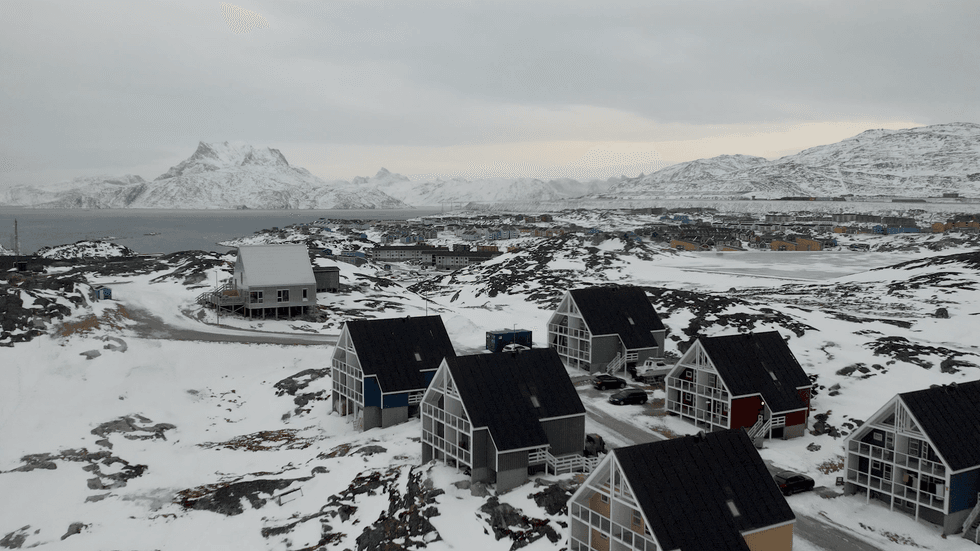
Nuuk, the capital of Greenland
“Three, if we're ever going to build the Golden Dome and have proper missile defence, it will have to be over Greenland. Again, look at the map. Missiles from Russia would be coming over the Arctic, and they must be shut down ahead of getting to the United States,” he concluded.
Yet Trump’s strategic logic does little to reassure Greenlanders, many of whom feel they are once again being discussed as an object rather than a people. For locals, American interest is not viewed as abstract geopolitics but as another looming form of outside control. Greenland’s prime minister, Jens-Frederik Nielsen, gave a defiant speech at a press conference last week, saying: “We choose the Kingdom of Denmark. We choose the EU. We choose NATO.”
However, while nearly all Greenlanders do not want to be part of the United States, many also wish to be independent of Denmark. While Greenland has been a self-governing territory since 1979, Denmark still controls foreign policy, defence and much of the island’s economy.
Kuno Fencker, a Greenlandic politician campaigning for independence, argued that Denmark’s record in Greenland undermines any claim to moral authority. “We don't want to be Americans. We don't want to be Danish, either… We don't want to be annexed anymore or colonised anymore,” he stressed.
Supporters of Greenlandic independence point to an independent report published in 2025 which found that hundreds of Inuit women were forcibly sterilised by Danish health authorities between the 1960s and 1990s, often without their consent.
While the Danish government has since issued a formal apology, the episode remains a powerful symbol of colonial rule for many Greenlanders. Some interviewed said the scandal demonstrated why decisions about Greenland’s future should be made in Nuuk, not Copenhagen or Washington.
To hear an alternative perspective, I visited the US consulate in Nuuk, where Jens Kjeldsen, a Danish adventurer who has lived in Greenland for more than 50 years, was protesting against Donald Trump. He rejected claims that Denmark has mistreated Greenland’s population. Kjeldsen argued that Greenland benefits from substantial financial support and security guarantees, and warned that independence would leave the island economically vulnerable, particularly given its reliance on fishing and Danish subsidies.
That concern is echoed by some Greenlanders, who fear independence could simply replace Danish dependence with American influence. The presence of the US military looms large over that debate. The United States has maintained a base at Pituffik (formerly Thule Air Base) since the Second World War, a critical installation for missile warning and space surveillance. While the base employs locals and brings investment, it also serves as a reminder that Greenland is already deeply embedded in American defence planning.
Trump’s rhetoric has heightened anxieties about what that presence could become. Earlier this month, he threatened tariffs on Denmark if it refused to negotiate over Greenland, before later softening his position following talks with NATO Secretary General Mark Rutte. Danish foreign policy expert Peter Viggo Jakobsen said Trump’s tactics were typical of his negotiating style. “I wouldn't call it diplomacy. I would call it attempted blackmail. And I would say that it has created a lose-lose situation,” Jakobsen said.
“No matter how you look at this crisis, there's no doubt that it has damaged relations between the United States and Europe considerably.
“The US has not gotten anything it could not have gotten by simply talking to Copenhagen and Greenland and NATO,” he concluded.
So far, no transfer of sovereignty has occurred, nor is one likely. Yet in Greenland, the damage may already be done. Trump’s comments have forced uncomfortable questions about who ultimately controls the island’s fate, and how long Greenland can remain caught between global powers.
Back in Nuuk, those questions feel less theoretical. As Mrs Jensen lowered her rifle and laughed off her mock gunshot, the seriousness beneath the humour was unmistakable. Most Greenlanders know they could not defeat the United States in a conventional war. But that is not the point. What they are asserting is something deeper: a refusal to be bargained away.
Whether Greenland remains part of the Danish kingdom, becomes fully independent, or finds itself drawn ever closer to Washington, one message came through repeatedly on the streets of Nuuk. This is not an empty land waiting to be claimed. It is a country with its own people, history and identity, and it does not see itself as for sale.
Our Standards: The GB News Editorial Charter
More From GB News