










Labour is facing a High Court challenge over a controversial change to UK animal welfare law that campaigners say effectively legalises the cruel handling of chickens.
The legal challenge targets a recent amendment to animal transport regulations which allows chickens weighing under five kilograms to be carried by both legs during handling and transport. The practice had previously been prohibited under EU-derived welfare protections, which required birds to be carried upright, supporting their bodies.
Animal welfare organisations warn the change could affect billions of chickens across the UK, increasing the risk of broken bones, bruising, stress and suffocation. Birds are often carried upside down and stuffed into transport crates on their way to slaughter, a method experts say restricts breathing and causes significant suffering.
The case has been brought by the Animal Law Foundation (ALF), which argues that the Government’s consultation process on the change was unlawful because the outcome was effectively predetermined.
TRENDING
Stories
Videos
Your Say
Morgane Alting von Geusau, Advocacy and Communications Coordinator at the Animal Law Foundation, told GB News that chickens had until recently been legally protected from leg-carrying, which she described as “harmful” and “painful”.
“Until recently chickens were legally protected from the harmful practice of catching and handling them by their legs rather than upright,” Ms Alting von Geusau said. “This causes pain and suffering and is particularly harmful to chickens because they don’t have a diaphragm and cannot breathe upside down.”
She explained that although the practice was technically illegal, it was widespread across the poultry industry, with Government codes of practice allowing it to continue. Because of this inconsistency, the Animal Law Foundation initiated legal action.
“Instead of changing their codes of practice to reflect the law or enforce the law, the Government changed the law to remove the legal protection – ultimately lowering legal protections for chickens and turkeys,” Ms Alting von Geusau said. “To make this legal change the Government carried out a consultation, which The Animal Law Foundation argues was unfair.”
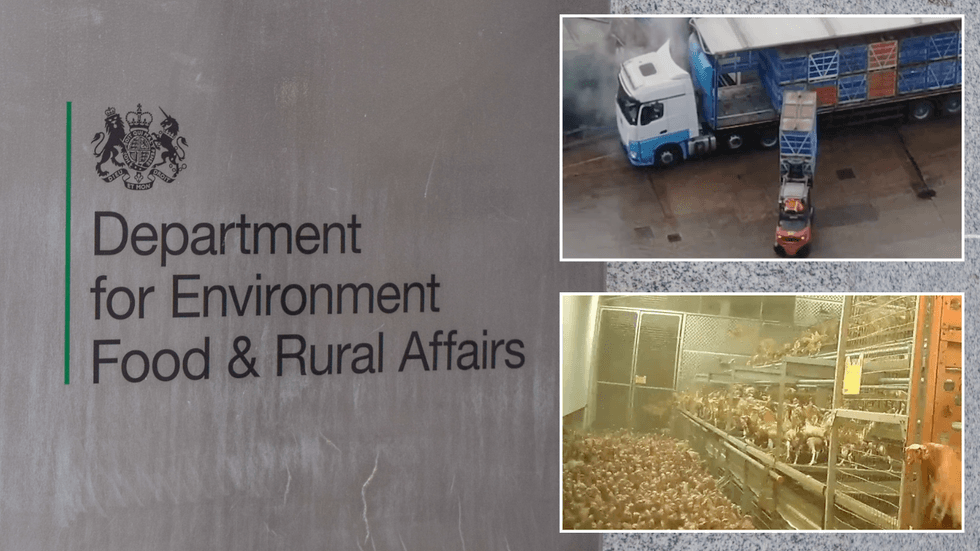
The Government is gearing up for a legal battle
|GETTY / ANIMAL LAW FOUNDATION
Campaigners point to evidence uncovered by an Animal Justice Project investigation, which showed chicken catchers grabbing up to five distressed birds in each hand by their legs. During the Government’s consultation, the Department for Environment, Food and Rural Affairs (DEFRA) itself acknowledged there was strong evidence that catching chickens upright was better for their welfare.
Despite this, on 30 June 2025 the Government published consultation results showing that 59 per cent of respondents opposed the proposed change. Nevertheless, ministers proceeded with the amendment.
Ms Alting von Geusau said the consultation failed to meet legal standards of fairness.
“Whilst a public authority can have a ‘preferred’ outcome, it must not have a predetermined outcome or have a closed mind,” she said. “Here the Government had made it clear beforehand that its plan was to change the law to allow for the handling of chickens by the legs.”
LATEST DEVELOPMENTS
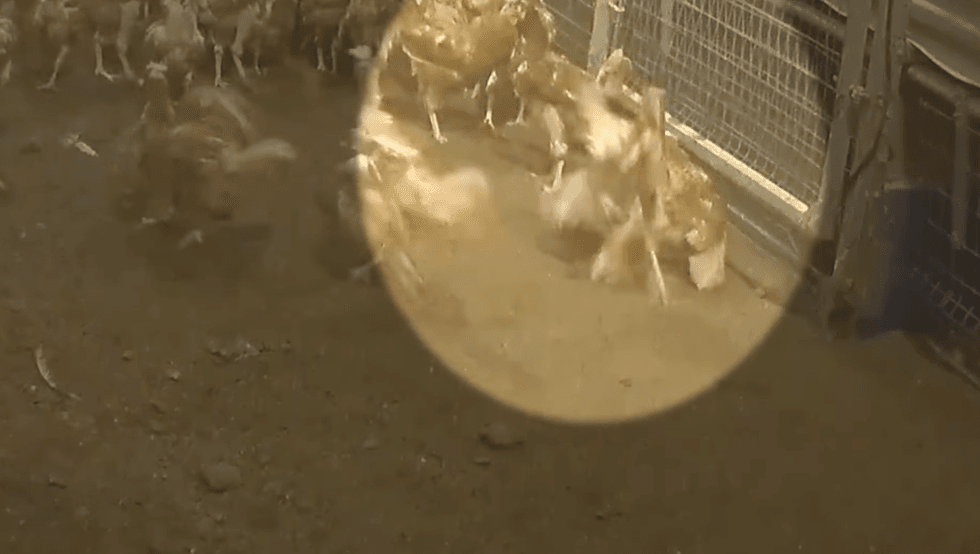
The Animal Law Foundation argue the practice causes severe distress
|ANIMAL LAW FOUNDATION
Further concerns were raised in July 2025, when the House of Lords issued a scrutiny report on the Welfare of Animals (Transport) (Amendment) Regulations 2025. The report highlighted widespread non-compliance within the chicken industry, weak enforcement of existing welfare rules, and a lack of clarity over how compliance would be ensured in future.
Critics also dispute the Government’s claim that the change is necessary for efficiency. Data suggests upright handling carries minimal cost implications. In the Netherlands, poultry producer Kipster calculated that handling chickens upright by the abdomen adds just €0.0004 per egg.
Animal welfare groups argue this undermines claims that higher welfare standards are economically unviable, and say the UK’s decision signals a worrying dilution of animal protections post-Brexit.
“The outcome of this hearing will affect the lives of billions of chickens in the UK and determine the difference between treating animals with compassion or treating them merely as commodities to maximise profit,” Ms Alting von Geusau said. “If The Animal Law Foundation succeeds, the Government’s change in law could get quashed – if the law is quashed, the codes will become unlawful again.”

Environment, Food and Rural Affairs Secretary Emma Reynolds
| POOLThe hearing is scheduled for early February at the Royal Courts of Justice in London. If the challenge is successful, the Government could be forced to revert to the previous legal position, reinstating the ban on carrying chickens by their legs.
Animal rights campaigners are urging the public to share information about the case and pressure ministers to reconsider the change. Social media campaigns are already underway highlighting the alleged cruelty of the practice and calling for stronger enforcement of welfare standards.
The Animal Law Foundation says it hopes the case will send a clear signal that animal welfare cannot be sidelined for convenience.
The Department for Environment, Food and Rural Affairs told GB News: “All farm animals are protected by comprehensive and robust animal health and welfare legislation, and we’re committed to upholding the highest animal welfare standards.
“We cannot comment on ongoing legal proceedings.”
More From GB News