

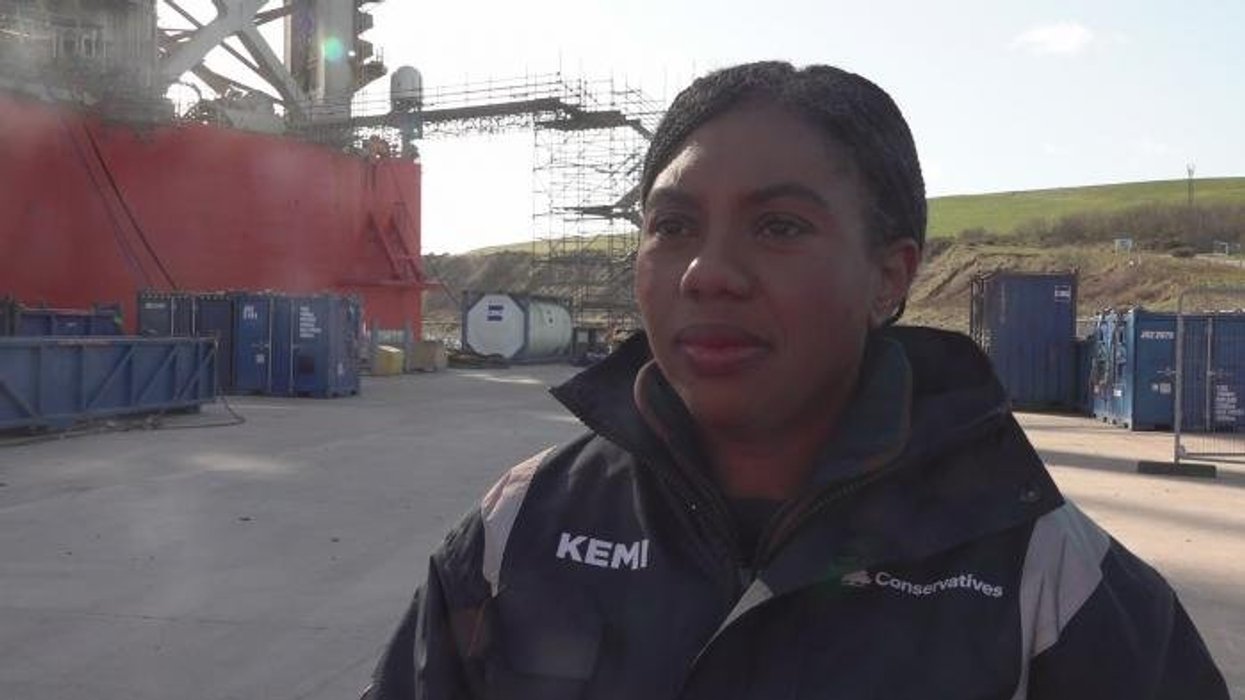





Kemi Badenoch has pledged to ditch carbon levies that are “killing British industry”.
The Carbon Tax regime is aimed at reducing industrial emissions. But with some companies paying more on the levies than on salaries, industry leaders warn it is simply driving business abroad.
The Conservative leader argues it is “madness” to reach Net Zero targets by weakening the UK's industrial base and says axing the tax will help “reverse decades of deindustrialisation”. Her party had previously announced plans to remove the carbon tax from electricity generation.
The new move will see the taxes abolished from industry completely. The Tories also say they will start measuring the offshoring of domestic emissions.
TRENDING
Stories
Videos
Your Say
The Carbon Tax regime on industry is currently comprised of Carbon Price Support, levied on fossil fuels used to generate electricity, and the Emissions Trading Scheme, which caps industry emissions. Businesses exceeding this cap must pay for extra carbon allowances.
Branded a “tax on British production” by the Tories, certain companies, such as refineries, are paying tens of millions of pounds a year, which is more than their annual wage bill. The total cost, already in the billions, is expected to double as the race to Net Zero accelerates.
“The UK’s Carbon Tax regime places immense cost on British Industry”, the Tories say. “Originally designed to drive down emissions, in practice it is taxing our energy-intensive industries out of existence.”
Because many competing nations don’t impose the charges, this leaves the UK at a disadvantage on the world stage, the Tories argue. They point to China, India, Turkey and Middle East states as countries where businesses do not shoulder the same burden.
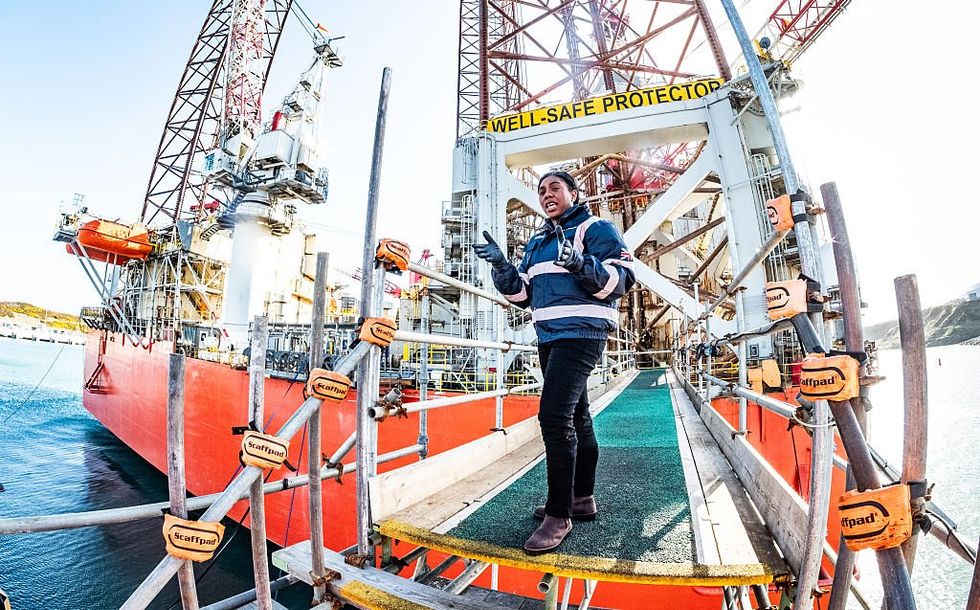
Kemi Badenoch has pledged to ditch carbon levies
|GETTY
Foreign emissions do not count towards the UK’s carbon tally, helping the UK keep to its Net Zero targets. This is despite the fact overseas production can be more polluting and energy intensive.
Industry leaders have repeatedly warned about manufacturing fleeing overseas, a process they describe as “decarbonisation by deindustrialistion”. Mrs Badenoch said: “As a former Business and Trade Secretary I have heard from countless bosses how carbon taxes and green levies have made doing business in Britain much, much harder than it needs to be. It’s time to reverse decades of deindustrialisation by doing what Keir Starmer lacks the backbone to do: axe the Carbon Tax in its entirety. We all want to leave a better environment for the next generation, but it is madness to pursue that goal by killing British industry and fatally weakening our national resilience. Under my leadership, the Conservatives are backing British businesses and making sure we can secure cheap, reliable energy and get Britain working again.”
Shadow Energy Secretary Claire Coutinho added: “We are losing the ability to make things in Britain. From refineries, to chemical plants, to manufacturing, we are losing jobs and factories here only to import more of the same goods from abroad with higher emissions. Deindustrialising our economy in the name of Net Zero is making us a warning, not an example, to the rest of the world. “Our industrial power is our hard power – it is the power we turn to in times of crisis or conflict. We must axe the Carbon Tax to save British industry and create a stronger economy and stronger country.”
Industry voices have increasingly called for relief, with the chemicals sector pointing out production has collapsed by 60 per cent. Output from other energy-intensive industries has fallen by 35 per cent.
LATEST DEVELOPMENTS
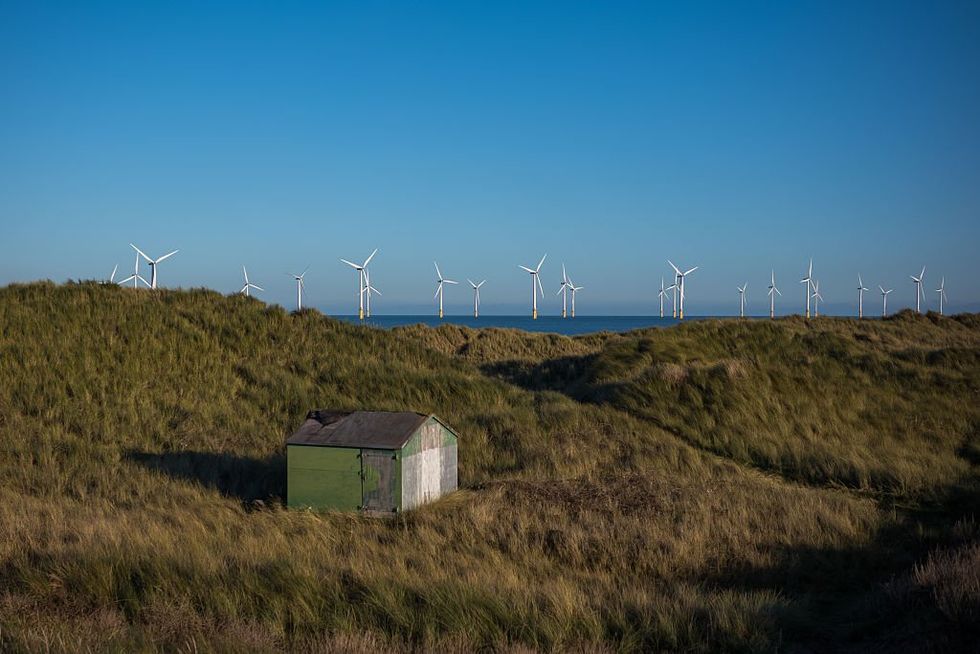
Industry leaders say the current regime is driving business abroad
| GETTYBritain lost a third of its refineries last year alone. The ceramics sector has said Net Zero rules, combined with the hostile economic climate, “could destroy what’s left of the UK industry”.
Industry leaders welcomed the move and said “radical” action was needed. Paul Greenwood, UK Chair of ExxonMobil, said: "The UK refining industry pays hundreds of millions of pounds in CO2 costs every year that many of our international competitors do not pay. The Government has refused to level the playing field by passing those same costs onto our competitors – that is both unfair to British workers and dangerous for UK energy security. We support policies that create a level playing field and allow us to continue building the strong refineries on which this country depends. Continuing as is risks both jobs and our national security.”
Rob Flello, Chief Executive of Ceramics UK, said: “High energy costs have become an existential issue for the UK ceramics industry. There is no switch our members can flick to decarbonise overnight, so the Carbon Tax just acts as a tax on British industry and British jobs. The ceramics industry cannot afford to keep paying a Carbon Tax that our competitors simply don’t face. Scrapping it would be a huge relief for the industry and halt the deindustrialisation of Britain.”
Steve Elliott, Chief Executive of the Chemical Industries Association, wrote to Sir Keir Starmer at the beginning of March to raise the alarm on the state of the sector. He said: “UK carbon policies should drive decarbonisation. Increasingly, they do not. Tightening our national carbon targets without giving industry access to the essential tools to decarbonise, alongside effective carbon leakage protection measures, has created a recipe for site closures, job losses and investment flight. Despite our long-standing recommendations, policy choices, or the lack of, continue to lock in deindustrialisation. A more radical and supportive approach is now essential if the UK is serious about economic growth, jobs and resilience in an increasingly competitive and volatile world.”
The Tory’s Cheap Power Plan has already promised to remove VAT from domestic energy bills for the next three years, saving an average of £94 per household. It claimed the overall savings from its policy will be around £200 a year.
It says it will fund this by scrapping Net Zero schemes funded by the taxpayer, including heat pump subsidies and Renewable Obligation charges, which were used to fund green energy projects. It will also allow more drilling in the North Sea and claims this will generate "billions of pounds in tax revenue”.
Chris McDonald, Labour’s Industry Minster, said the Tory pledge had "echoes of Liz Truss" and that "their sums still don't add up".
He said: “Kemi Badenoch has exposed hder own hypocrisy given she personally introduced these measures as a Tory Treasury minister.
"It’s a total embarrassment for her to, yet again, be railing against her own work in government. Her new pledge is wrong, and it would hammer industry.
“This multi-billion-pound unfunded spending commitment has echoes of Liz Truss and would leave working people picking up the bill. The failed Conservative Party haven’t changed, and their sums still don’t add up.
“Through our Industrial Strategy, Labour is slashing electricity costs for business by 25 per cent. Our long-term plan, in partnership with industry, will boost investment, create good skilled jobs, and make Britain the best place to do business.”
Our Standards: The GB News Editorial Charter