





Earlier this year, I took the unusual step of publishing a minority report to the Women and Equalities Committee’s inquiry into discrimination, harassment, and abuse against Muslim women. Minority reports in Parliament are rare, but I felt it was necessary because the Committee’s main report failed to confront some uncomfortable realities about abuse from within the Muslim community itself.
As I was writing my report, I asked myself a simple question: would I accept these practices for my own daughter? Would I accept her being pressured to cover her head as a child, pushed into a marriage without full legal protection, expected to resolve family disputes before a religious body, or left without proper protection from practices such as FGM? If the answer is no, then it must be no for every girl in this country.
We know that Muslim women and girls can and do face abuse from outside their communities and this should be challenged wherever it appears. It is completely unacceptable. But protecting women from external hostility must not become an excuse for ignoring harmful practices happening within some communities and family structures.
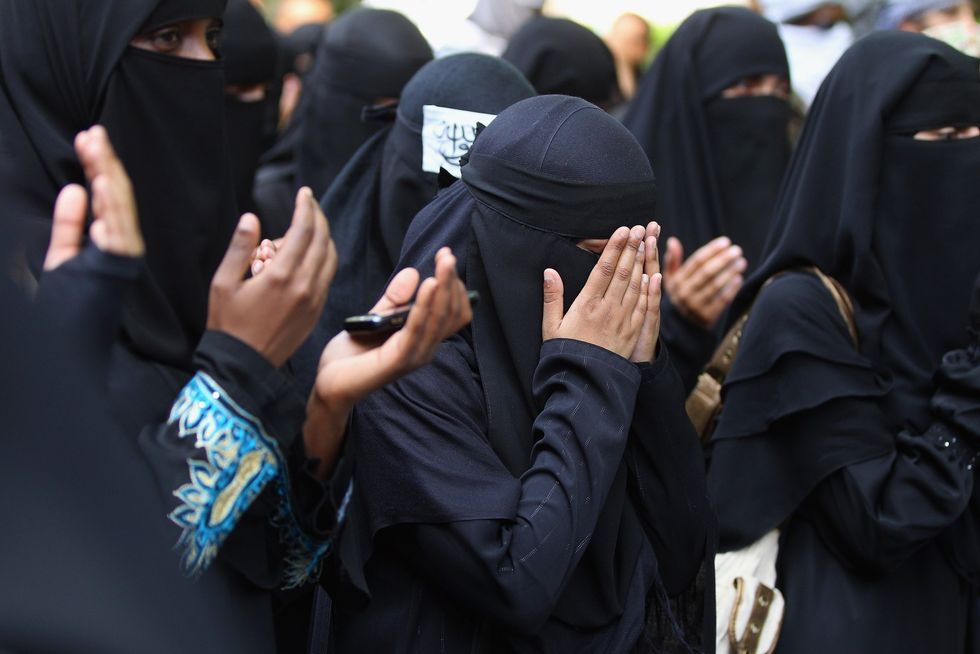
The government found plenty of room for warm words on diversity – but had nothing to say on FGM, unregistered marriages and Sharia councils, writes Rebecca Paul MP
|Getty Images
Unfortunately, that is exactly what the Government’s response to the Committee’s report has done. The most telling aspect of the Government’s response is not what it says, but what it does not. Ministers found plenty of room for warm words on equality, diversity and inclusion. Yet when presented with my specific recommendations on headscarves in schools, unregistered religious marriages, first-cousin marriage, Sharia councils and FGM, they say nothing.
Britain is rightly proud of being a tolerant country committed to freedom of religion. Our tolerance though cannot mean turning a blind eye when women and girls are being disadvantaged and harmed.
Take unregistered Islamic marriages. Baroness Casey’s review into integration highlighted evidence suggesting that many Muslim marriages may not be legally registered. The result is that when relationships break down, women can be left without the legal protections that other wives take for granted and may instead face pressure to resolve disputes through Sharia councils.
Or consider cousin marriage. In some communities it remains widespread despite the very serious public health consequences associated with it, including significantly higher rates of birth defects. The burden of caring for children with complex needs overwhelmingly falls on women, limiting their independence and opportunities.
And then there is FGM - one of the most abhorrent forms of abuse imaginable. Thousands of women and girls are identified by the NHS each year as having undergone FGM, yet convictions remain extraordinarily rare. That gap between prevalence and prosecution should shame us all.
The Government’s response exposes the central weakness in its approach to women’s safety. It seems prepared to condemn prejudice when the perpetrator is outside the community, but far less willing to confront abuse and coercion flowing from culture, religion or family honour. That is not equality and our women and girls deserve far better.