









It was a warm summer evening in July 2013. At the Hasmonean Boys’ School in north-west London, 400 people were attending a speaker meeting organised by the Jewish Chronicle.
The guest speaker addressed many of the political issues of the day relevant to Jews, including Israel, antisemitism, circumcision, kosher slaughter and racism in public life.
I was present, and the speech was interesting. However, what for me eclipsed everything was one of the speaker’s opening sentences. He said: “I’m not coming here like everybody else to fawn on the Jewish community!”
The identity of the guest speaker was Nigel Farage, and it was the first occasion on which he had ever addressed a large Jewish audience.
Why, on reflection, was this sentence so important? Because it characterised exactly how the major political parties treated the Jewish community then and, in many respects, still do. They fawn. They portray themselves as strong supporters of Britain’s Jewish community, but when help is really needed, they go AWOL and do nothing.
Before October 2023, this was not perceived to matter too much. Britain’s Jews, like everyone else, voted for or against different political parties based on their views on major national issues such as the economy, tax, public services and, at times, overseas matters.
Everything changed in October 2023. Britain descended into a morass of anger-filled marches, characterised by extreme Jew hatred.
Antisemitism across many areas of life, including schools, hospitals, universities, the courts, police behaviour and even the world of entertainment, soared and became, for most Jews, deeply frightening.
It then became possible to identify a notable difference between the “fawning” politicians, who sadly were and continue to be the large majority, and those who genuinely wished to address the issues.
The former would put an imaginary comforting arm around the Jewish community, seek to underplay the problem, make comments expressing opposition to antisemitism, and then fail to produce any meaningful policies or solutions.
The latter, Nigel Farage and Richard Tice, have been firmly in this category, would begin by acknowledging the true and significant scale of the problem, state clearly where it is coming from, and tell it “like it is”, and then recommend decisive government action.
Since the Golders Green atrocity of 29 April, both the Labour Government and the Conservatives have at last appeared to realise that some steps must be taken.
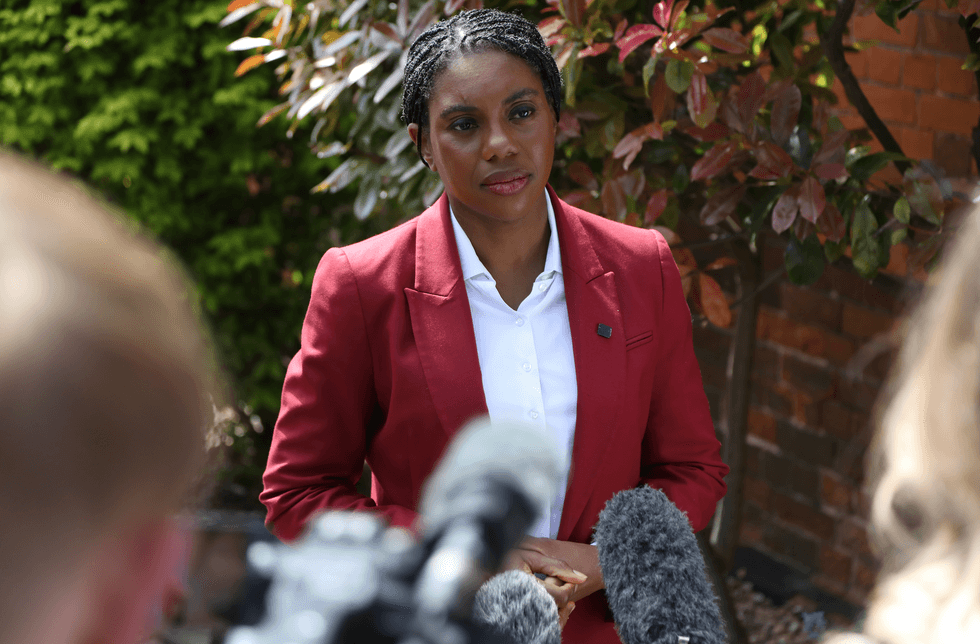
Kemi Badenoch talks tough on antisemitism, but she didn't act when Jews needed her - Gary Mond
|GB
However, why should we believe them? The Conservatives were in government for the first nine months of the new post-7 October 2023 reality.
In late 2023, the Home Secretary, Suella Braverman, sought to have the so-called “pro-Palestine” marches banned, but received scant, if any, support from fellow Cabinet ministers and certainly none from the future party leader, Kemi Badenoch.
It is fair to say that the fawning Conservative government was not interested, not only in stopping the marches but in taking any credible action to address the antisemitism that was beginning to permeate our society.
Under Labour, matters have worsened, aided by government actions such as recognising a Palestinian state run by terrorists, criticising Israel when it is defending itself and the wider Western world in its conflict with Iran, and encouraging what many perceive as two-tier justice.
It is unlikely that the Prime Minister's remarks on Iran on May 5 will be taken seriously by anyone.
So Nigel Farage’s comment of almost 13 years ago has proven to be prescient. Politicians from both the Conservatives and Labour have fawned but failed. Reform UK will act when it gets into government.
Our Standards: The GB News Editorial Charter