

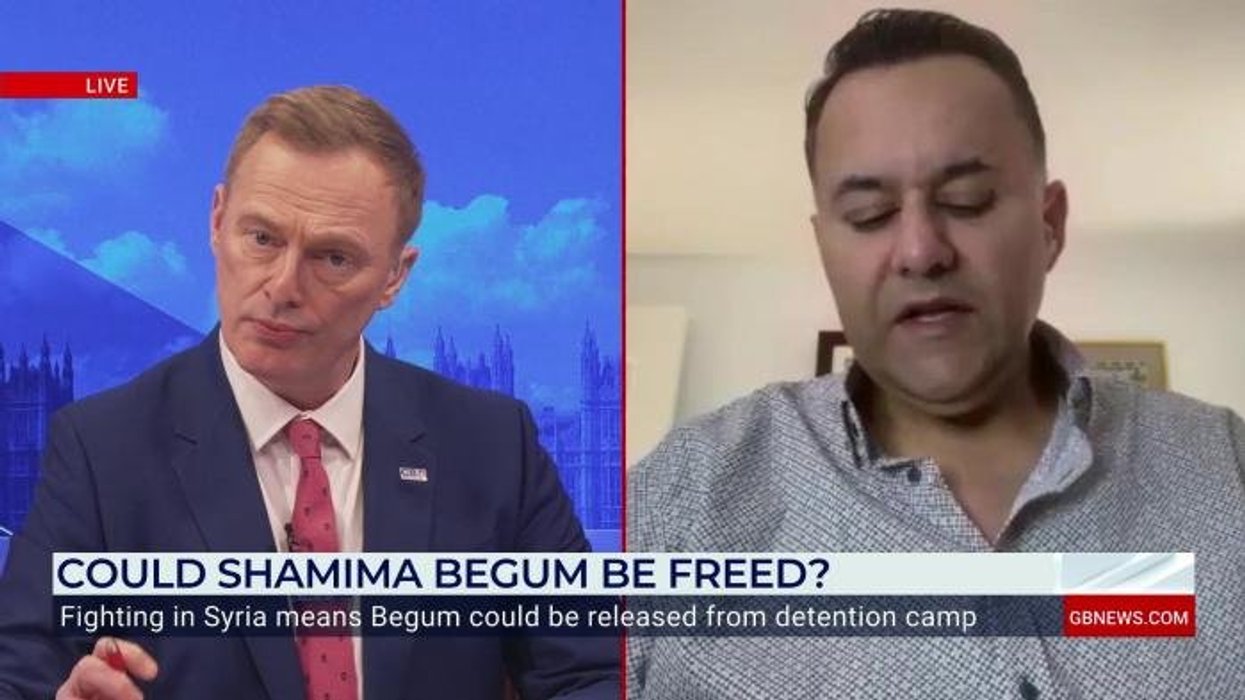









Friends and allies are stunned as Britain has repatriated at least six women linked to Islamic State and nine children from northeast Syrian camps, including Al-Roj, with reports indicating some returns occurring quietly in recent years and continuing on a case-by-case basis.
The operations have proceeded without public announcement, managed after individual security assessments. The government clings to its public stance against any broad repatriation policy for such cases.
Only two earlier instances ever received official confirmation. The pattern exposes an administration that operates in deliberate concealment.
The United States watches with particular concern. American policy toward its own Isis-linked citizens has remained consistent: repatriation paired with prosecution where evidence exists, sustained surveillance, and lengthy prison terms for those convicted.
Britain, long a key counter-terrorism partner, now conducts these returns in seeming silence. Allies register the shift with mounting alarm. Adversaries register the hesitation as an opportunity.
While previous governments initiated some limited repatriations alongside citizenship deprivations, responsibility for the current wave rests with Keir Starmer's Government.
In opposition, Labour criticised the use of citizenship-stripping measures, most prominently in the Shamima Begum case.
In office, ministers have authorised these returns without offering any detailed public justification or inviting parliamentary scrutiny.
The decision to act discreetly rather than openly betrays calculated avoidance: keep the policy hidden from voters who rejected open-border politics in the Brexit referendum and who still expect borders to function as hard barriers.

Forget Greenland, smuggling Isis brides back into Britain torches the transatlantic alliance - Lee Cohen
|Getty Images
The repatriations fit Labour's wider migration record with depressing predictability. According to Home Office figures, roughly 37,000 people had been resettled or relocated under Afghan schemes by late 2025. Small-boat crossings hit 41,472 in 2025—a near-record total and a clear rise from the previous year.
Asylum hotels continue to house thousands despite repeated promises to close them. The 2025 immigration white paper promised tighter control, yet provoked internal Labour criticism for language deemed too harsh.
Starmer warned that uncontrolled migration risked turning Britain into an "island of strangers" — a phrase that drew immediate accusations from his own benches of echoing far-right rhetoric.
The quiet repatriations follow the same managerial reflex: deal with the problem administratively and invisibly rather than confront its consequences in daylight.
Flying in thousands of Afghans and now these Isis-linked women and their children, all while keeping both largely from public view, neatly summarises the contempt shown by the governing class and Whitehall for ordinary citizens.
No clear benefit has emerged from importing more individuals in these categories — let alone large numbers of irregular arrivals who contribute little economically and draw heavily on public resources.
The security consequences are immediate and grave. These women chose to travel to join an organisation that carried out mass executions, systematic sexual slavery, and directed attacks on Western cities.
Their children were raised in environments saturated with extremist ideology. Camps such as Al-Roj exist in a volatile region shaped by Syria's fractured politics.
Returns executed without transparent explanations of risk-management measures — detailed deradicalisation programmes, prosecution where evidence permits, indefinite monitoring — transfer those dangers directly to British communities.
The scars of Manchester Arena and London Bridge remain fresh. Labour's method does not contain the threat; it enlarges it.
The ideological driver is unmistakable. Starmer's progressive governance treats sovereignty as a negotiable inconvenience whenever international obligations or domestic sensitivities intrude.
What is dressed up as pragmatic, case-by-case handling is, in reality, a retreat under pressure from human-rights litigation and fear of prejudice accusations.
The outcome is predictable: weakened resolve. Extremist networks see a Western state unwilling to enforce firm boundaries. Britain projects vulnerability.
Where citizenship has already been stripped—as in the Begum precedent—the principle should stand firm: no British citizenship means no automatic return. Individuals can seek residence in the country of their father or husband, or elsewhere.
Geopolitically, the damage mounts. The UK derives strength from partners that project comparable clarity and resolve. A Britain that softens on border enforcement and terrorism-linked returns undercuts shared deterrence against the revival of extremism, not to mention the greenlighting of the Chinese “mega embassy”.
Defence cooperation, intelligence-sharing, and national-interest alignment all rest on perceived competence in these domains. Post-Brexit Britain possesses the legal authority to refuse entry, pursue charges on available evidence, and maintain exclusion where risks predominate. The government chooses accommodation instead.
Britain faces a stark choice. It can halt discretionary returns of this nature, demand full accountability for past affiliations, rebuild public confidence through visible competence , or persist on the current course.
The latter path only magnifies existing failures: uncontrolled entries, institutional hesitation, and deepening public alienation.
The world watches in disgust and disbelief. Allies measure reliability and register growing horror. Enemies probe weakness.
Britain once commanded respect for its seriousness and global leadership. The current government has placed that reputation in serious doubt. Restoration demands action, not continued managed decline.
More From GB News