

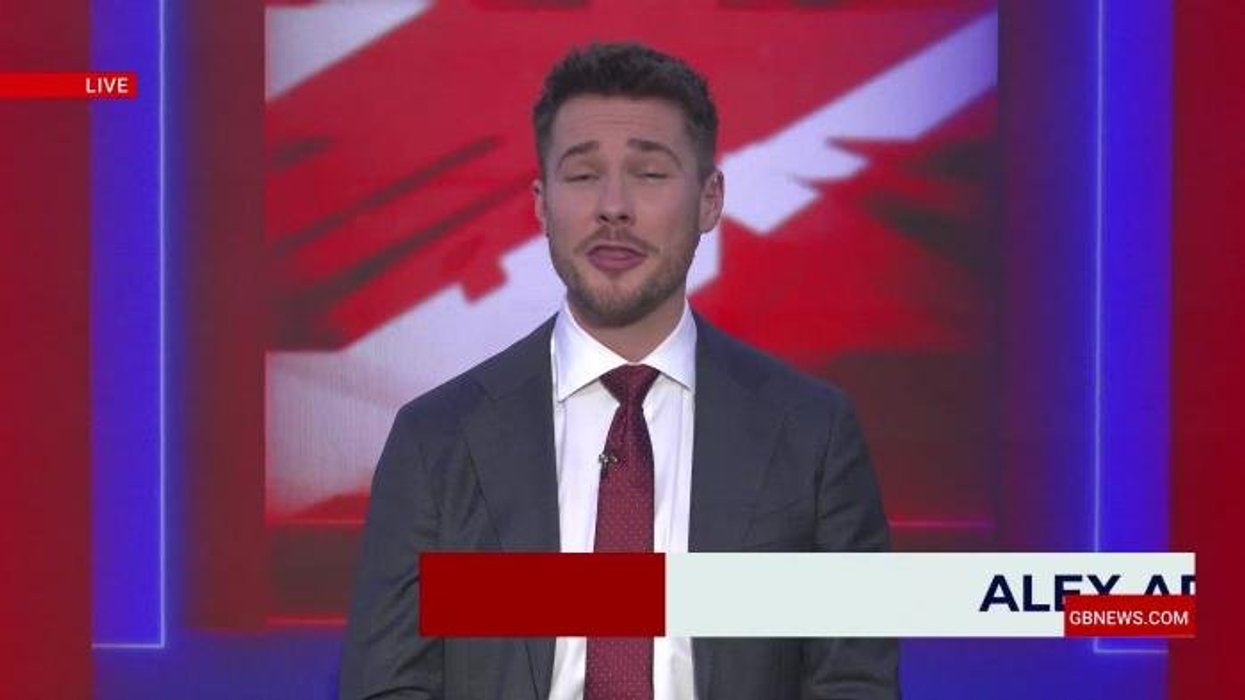
Integration starts with communication. It’s really not complicated, is it? Says Alex Armstrong
GB NEWS



Alex Armstrong shared his opinion on teaching migrants to speak english
Don't Miss

Most Read
Trending on GB News
Taxpayers have spent £350 million teaching migrants to speak English.
Last year alone, 170,000 migrants were enrolled on taxpayer-funded English language courses, costing the public a whopping £350 million. And that doesn’t even include Scotland, Wales or Northern Ireland.
That figure has risen by 44,000 in just five years. Meanwhile, hard-working Britons are struggling to pay their bills, and the Government has overspent a quarter of a billion pounds on these lessons since 2018 because so many new arrivals can’t manage a basic conversation.
This isn’t a handful of people, is it? The 2021 Census showed almost 800,000 people living in England and Wales can’t speak English well — and 138,000 of them can’t speak it at all. A third are Syrian, over a quarter are from Bangladesh, and a fifth are from Pakistan and China.
And I suspect that number is far higher today, because that data was collected before the Boris wave, where millions were flown into Britain on what I would say are questionable visas.
These are not highly skilled, fluent arrivals ready to integrate and contribute, are they?
They are arriving unable to speak the language, then expecting the public at home to fund their catch-up classes.
I sincerely doubt many of these arrivals are net positive contributors to Britain — economically, and certainly not culturally. If you cannot speak the language of the country you are coming to, you shouldn’t be here in the first place.
It’s shocking we even have to say that out loud.
Integration starts with communication. It’s really not complicated, is it?
And we are already seeing the consequences of this.
Neighbourhoods where entire communities recreate their home cultures with no shared identity — particularly not a British one — no shared values and no shared language, particularly not the English language.
LATEST DEVELOPMENTS
In my hometown of Harrow, a London borough, 63.2 per cent of pupils don’t speak English as their first language, according to the latest Department for Education figures. Quite shocking stuff, isn’t it?
In Glasgow, a recent report found one in three children do not speak English as their first language. And nationally, in England, an absurd 21.4 per cent of all pupils now have a first language other than English. In 2005, that number was just 10 per cent.
And this is not gradual change, is it? In my opinion, this is rapid transformation without preparation, without proper evaluation of people’s contribution, without cultural benefit to Britain, without economic benefit in many cases, and without a serious plan to integrate these people in the long run.
All I have to ask you, watching at home, is this: is this what you voted for?