









Labour has quietly enabled a nationwide rollout of "15-minute cities" – a tightly controlled system of traffic filters, pervasive cameras, permit rationing, and fines enforced via DVLA driver licence databases.
This is not a new idea, and on the surface, sold as green spaces, without cars, everything you need within a 15-minute walk, cycle or public transport ride, where children can play joyfully in the street, is appealing to many.
Not to me, to me it’s a cage, a cage created and policed by the very people we voted in (well, some of us) to make life easier without constant interference.
Remember when Keir Starmer said, “We will have a light touch on your life”? He lied.
We are being marched towards a life where nothing will be done that isn’t seen, controlled, dictated and fined. Welcome again to 1984.
I want to be free to decide where I go, how I go there, and how I navigate my route. I like driving. I like visiting friends and family in places well outside a 15-minute radius, and guess what, it's good for me, good for mental health. The science on this is clear: isolation is damaging to health, and social contact is good.
In my view of the world, these kinds of restrictions are bad for health, not good. Allowing people to navigate their complicated, busy and rushed lives as smoothly and quickly as possible, by car if that’s the easiest way for them, cannot be bad.
Allowing carers to go about their business unimpeded, the disabled to get to their appointments as easily and quickly as possible and relatives to visit each other without charges, fines and rules is what a good life is all about. 15-minute cities are, in my humble opinion, the antithesis of this.
They are not a new idea, but the Telegraph this week exposed Labour's move to reinvigorate the idea and make controlling people easier: ministers confirmed that councils can now access DVLA data to penalise drivers who breach restrictions.
Oxford is the pilot – dividing this beautiful Cathedral City into six "neighbourhoods" with residents limited to just 100 free driving days a year through filters watching their every incursion and counting their journeys.
They get a further 26 day passes for the congestion zone. Oh goody! If they exceed it? Automated cameras identify the rule breakers, and fines follow.
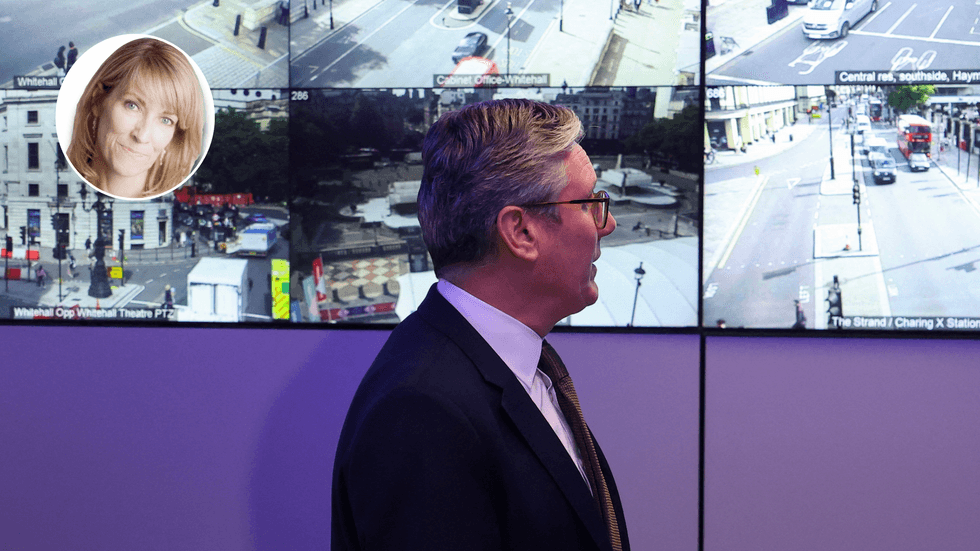
Labour's stealth expansion of 15-minute cities is a Stalinist nightmare sold as a green dream - Renee Hoenderkamp
|Getty Images
This is enforced social engineering, not voluntary sustainability. Shadow transport minister Greg Smith called it Labour's explicit "blueprint for the country": empowering draconian councils to dictate how people live, move, and drive. He isn’t wrong.
The Alliance of British Drivers slammed it as a "Stalinist abomination" – echoing East Germany's internal passport system, where everyday trips require permission.
It's just another step into the 1984 playbook that current governments around the world seem to be using as the instruction manual.
The AA highlights the obvious: cars remain Britain's main transport mode; these barriers will devastate high streets, rural communities, and local economies.
As I said, this isn't a new or British invention – it's deeply embedded in the United Nations Agenda 2030, "Make cities and human settlements inclusive, safe, resilient and sustainable." ‘ Human settlements”… eurgh..
Agenda 2030 demands compact, low-car urban living: everything essential within 15 minutes by foot, bike, or public transport. Key targets include reducing car dependency for sustainable transport, cutting per-capita environmental impacts like emissions and waste and ensuring accessible, inclusive public spaces.
The 15-minute city idea is promoted by C40 Cities – the global network of nearly 100 megacities leading on climate action. And leading C40? London Mayor Sadiq Khan, who has served as Chair (now Co-Chair) since 2021.
Under Khan's leadership, C40 has championed the 15-minute concept as central to post-pandemic "green and just recovery." Designed to reduce car reliance, reclaim streets for people and nature, improve air quality, and connect residents to jobs, schools, leisure, and loved ones via short, sustainable trips.
C40 partnered with developers like ARUP to fund "Green and Thriving Neighbourhoods" pilots proving the 15-minute model. Dig a little in the ARUP plan for implementing C40 cities, there are ambitious targets for us on;
Air travel – one short-haul flight every three years max
Meat consumption – zero
Clothing purchases – three clothing item purchases a year max
Imagine being told how many dresses you can buy in a year.
Kahn committed London to net-zero by 2030 with initiatives like expanding the Ultra Low Emission Zone (ULEZ), school street closures, and pushing renewable energy for the Tube, which aligns seamlessly with UN Agenda 2030's 1.5°C Paris Agreement ambitions.
But here's the rub: while C40 and Khan frame it as "livability" and "inclusion", Labour's enforcement version – DVLA-backed fines, permit limits, unchecked Low Traffic Neighbourhoods (LTNs), 20mph zones, and parking crackdowns make it just a punitive punishment system if you don’t do as you are told.
And what of the vulnerable groups that Labour promises to protect?
Women – often primary carers juggling work, childcare, eldercare, and errands – rely on cars for chained trips (school run, supermarket, doctor's appointment) that 15-minute walking/biking can't realistically cover. Restricted zones mean detours, unreliable public transport, lost time, and added stress – entrenching gender inequalities rather than easing them.
Carers (predominantly women) face chaos: time-sensitive home visits, medical transport, or emergency runs become fined or impossible under rationed permits. Flexible car access is essential for their roles; this strips it away.
The elderly – with reduced mobility and slower walking paces – "15 minutes" covers far less ground. Many depend on cars for healthcare, shopping, or social visits to avoid isolation. Permit limits trap them in zones, worsening loneliness, physical decline, and mental health issues. Studies show elderly amenity access suffers in dense 15-minute models without proper adaptations.
Disabled people – wheelchair users, those with mobility impairments, or chronic conditions – need reliable, barrier-free access. "Walkable" designs often mean uneven paths, steps, or gaps that render cities inaccessible. Fixed-route transit prioritises speed over inclusivity; proximity doesn't help if the journey itself is impossible.
The model favours able-bodied urban elites in central areas, sidelining those who can't afford or navigate dense zones. UN Agenda 2030 promises "inclusive" cities – but Labour's rollout, amplified by Khan's C40 leadership, risks exclusion: surveillance over personal choice, control over care, fines over freedom. Women, carers, the elderly, and the disabled pay the highest price while proponents cycle or walk unhindered.
But honestly, it's everyone. Why should anyone have the right to curtail what we do, what we eat, what we buy, where we live and travel and even work? If I want to travel 20 times a year and have worked hard to do that, then why can’t I?
This is top-down social engineering masked as sustainability. Sadiq Khan's C40 cities push the global vision; Labour delivers the local enforcement.
When will they admit it's not about green goals – it's about restricting ordinary people's lives? I, for one, am not prepared to become one of their worker ants.
More From GB News