






This week, a death row inmate was given an extra year to live despite being seconds away from receiving a lethal injection — and the story has made me question whether we need the return of capital punishment in the UK.
On Thursday, triple killer Tony Carruthers extended his arm in acceptance of his fate at Riverbend Maximum Security Institution in Tennessee.
He was ready to take the poisonous cocktail that would see the lights go out one last time. A punishment, some argue, fit for his crime: a kidnapping and triple murder in Memphis in 1994.
The story of his botched execution is an extraordinary one. His death was halted after medical staff could not establish a required backup IV line. They quickly found a primary line but failed to find another suitable vein despite over an hour of clumsy attempts, including in his arms, feet, and neck.
I find such detail fascinating. I wonder what went through Carruthers’ mind as prison staff struggled for over an hour to find another suitable vein. Was he in distress? Did he care? What was said or communicated? And what did he think awaited him once he left this mortal coil?
I also wonder if he thought of his victims: 21-year-old Marcellos “Cello” Anderson, his 43-year-old mother Delois Anderson, and 17-year-old Frederick Tucker.
Carruthers took them to a cemetery where they were shot and buried alive beneath a casket in a pre-dug grave. Carruthers has long protested his innocence. His conviction relied heavily on testimony from a paid jailhouse informant, with no physical evidence linking him to the crime. His high-profile case has received support from the likes of Kim Kardashian, who has called for clemency and further DNA testing.
Almost immediately after the failed execution on Thursday, Tennessee Governor Bill Lee granted Carruthers a temporary one-year reprieve, pushing any new execution date to after May 21, 2027. After accepting you were about to die, what does it do to the human psyche when you are then miraculously given another 12 months on this mortal coil?
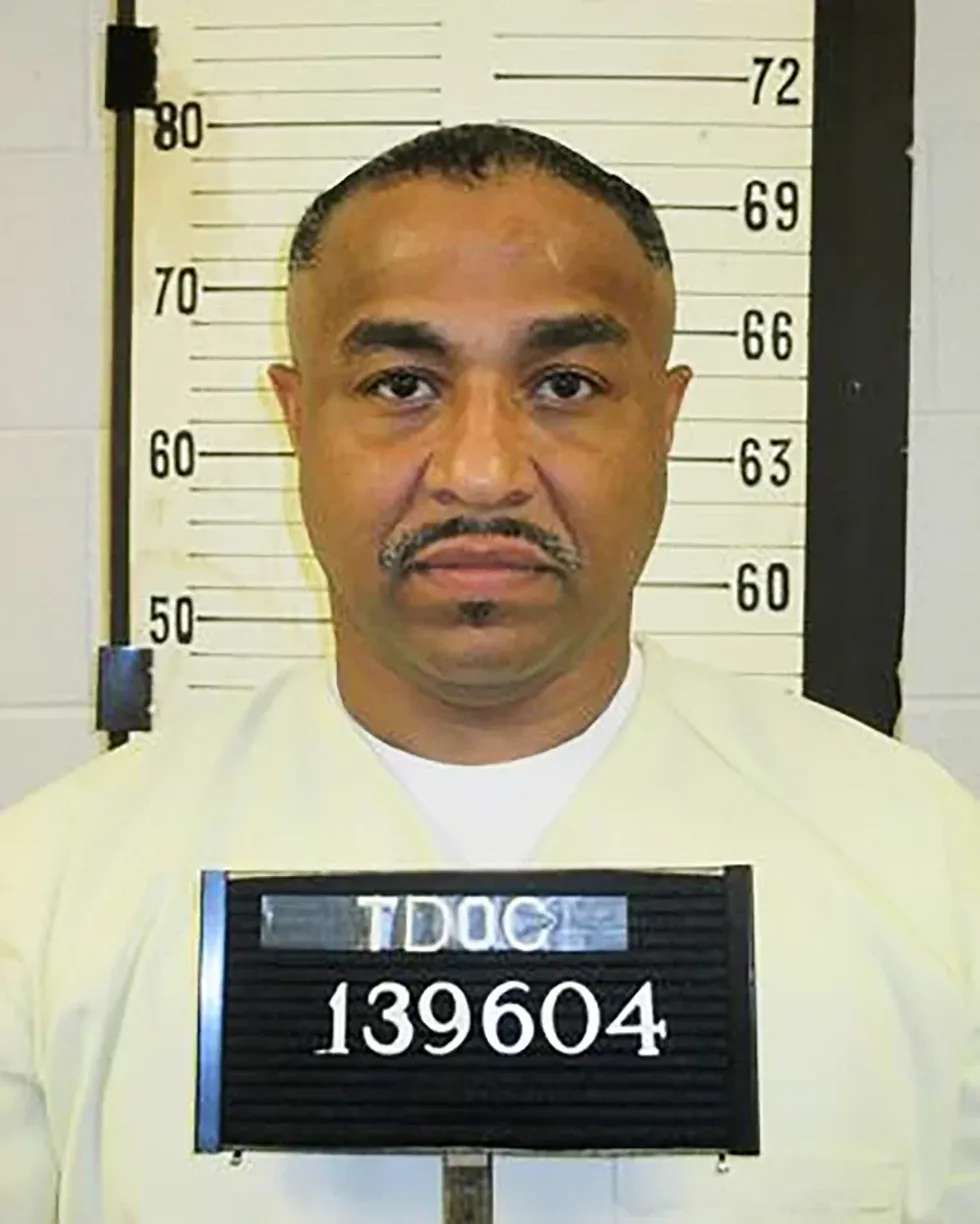
The execution of killer Tony Carruthers has been postponed
|HANDOUT
The death penalty has long been an interest of mine because there’s so much to talk about and dissect — theology, justice, morality, and economics. Why do so many God-fearing red states in America allow the death penalty when the Bible says ‘Thou shalt not kill’? How do you square that with your faith? I later received some education on the matter when I attended Bible study classes in Washington, DC. The Bible actually says thou shalt not ‘murder’ — and the death penalty is not considered murder in scripture.
But there are many other questions that run through my mind. Is the death penalty actually a deterrent? For victims’ families, has it given them closure and a sense of justice after seeing the killer of their children, brothers, mothers, or fathers suffer the same fate as their loved ones?
And what about the cost to the American taxpayer? We often hear in the UK that monsters like Southport killer Axel Rudakubana should be put to death, if only for the basic reason that British people should not be paying hundreds of thousands of pounds to keep these demons alive in UK jails.
However, when you consider that some death row inmates have been languishing in prison for more than 40 years after their sentencing, that argument begins to look a little weak. Appeal after appeal, campaigns, and new evidence coming to light all hit American taxpayers far harder than a normal life sentence in a maximum-security prison would.
LATEST DEVELOPMENTS
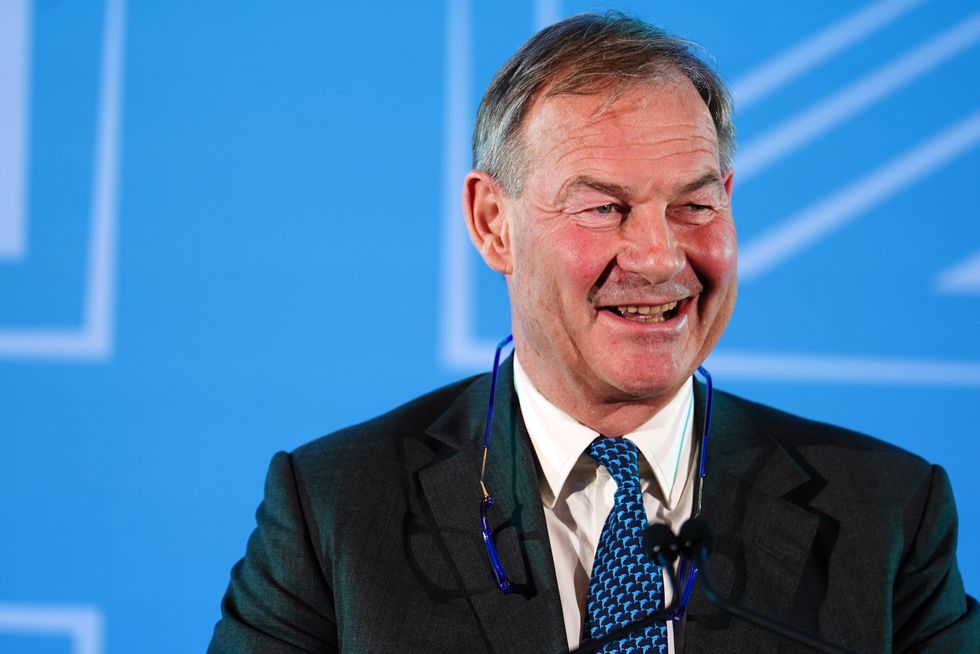
Rupert Lowe supports the death penalty being reintroduced in Britain
| PAI’m keen on making a film for GB News viewers about the death penalty and how it works in the USA. It comes off the back of a growing conversation in Britain about whether we should bring back capital punishment to deal with scumbags like Rudakubana.
I personally support the return of state-sponsored killing in Britain — but only in absolutely nailed-on cases where there is no doubt about who committed the atrocity. I’d also extend it to child abusers and paedophiles.
Nevertheless, I’ve begun to question my conviction after a discussion with somebody close to me about another death row inmate whom I am trying to meet for an interview for GB News.
Andrew Richard Lukehart is on death row in Florida for the murder of a five-month-old baby in 1996. Lukehart, then 22, was dating the mother of the child when, according to court records, he was left alone with the infant and tried to change her nappy.
She wouldn’t lie still — and he admitted to striking her head multiple times in anger and fracturing her skull. He then put her body in a plastic bag, drove to a pond, and dumped her in it. Lukehart reported her missing to the police, claiming she had been abducted. Her body was found the next day. At the time, he was already on probation for a previous felony child abuse conviction involving another infant. The very definition of a demon, if there was one.
Lukehart is scheduled for execution on June 2 — next week — after being convicted in 1997 and languishing on death row for nearly 30 years.
Lukehart’s legal team and anti-death penalty advocates argue he has serious mental health issues and a history of trauma, claiming he never received proper psychiatric help. I did some digging into his childhood.
Lukehart presented testimony at his trial from several family members who described the abuse and tragedy he endured as a child and young adult. Their evidence showed that Lukehart’s father was an alcoholic who physically and emotionally abused him and his sister until Lukehart was at least four or five years old.
When Lukehart was about ten years old, an uncle who was his supporter and confidant died. At around the same time, another uncle began sexually abusing him. When he was 17 or 18 years old, his sister Jennifer died in a car accident, which left him almost suicidal.
I relayed this information to a loved one I was discussing the case with this week, and their response got me thinking.
They said: “There is always deep pain behind such crimes. We haven’t evolved much as human beings when this sort of thing is still happening. He should be nurtured, not killed. Shown a bit of love. Lack of love is why he did it. If you understand that there is only one God masquerading as all creation, you would see how wrong it is to kill, even a killer.”
While I don’t entirely agree, and while "sympathy" is the wrong word, what I found about Lukehart’s background goes some way to explaining how a human being — once a pure, innocent baby themselves — can behave in such an evil way.
In the UK, Restore Britain leader Rupert Lowe has recently been leading the charge for the return of the death penalty. He called for a referendum on the matter during Prime Minister’s Questions, asking for a public vote on restoring capital punishment for foreign and domestic criminals, citing cases where guilt is “undeniable” and the crime is “monstrous”. Sir Keir Starmer firmly shut down the proposal, insisting the death penalty is “not the answer” and citing cases where people had previously been put to death despite later being proven innocent.
Yet Lowe’s push for the death penalty sparked widespread public debate and a growing conversation about its return to Britain.
Peter Anthony Allen and Gwynne Owen Evans were the last people ever to be executed by the British state, on August 13, 1964. They were executed simultaneously at 8:00 am for the murder of John Alan West. Allen was hanged at Walton Prison in Liverpool, and Evans was hanged at Strangeways Prison in Manchester.
More than 60 years later, are we now closer than ever before to seeing the return of capital punishment in the UK? The blowing up of children at pop concerts, the rape and murder of children, and the seemingly endless spate of Islamist terror attacks over the decades certainly give fuel for thought.
Our Standards: The GB News Editorial Charter